Where are the Orange Groves?

If you receive these posts in email and the pictures in the post don’t show for you, tap here janabotkin.net. It will take you to the blog on the internet.

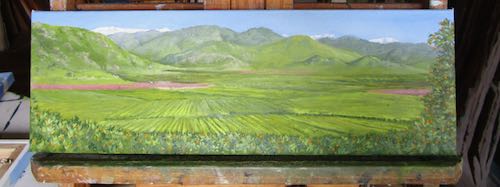
Where are the orange groves? They are in other paintings, eight other ones, to be exact.

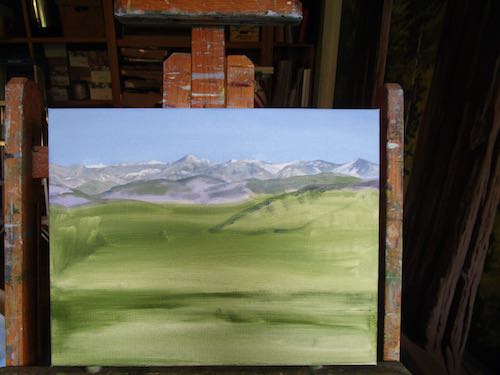
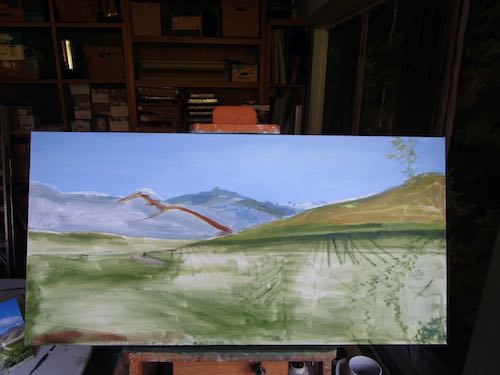
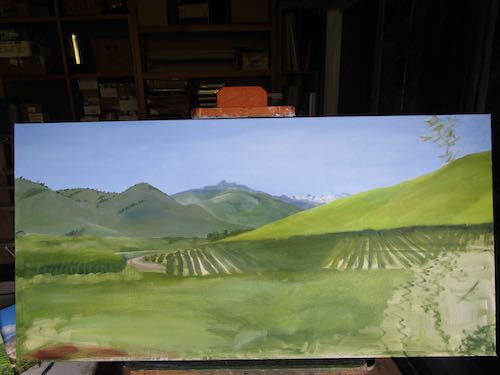
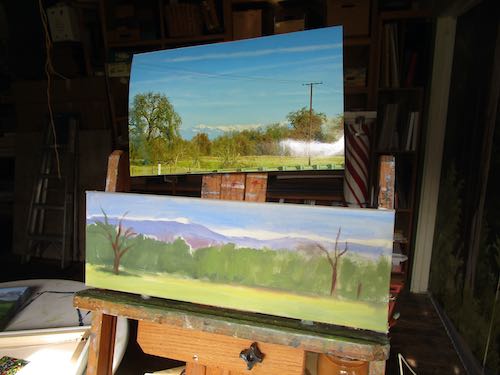
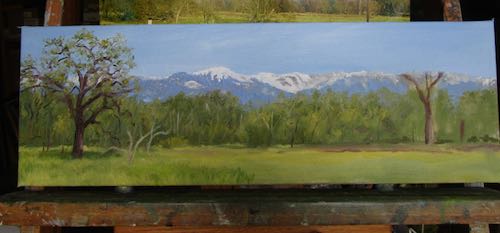
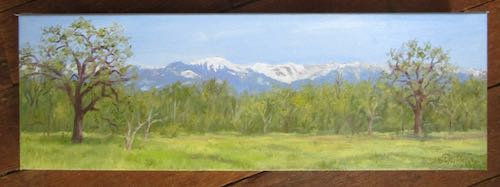
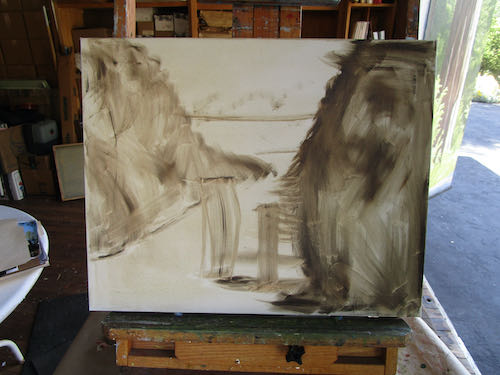
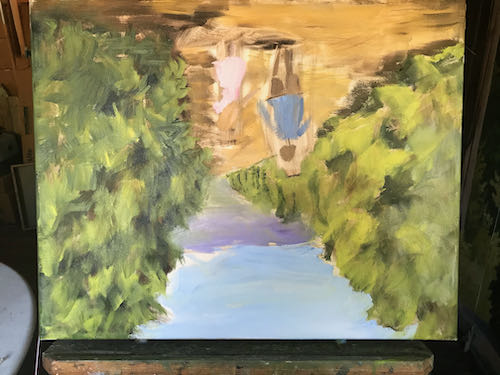
This is a grove of oak and sycamore trees, at the Kaweah Oaks Preserve, working from a photo taken through my windshield. Don’t be alarmed; there was no traffic either in front or behind. I didn’t take the time to compose the photo carefully, just went click click click and then patched things together later on Photoshop Junior to get something paintable.

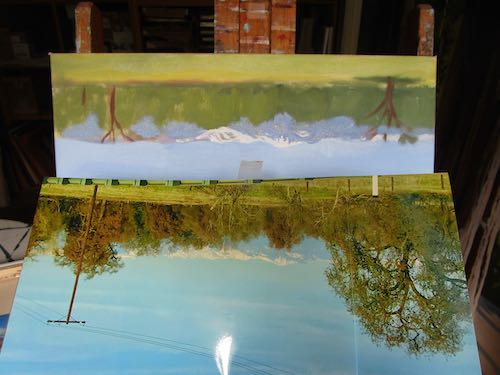
I flipped things to get the mountains more accurate.

That’ll do. Now the trees.

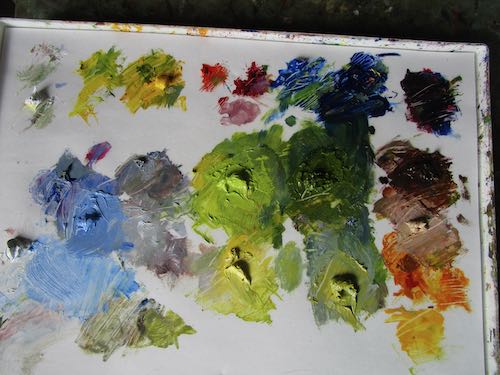
I thought you might like to see my palette; all the colors used here are mixed from white, 2 yellows, 2 reds, and 2 blues. 

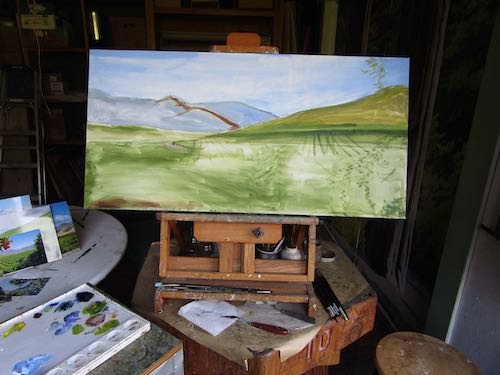
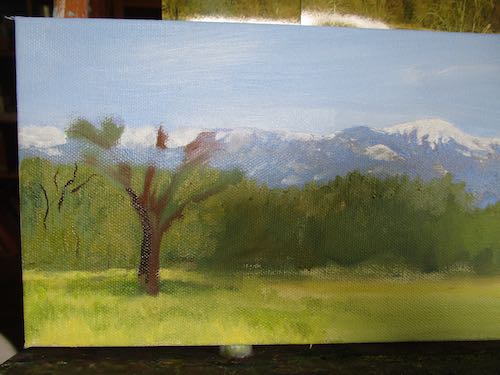
Here is the left hand side as the detail begins to appear in the distant trees.

Mostly working left to right.

I didn’t save my crummy photos on the computer so that I can show it to you. After I had the prints made (it is 2 8×10″ taped together), I deleted them. There are too many photos on my computer, so I have to be very vigilant about deletion.

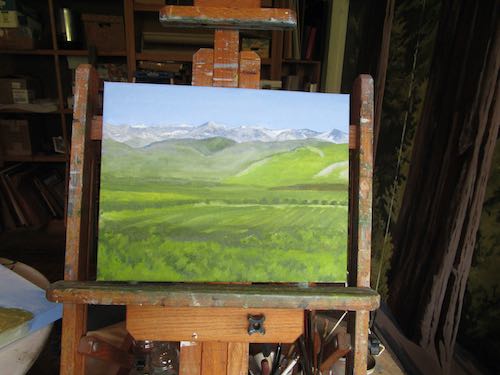
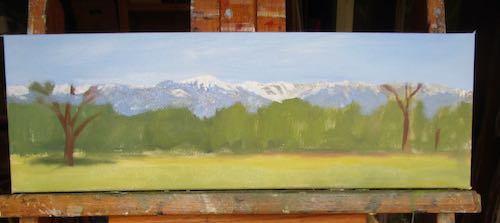
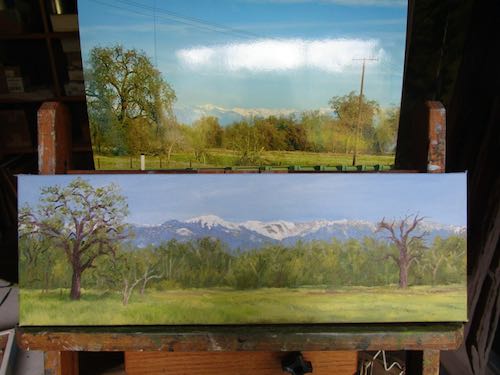
Finished! Too wet to scan, so I laid it on the floor to photograph it without shadows or wet paint glare.
Now, back to the orange groves. . .

Two Drawings, Mine and Someone Else’s

Hers

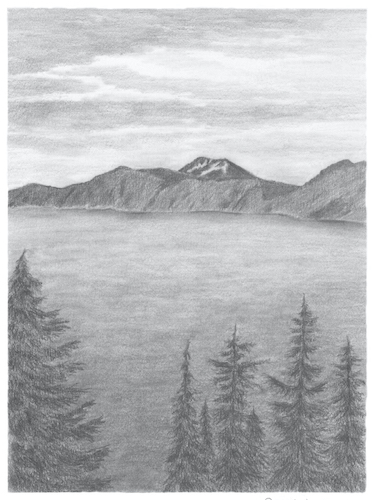
A drawing student brought in a photo she had taken, a challenging choice for a beginner. I tell my students, “Pick something you love, because you will be looking at it for a long time”. She loves this scene and worked very diligently. 

This is the result of her labors, and I think she did a wonderful job! (I removed her name because she didn’t ask to be on the World Wide Web, and I didn’t ask her permission.)

This is how it looks after I’ve photoshopped it for reproduction purposes, in case my student wants to have copies or cards printed.

Mine

For about five years, I have been working with a writer on a book about tuberculosis. It began as a local story about the TB hospital in Springville (here in Tulare County). When he started researching, the story grew into a different book, a massive project. Through it I have learned much more than I ever expected about “the white plague”, as opposed to “the black plague” (both of which refer to skin color associated with the disease, not race, so no need to get your knickers in a twist.)

The author came to me initially for some drawings for the Springville book, and upon further discussion, hired me to edit for him. We are finally reaching the end of the main text and are now gathering appropriate illustrations.

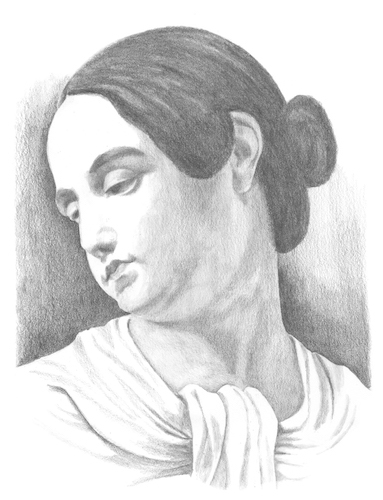
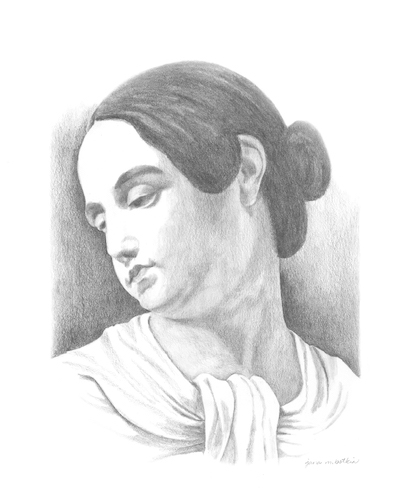
He couldn’t find a good photo of Virginia Poe (wife of Edgar), so he asked me to draw her from a rather gruesome photo (or painting?) taken shortly after she assumed room temperature.
Are you properly horrified? This fits with Edgar Allan Poe’s writings, doesn’t it? I haven’t read his work, but I learned plenty about him through the process of assisting with the writing of this book. I’ll stick with modern writers for my fiction.
Meanwhile, I think the background needs a little bit more work.

Okay, all better now. I also remembered to sign the drawing. 


Custom Art Means Accepting Commissions

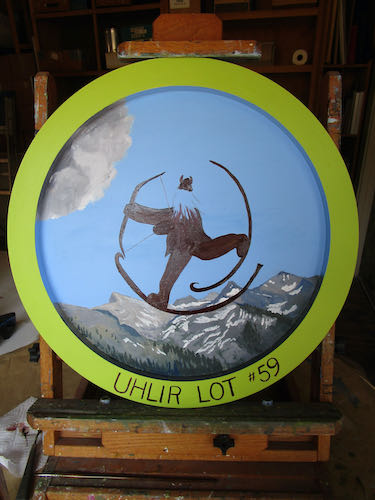
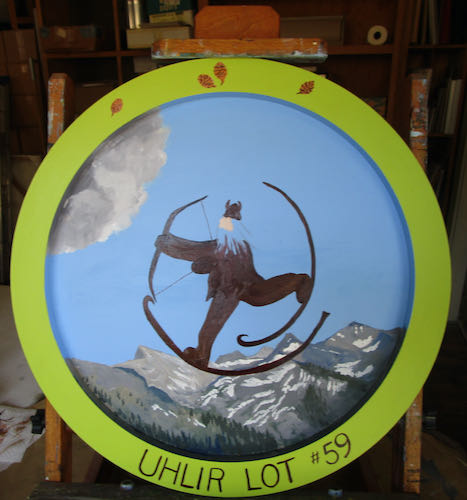
I accepted the job of painting a custom sign for a cabin owner. This is a larger version of one that I did 10 years ago, one that fell apart from being out in the weather.

He asked me in July, and the summer got hot, as summers do in Tulare County. Because he wasn’t in a hurry (bless you, Mr. Customer!), I just piddled along, and then stopped for a few weeks when it was just too hot in the painting workshop. 

Suddenly, the heat quit, so I returned to the project.

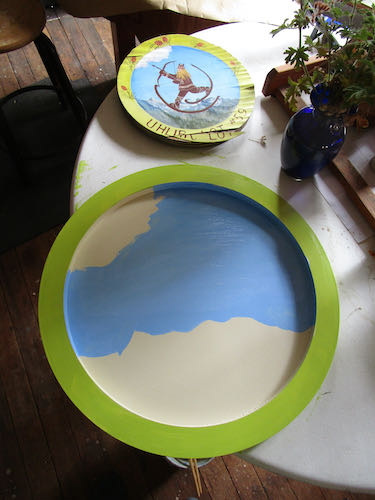
It is a little bit too hard for me, so there is a fair amount of thinking, trying, erasing, waiting, and trying again. Here are the steps.

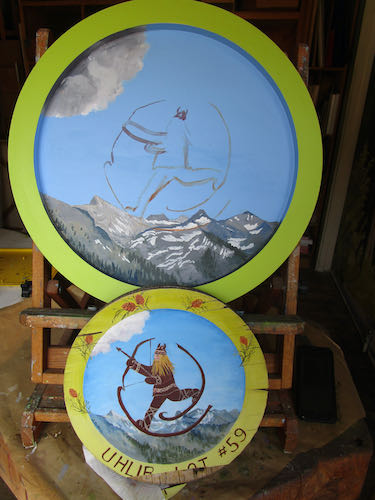
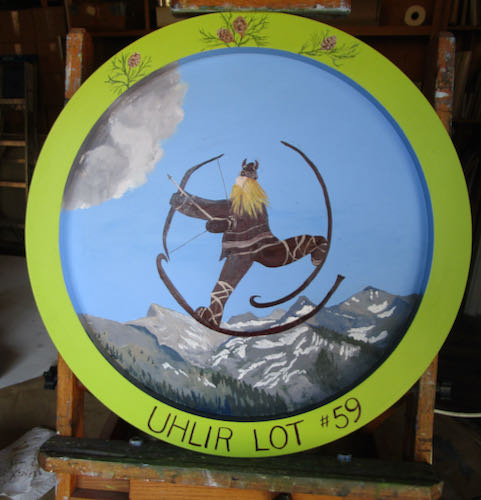
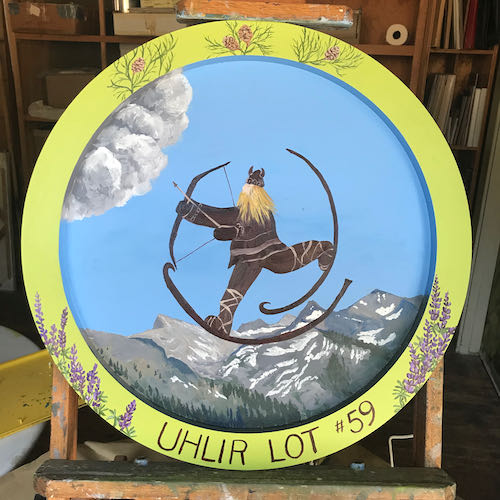
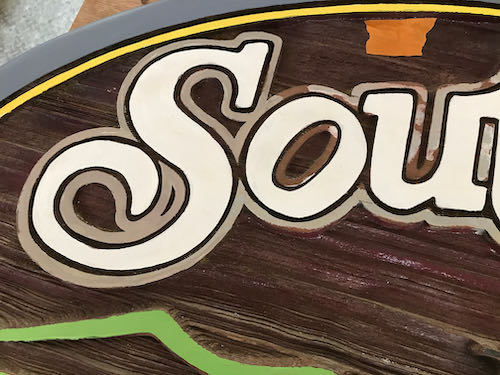
I am working from the old sign and don’t remember what the source was for this Norse god of winter, named Ullr.

I changed the border color from yellow to a more pleasing yellowish green.

A little bit at a time, because this is just difficult.

What is so hard? Seeing the proportions correctly, getting the oil paint and brushes to behave, figuring out where to place the border decor.

This time I will include some wildflowers. Mr. Customer and I discussed lupine, so there is more thinking involved in size and placements.

Finally, I am happy with the results, as is the easy-going customer.

P.S. Recently someone else asked me to paint another strange and unique sign, with blurry and uncertain reference photos and calligraphy. This time I had the good sense to turn down the job. An artist has got to know her limitations.

More Cold Water Drawing

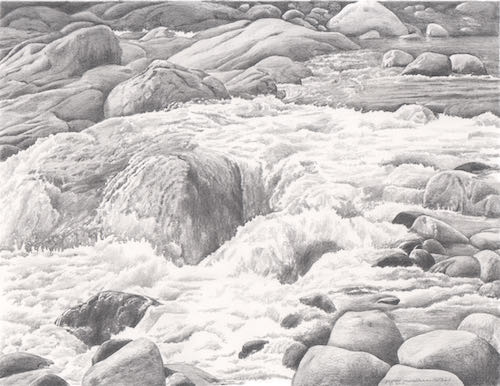
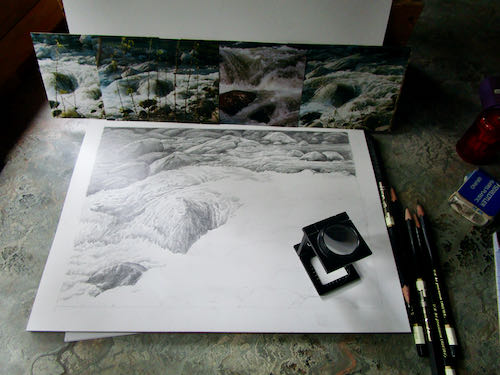
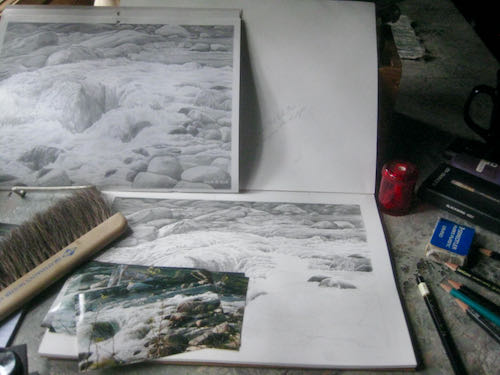
This is the first drawing titled “Rock and Roll”, one that appeared in my 2018 calendar, sold, and now has been requested by a new customer as a do-over.

On a rainy weekend in Mineral King, I worked on the new drawing for another few hours.


This time I remembered to bring my Tombow pencils and also the original photos. I try to work from photos so that I am not simply interpreting a previous interpretation. Flowing water isn’t an exact subject, but I want to keep close to the original view because the customer recognized this section of river. If I stray too far, she might say it doesn’t look right.

I wrote a few reminder notes on the facing sheet, and then because of the overcast and rain, it got too dark to see the details, up there in the Land of No Electricity, Internet, or Cell Service. 

A Repair and an Agreeable Customer

If you can’t see the photos, go here: cabinart.net/blog.

Repair

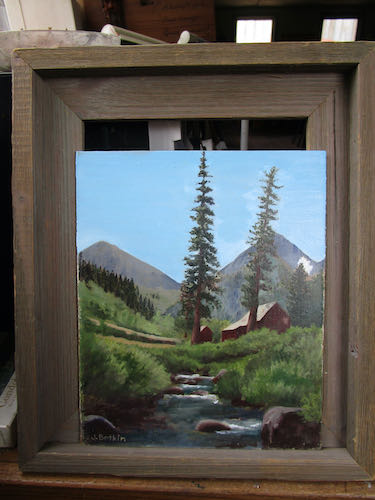
This returned painting now has a cleaned up sky, new snow on Bearskin and new whitewater in the creek. I photographed it wet, which is why the color looks patchy. It is not actually inserted in the frame, which is why it looks unframed. Duh. I just propped it in the frame so I could photograph it.

Redo for an Agreeable Customer

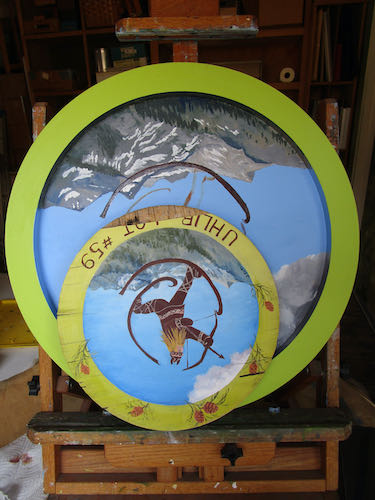
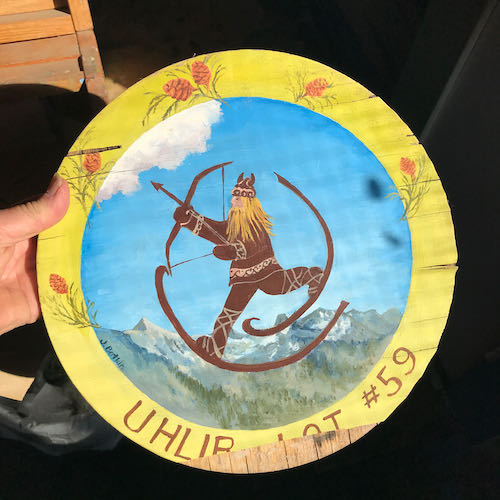
 This sign was well used and loved for 10 years.

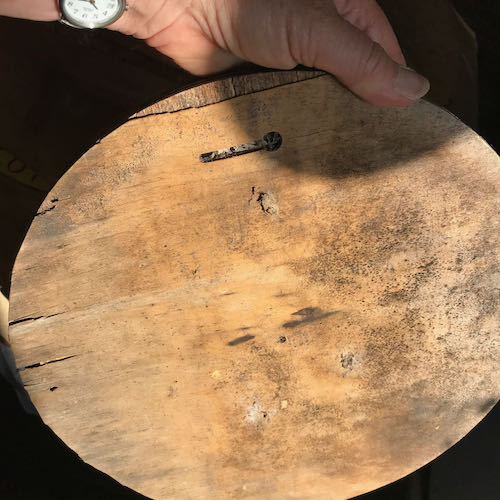
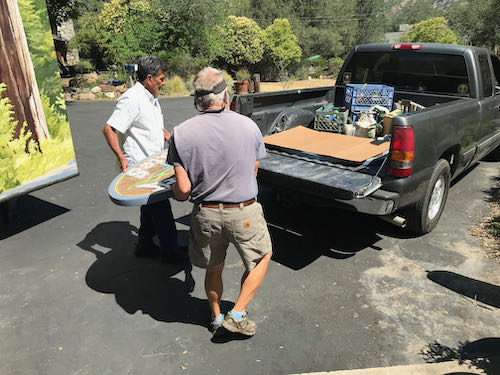
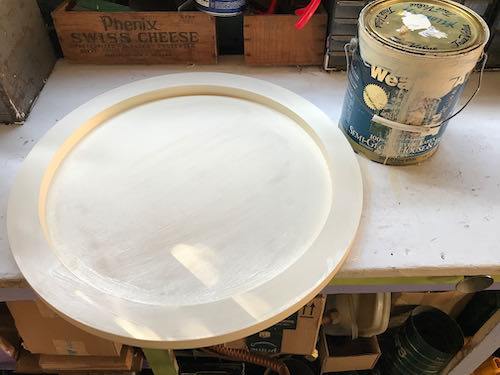
The customer asked for a larger one this time, so I ordered a 20″ round instead of the 12″ version. After applying 3 coats of exterior paint to both sides, I decide that the back of the round would make a more interesting sign than the flat front. The customer is very agreeable, so that’s what I will do.

I used oil paint on the first sign because I was unable to achieve a satisfactory level of detail with mural (acrylic) paints. Because this one is bigger, I am going to try it in the mural paints, and then if the detail needs to be tightened up, I will finish it off with oil paints.

I love these custom jobs for agreeable customers with no deadlines.


A New Oil Commission

If you subscribe to the blog and read the email on your phone, the photos might not show up. (Some people get them, some do not; it isn’t a problem I know how to solve.) You can see them by going to the blog on the internet. It is called cabinart.net/blog, and the latest post is always on top.

Custom art, or “commission” work might be the most satisfying piece of my business. I am painting something that someone really wants, painting with confidence that it will be loved, and confidence that it will be sold. 

Artists can be so insecure. We pour ourselves onto paper or canvas, creating something that really lights our fire, getting lost in the process, and then . . . what? Nothing happens.

So, when I get a commission, particularly one of something that I am familiar with (orange groves, sequoia trees, Sawtooth, cabins, or anything Mineral King), it is a real pleasure to paint.

Beginnings

The customers chose 16×20″. I primed the canvas, assigned an inventory number, and wired the back. Pippin hung around, but wasn’t interested in the details. (And the vase of lemon geranium may have repelled the mosquitos.)

It was near the end of the day, and I was in danger of falling into Idiotville, where Stupid, Sloppy, and Careless reside, so I set it aside for the day.

And this is how it looked after the next painting session:

That again

Yeppers, this time in oil paint instead of pencil. Not sisters this time—a brother and a sister, different grove. And no deadline, so I will spend oodles of time make this piece of Tulare County art perfect.

Oodles, I said.

Odd Job, Chapter 4

If you subscribe to the blog and read the email on your phone, the photos might not show up. (Some people get them, some do not; it isn’t a problem I know how to solve.) You can see them by going to the blog on the internet. It is called cabinart.net/blog, and the latest post is always on top.

This was the day for the careful work on my odd job of repainting signs for a subdivision in Three Rivers: a gray line around all the letters, and repainting the California quail.

Thin Gray Line

Mixing the color was fun, because I had success quickly. Color precision isn’t terribly important here, but I like to practice my skill. You can see the new gray around the S and the old gray around the other letters. Same, same!

The California Quail

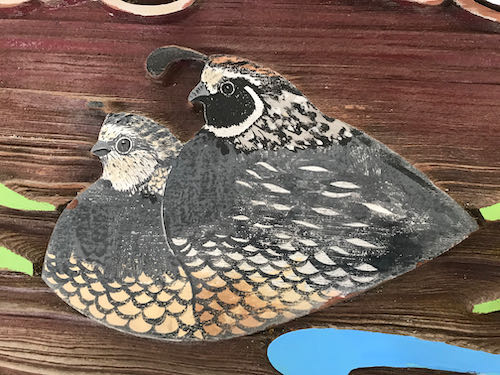
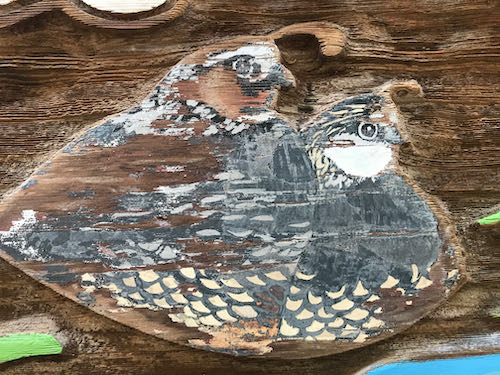
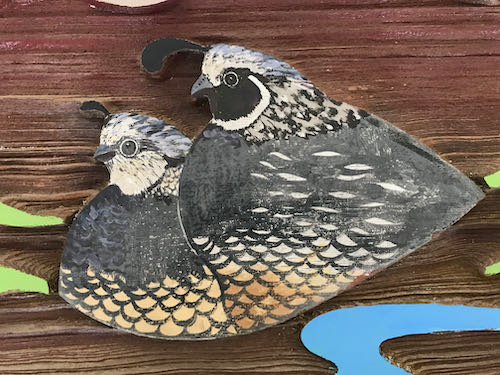
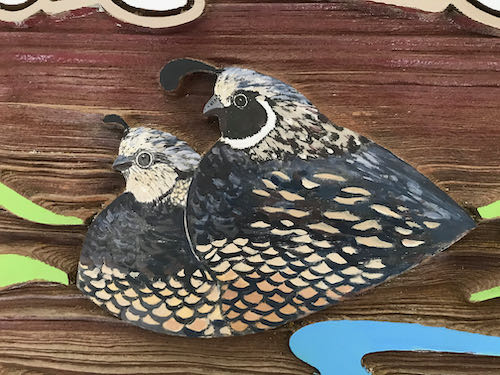
These were harder. I couldn’t tell for sure about the colors, and this particular one had such a sheen to it that I began to suspect it was a decal rather than something that was painted directly on the redwood.

On the more weathered sign, it was clear that the quail were painted directly on the redwood.

The photo only showed the quail on the less weathered sign, which should have been adequate.
When I moved over to the other sign, I couldn’t figure out why I wasn’t able to duplicate the quail when I turned my back. It took a few flailing efforts before I realized they were facing the opposite directions. 
I didn’t do a perfect job, but I was able to make them look believable.

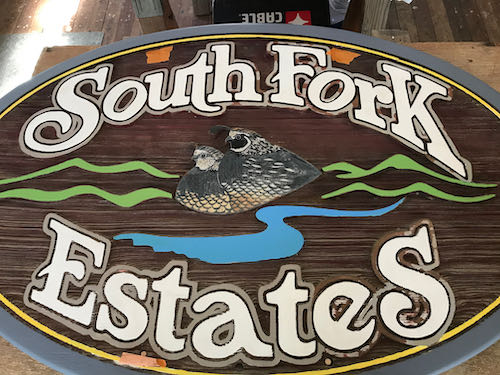
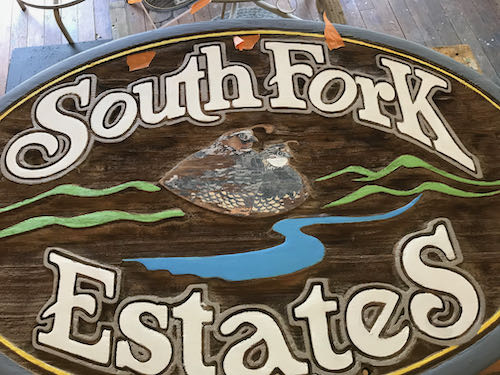
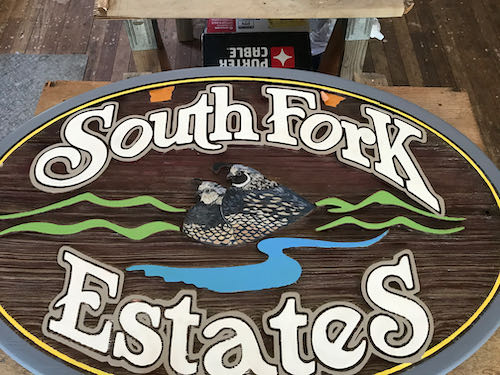
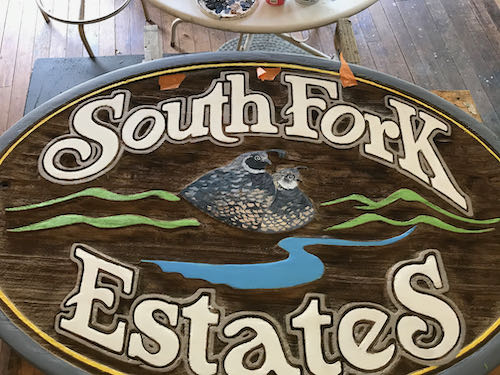
Here are the two signs, finished as far as I am able.

Finishing

The lead man on the project knows that I don’t know how to finish these. Mendosign kindly emailed me with a suggestion to use wood stain with a red tint, saying that wood needs to breathe, and that the stain would easily wipe off the painted parts. 

Mr. South Fork Estates thought there was a risk that it would make the painted parts look grubby. He will call a painter friend in Visalia for some advice. 

So, they will figure it out, and I am finished. 

Bye-bye signs. Thank you, TT and TG!

Odd Job, Chapter 3

If you subscribe to the blog and read the email on your phone, the photos might not show up. (Some people get them, some do not; it isn’t a problem I know how to solve.) You can see them by going to the blog on the internet. It is called cabinart.net/blog, and the latest post is always on top.

Yesterday’s post about refreshing 2 signs left you hanging. I hope the anticipation of today’s continuation didn’t disrupt your sleep last night.

After applying 2 coats of the rim color, some confidence began developing. Time to tackle the narrow yellow line. You can see the old color in the middle; I put a bit of white on the left, and some brighter lightfast yellow on the right.

The yellow needed some red, along with a touch of white.

You might be able to tell that the upper yellow is now better, but since the lightfast yellow is transparent, it needed a primer coat beneath. No need to color fuss here because the goal is to make it look good.

As I painted the narrow line with white, I realized that the wood is quite splintery. This means that getting a smooth edge isn’t going to happen the entire distance on any of the sign. But, it is a sign, not a piece of fine art to be viewed closely.

With the warm weather, swamp cooler blowing, and big doors open, the paint dried quickly. I could paint one sign, turn and do the other, go back to sign #1 for the second coat, and then turn and second coat sign #2.

The white letters seemed like a good next step. These also soaked up the paint and required 2 coats. The rough edges bothered me at first. Then I remembered that this will be viewed from inside people’s cars, until they stop noticing at all. After 5 hours, I felt an unavoidable slide into Idiotland, where Sloppy, Stupid, and Careless all reside. Besides, my cheater-readers kept falling off when I leaned over the sign, and then I painted a blue streak on my face by accident.

So, that’s all on this Three Rivers custom art project for today. The quail and the narrow gray line surrounding the letters will require a strong focus (and a better fitting pair of cheater-reader glasses).

Odd Job, Chapter 2

If you subscribe to the blog and read the email on your phone, the photos might not show up. (Some people get them, some do not; it isn’t a problem I know how to solve.) You can see them by going to the blog on the internet. It is called cabinart.net/blog, and the latest post is always on top.

Because I am an artist in a small town, I get asked to do a variety of things.

This keeps me growing, learning, and becoming more capable of doing more odd jobs. Still, I start out a little unsure of where to begin and unsure of my abilities to git ‘er dun well.

The outer rim of each sign is a grayish blue, or perhaps a bluish gray. It looked pretty straightforward, both in the mixing and the application. I put these 2 colors together and made the gray on the top of the lid.

You can see that I tried a few versions.

Because my gray had a purplish cast, I put in a smidgeon of yellow, which is opposite purple on the color wheel. (The ArtSpeak word for that is “complementary color”, as in “complete” because its presence completes the 3 primary colors which can be blended to make every color in the world. Not white. White is the absence of color.)

A touch more white, and then it was close enough. 

Clearly I had to be very very careful because Pippin was underfoot.

Let’s continue tomorrow, shall we?

Did Mineral King Need a Paint Job?

Did Mineral King need a paint job?

No, but the Mineral King Room at the Three Rivers Historical Museum did. The blue didn’t match the murals in the room, and the mountaintops weren’t recognizable. (You can see the murals here.)

First, I was determined to mix the right shade of blue using whatever paints I had on hand. Lightfastness isn’t a problem on indoor murals, so I was able to use a can of indoor white paint that came from who knows where, along with my 2 mural paint blues. Mural paints are highly pigmented and that makes them very useful for making my own interior colors.

Second, we taped all the parts that needed protection. (This was not the royal we—I had great help from MKPS Sandi).

Next, I traced the tops of the mountains on the mural showing the peaks surrounding the MIneral King valley. This provided a guide to redraw the peaks to match reality. (This was based on the assumption that I painted the mountains accurately in the mural.)

I drew the mountains on with chalk. (It wasn’t a Mineral King blue either but it matched my painter’s tape.)

Then, I started painting and almost immediately, dripped onto the rust color.

Good thing there is touch-up paint for all the colors involved. 

Here is an example of something weird that I have learned about acrylic paints, as opposed to oil paints: they are LIGHTER when they are wet. Doesn’t make sense, but it is true.

That teal color was great with the rust, but just not right for the subject matter. I told the Mineral King Preservation Society that if they are just going to waste the paint, I’ll be happy to take it off their hands. I’m sure I can find a use for it. (Weird how the rust looks like red here, and the white looks like light tan).

Now look at the room so you can see the corrected peaks and the color that matches the murals. (I’ll show a before and after on the 2nd shot for you.)

Before:

After:

The mountains in the Before photo are more dramatic and more proportionally pleasing. However, the mountains in the After photo are realistic rather than stylized, match the murals and give more display space for whatever will be going on the wall.

Tomorrow I will tell you a few thoughts about this job.