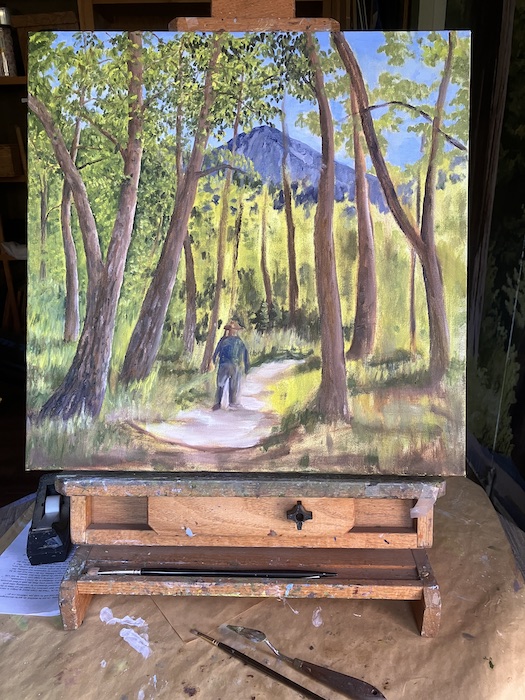
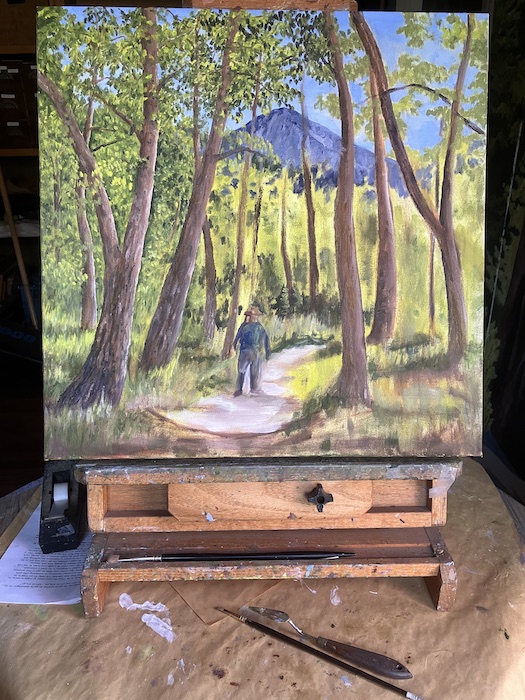
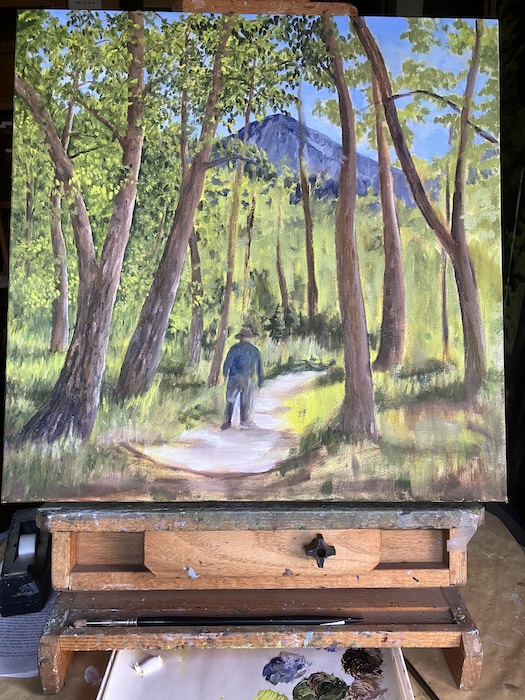
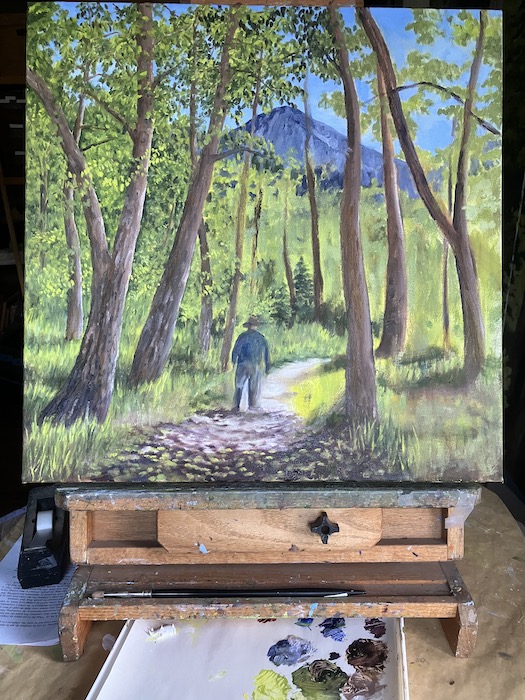
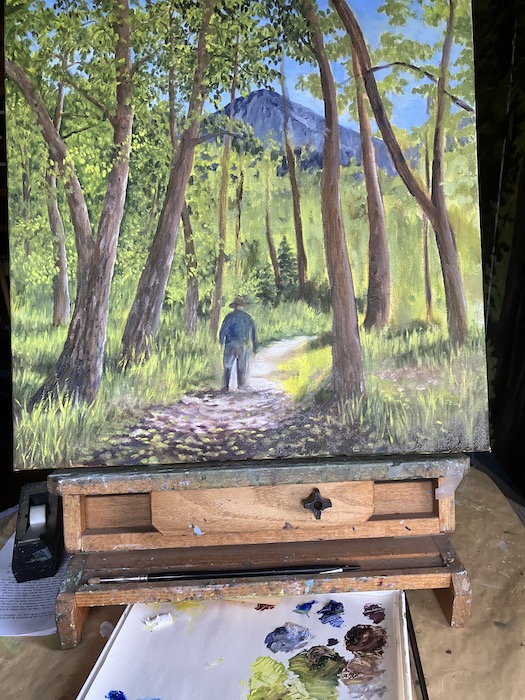
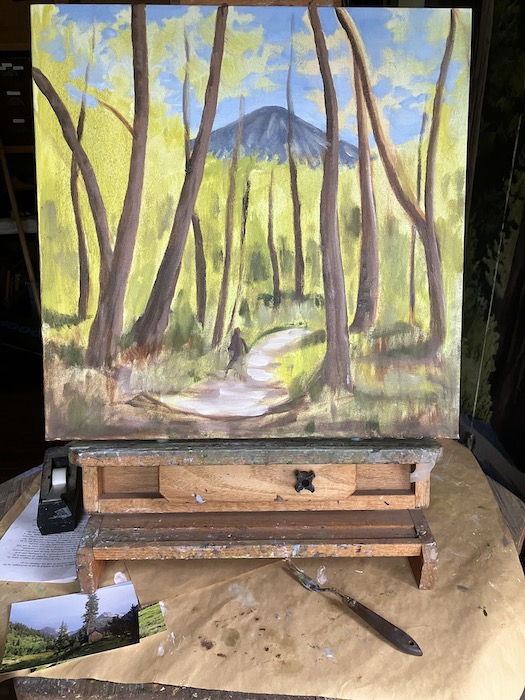
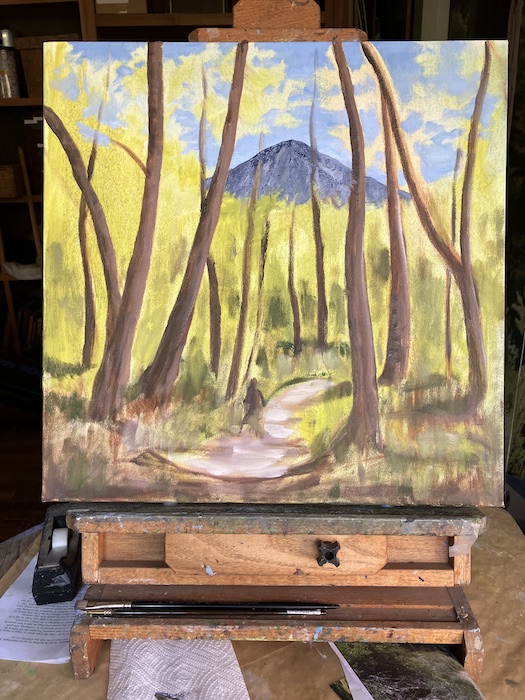
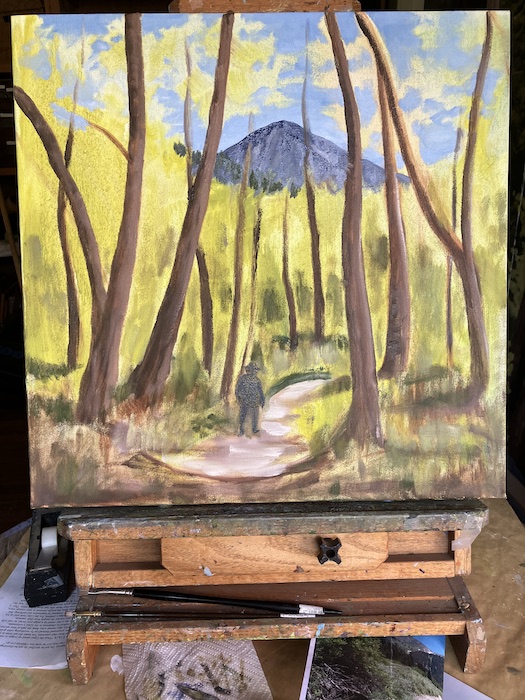
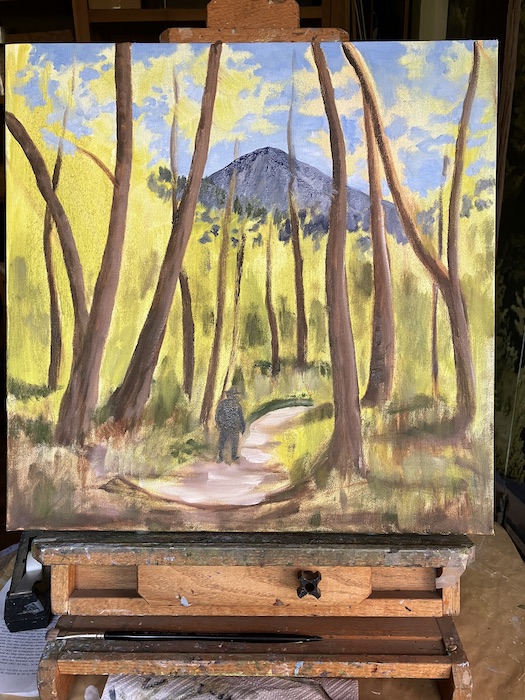
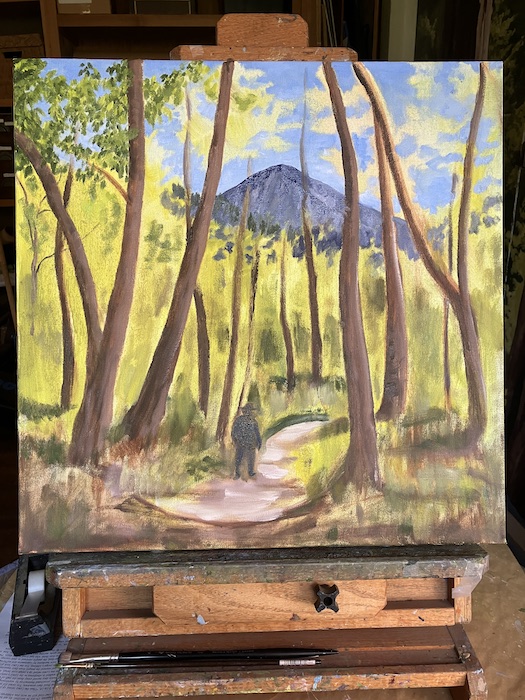
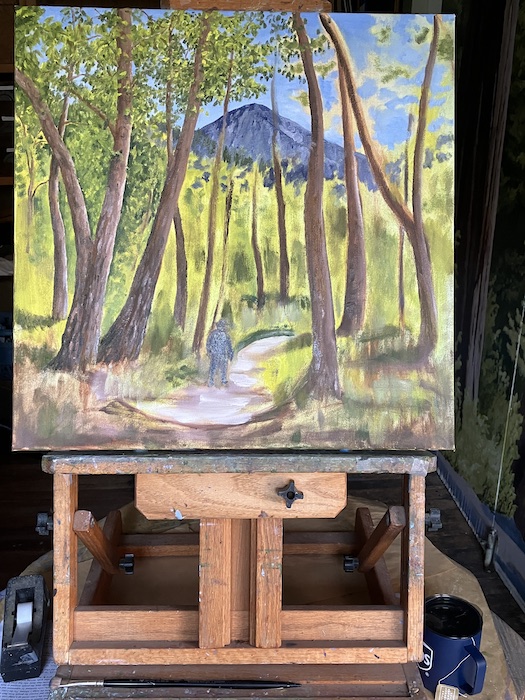
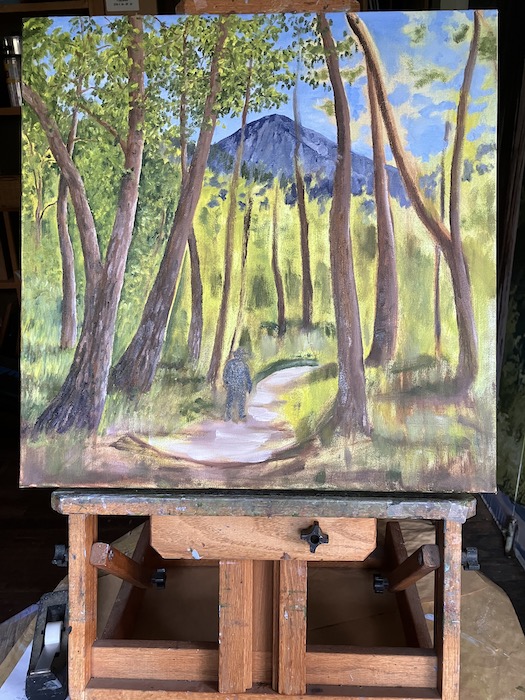
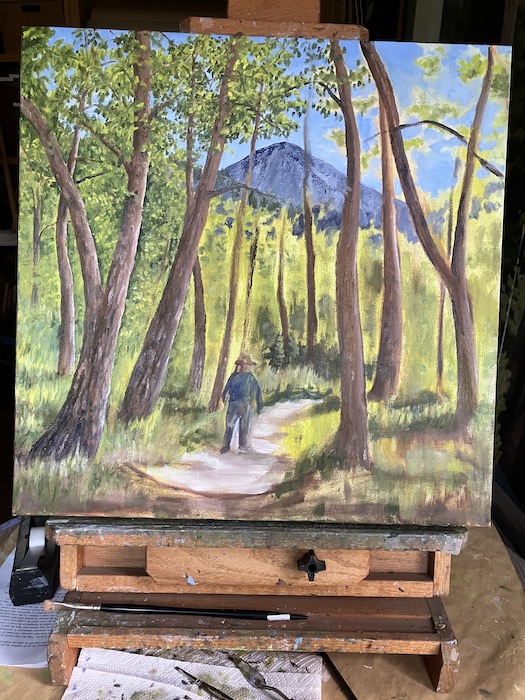
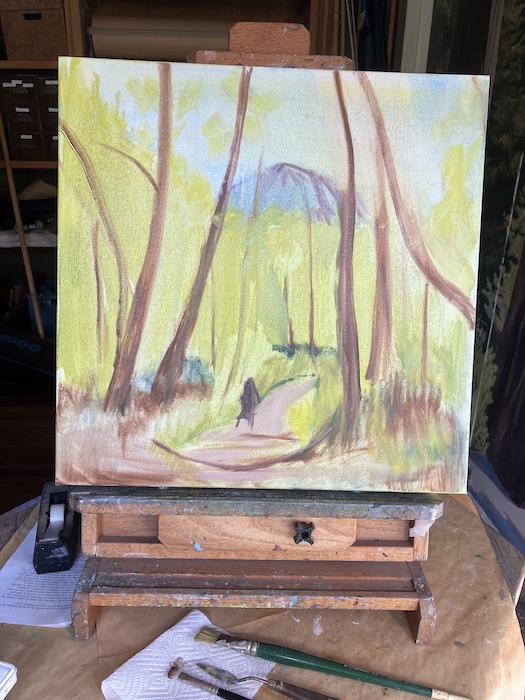
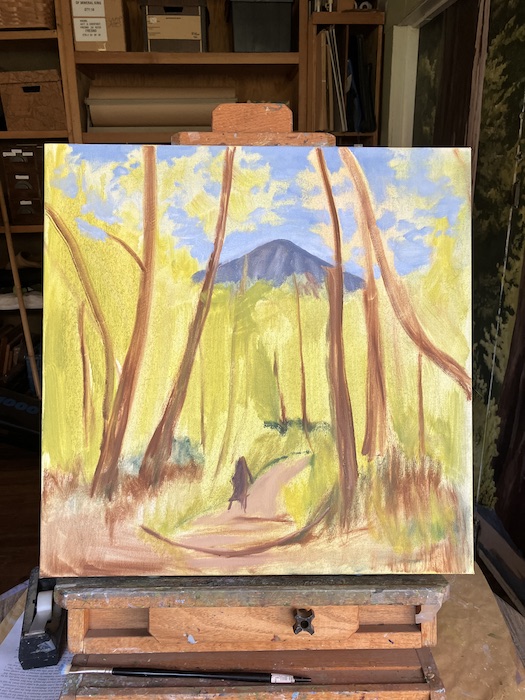
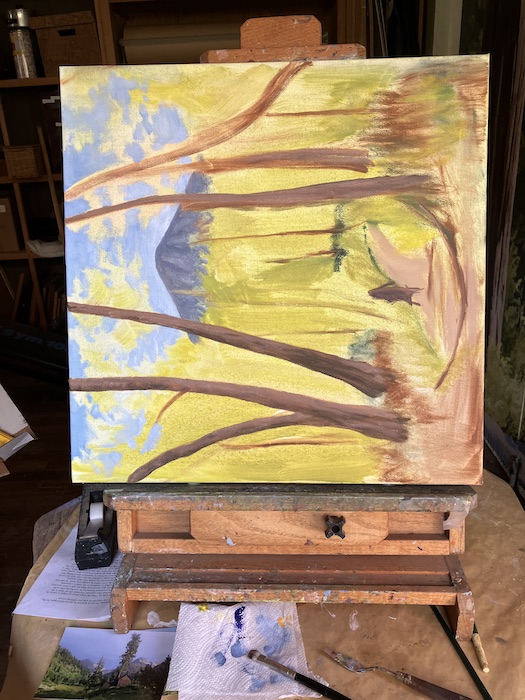
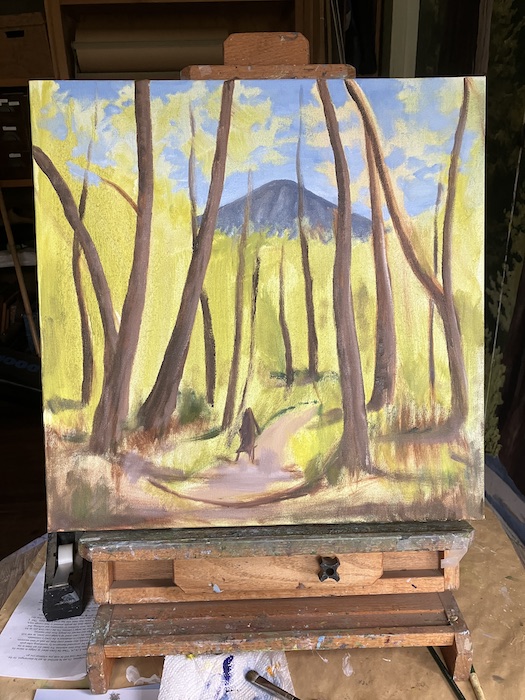
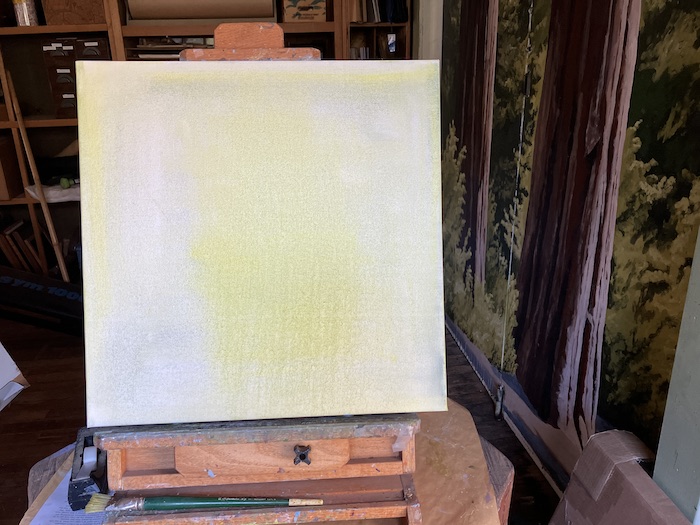
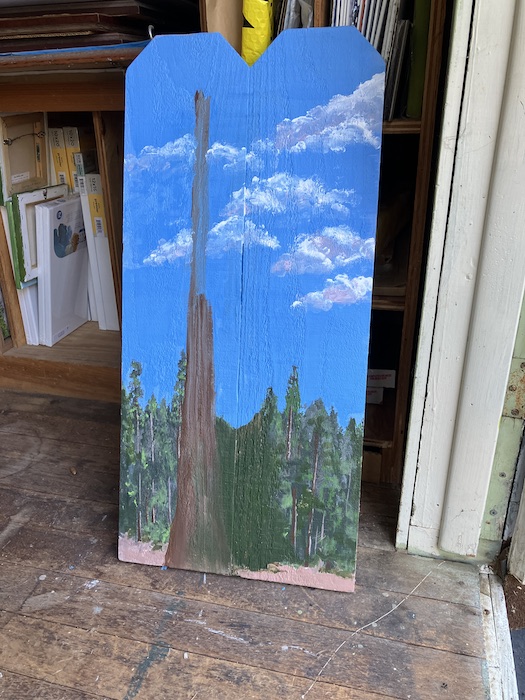
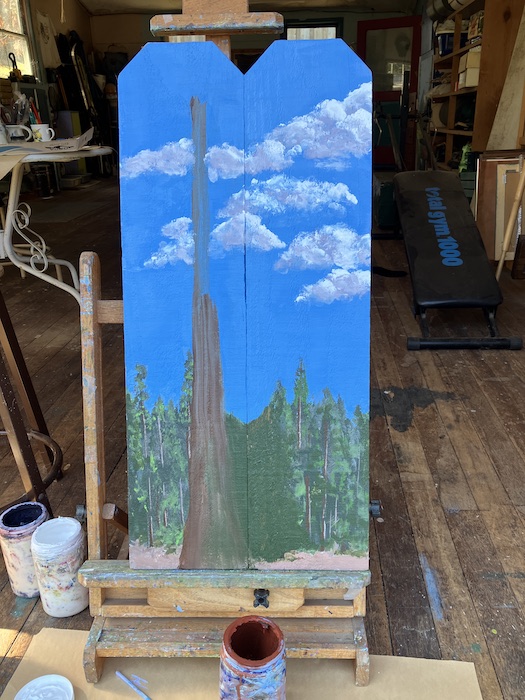
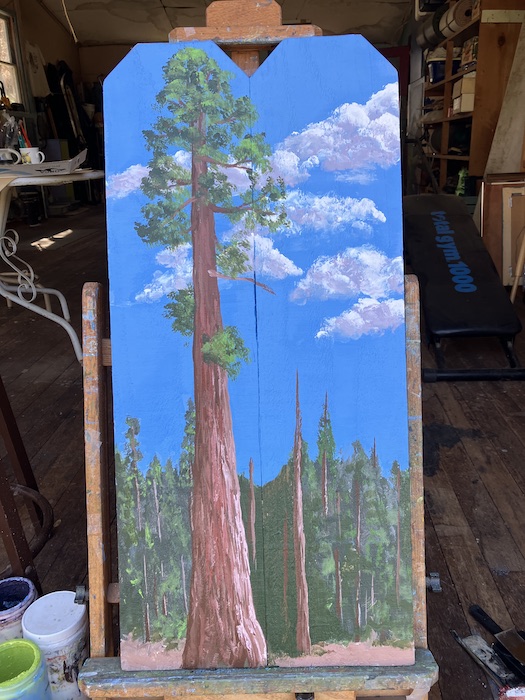
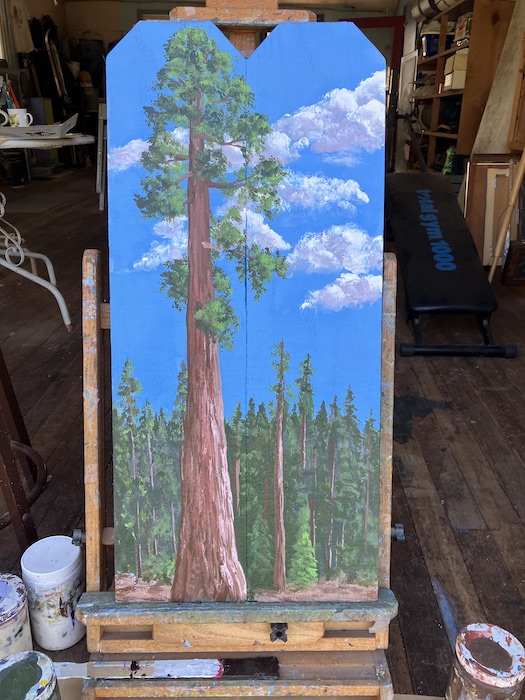
Somewhere in Oregon

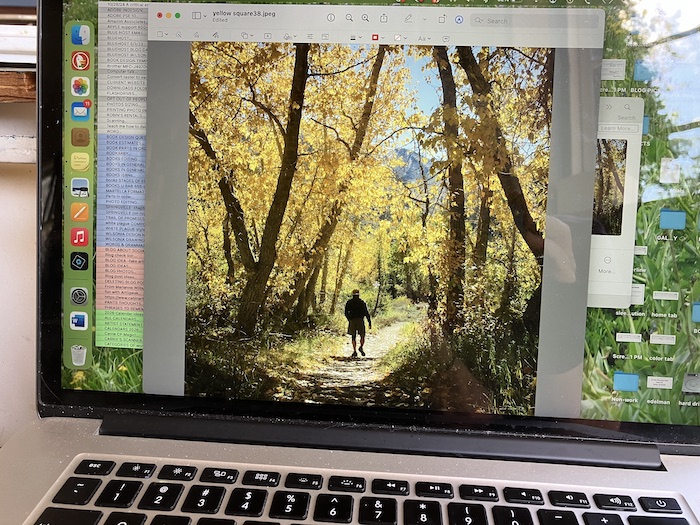
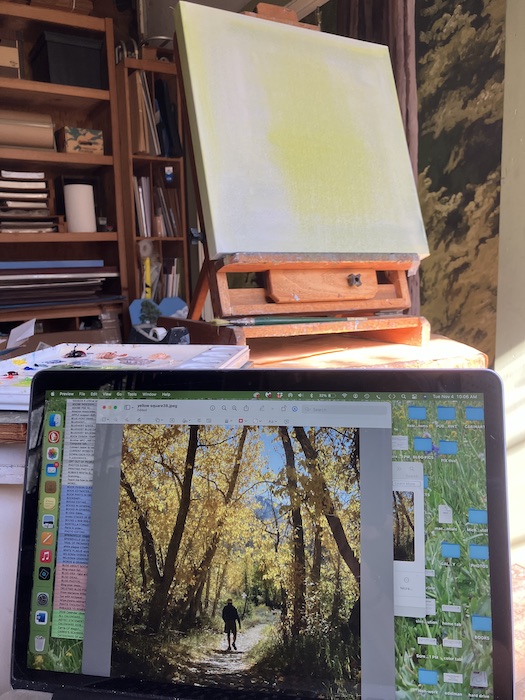
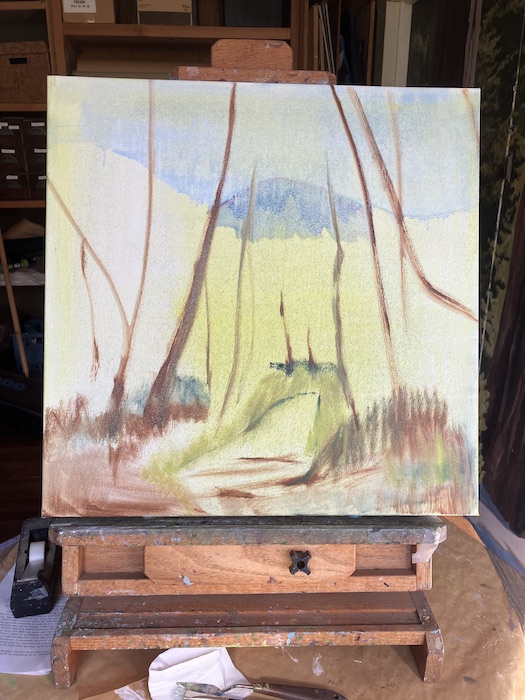
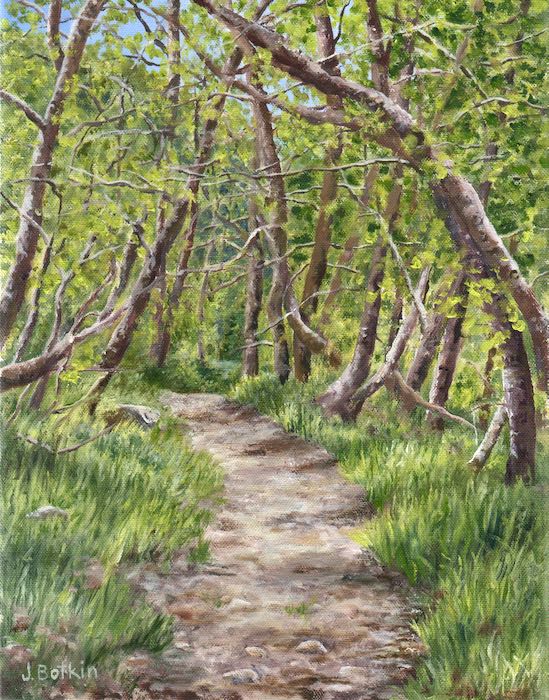
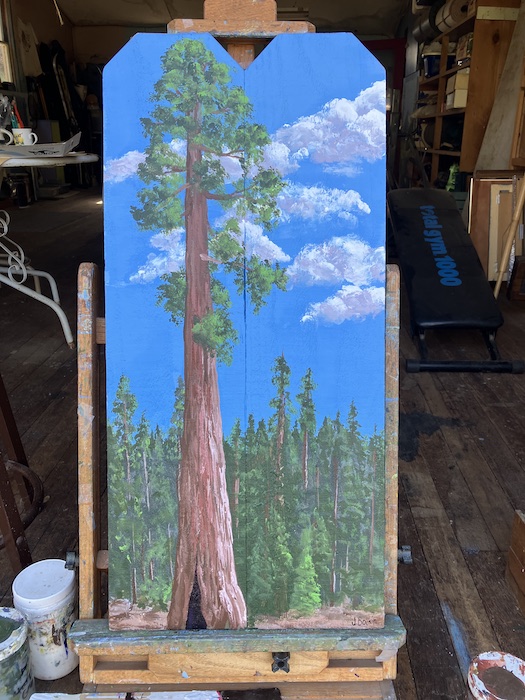
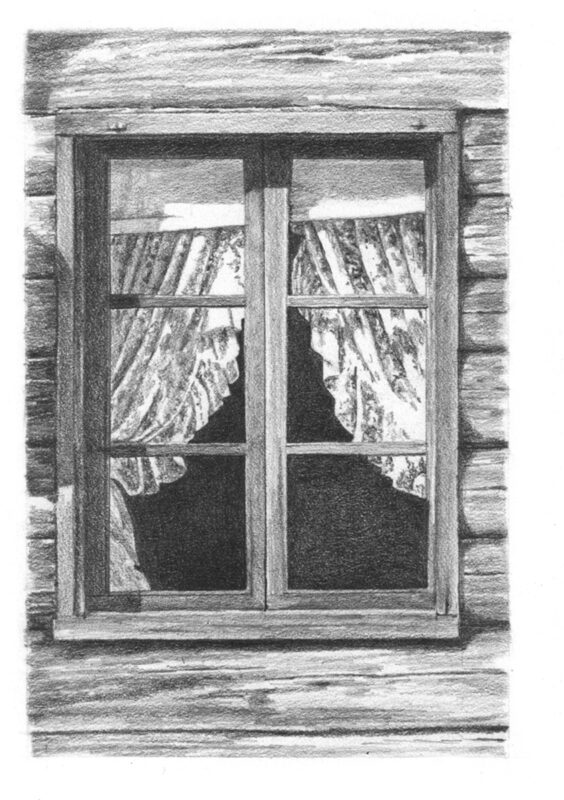
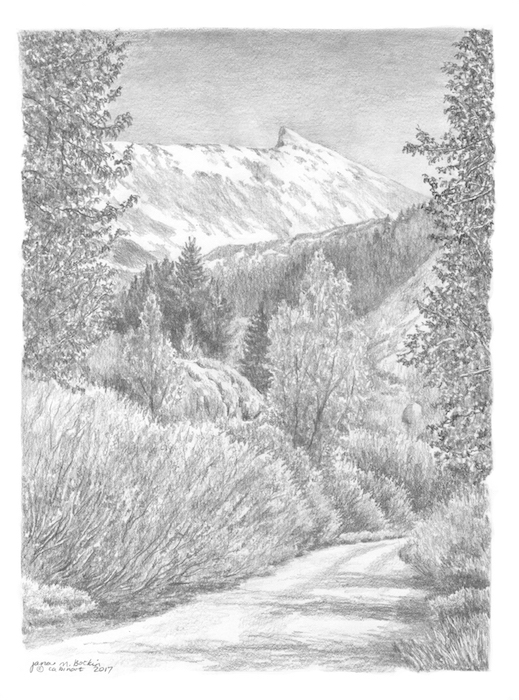
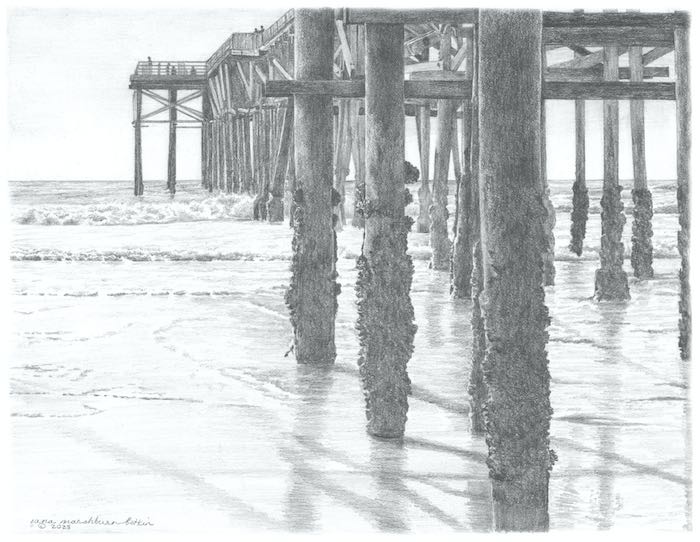
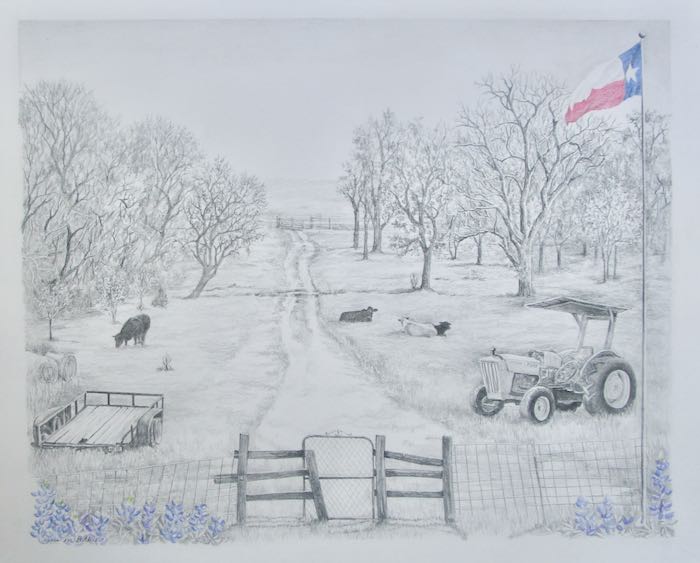
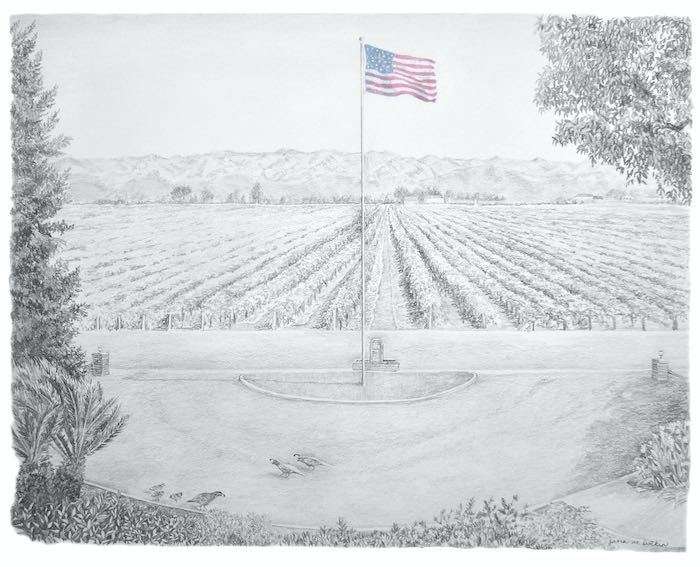
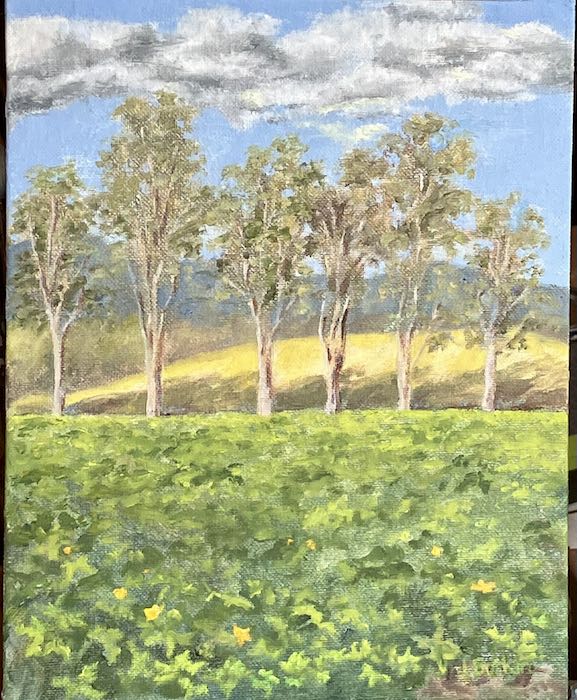
These paintings of rural Oregon scenes were high on my list of Want To Paint, but rather than go to a retail establishment that caters to visitors to Sequoia National Park, they will get framed and then be part of my upcoming show, Around Here, and Sometime a Little Farther, in August at the Tulare Historical Museum and Gallery.

I wonder if I should title it “Somewhere in Oregon”.

Then this one could be called “Somewhere Else in Oregon”.

Because I Wanted To

When I began oil painting with only the primary colors (“double primary palette” means 2 each of the 3 primary colors + white), I wondered why I thought that 2 different sets of 120 colored pencils were necessary. Colored pencil is not a main part of my art-making life: De Quervain’s tenosynovitis, Carpal Tunnel Syndrome, and extremely slow production combined with low sales sent me to oil paints.

If one can paint using only the double primary palette, doesn’t it stand to reason that one could use a box of just 12 colored pencils?

In the last handful of years, my favorite brand of graphite drawing pencils is Tombow. This is a Japanese word which means “dragonfly”, for some unknown reason. (A country that names its companies things like “Google” or “Yahoo” isn’t allowed to poke fun at something as straightforward as “Dragonfly”.)

When ordering some art supplies recently, I saw that Tombow has colored pencils. I bought their box of 12. They aren’t available any longer, although I only bought them a week or two ago. Life is full of mysteries.

This stellar jay caught my attention (they are fairly demanding birds) in Mineral King a few weeks ago, and I chose it for my trial use of Tombow colored pencils.

This is small—5×7” piece of paper with about 1/2” margin—so it didn’t ignite any wrist troubles. You can see that I made up the background, and the colors aren’t exacatacally* right on the bird. Trying to do exact matches is good learning practice, but I am a little past that in my career now, and besides, no one cares. I loved the challenge of trying to force the right colors from a box of only 12.

If you are really into colored pencils and want to know a bit more, these are very soft, possibly even softer than Prismacolor. I prefer the Blackwing brand of colors, but they include a white and a silver pencil, which I find to be almost useless; this causes their overpriced box of twelve to only contain 10 useful pencils.

*My blog, my spelling, my pronunciations.

Custom Art Job—A Map

The owners of a ranch used a hand drawn map to show visitors (for various reasons) how to find the right pastures, and they decided that a pretty map would better serve their purposes. They brought the hand drawn map along with a county map showing property lines and buildings.

Think, think, think. How do I do this? I started by tracing the country map and transferring it to a large sheet of drawing paper. Then we went over it together to determine property lines, fence lines, troughs, internal roads, gates, and to list what else would be helpful to add.

When all those things were figured out, the lanes were named, the pastures were numbered, and all the gates and water troughs were located, I walked the property a second time for a sense of what belonged in the margins to prettify the map.

When all the drawings were in place, I scanned it in 2 parts, because OF COURSE it was too big for my flatbed scanner. Then hours and hours using Photoshop began. (I seriously underbid this job. . . so what’s new?) When it seemed finished, I emailed the owners to see how it would print for them, since they often need to hand one to a visitor. (Duh. That’s why they had me do this job.)

The owners thought it was great, but needed to make a few corrections and changes

We decided that the heron looked weird, the word “faucet” on the legend needed to be replaced with “trough”, a fence line was missing, the map and words needed to be darker without changing the drawings, and, get this, I drew the wrong horse at the bottom left corner.

What?? Seen one, seen ‘em all (and I think most yellow flowers and most babies look alike too.)

So with coaching from these horse experts, I turned Mr. White Nose into Hopper, a black horse (yes, I can tell the difference in horse colors, just not features).

There were many layers of tissue paper, sketches to figure out what might fit where, copies to correct, piles and piles of papers when the job was finished.

Here is the final map of the Bar-O Ranch. Really challenging job, very satisfying results, lots of new experience in problem solving and design that I probably won’t get another chance to use. However, if you know of anyone who wants a pretty map, I’m the one to call.

Two Starts, One Finish, One Start-to-Finish

Translation of the title: I started two new paintings, finished one painting, and completed one in a single painting session (called alla prima in ArtSpeak, which means you layer wet upon wet).

With a sequoia painting in the queue but not wanting to waste paint in non-sequoia colors on the palette, I chose to begin another little beach painting. Why not? I have the boards, and the colors were just waiting to be used. (Fret not—this will look good eventually. I made it really small here so you wouldn’t get scared. I’m thoughtful that way.)

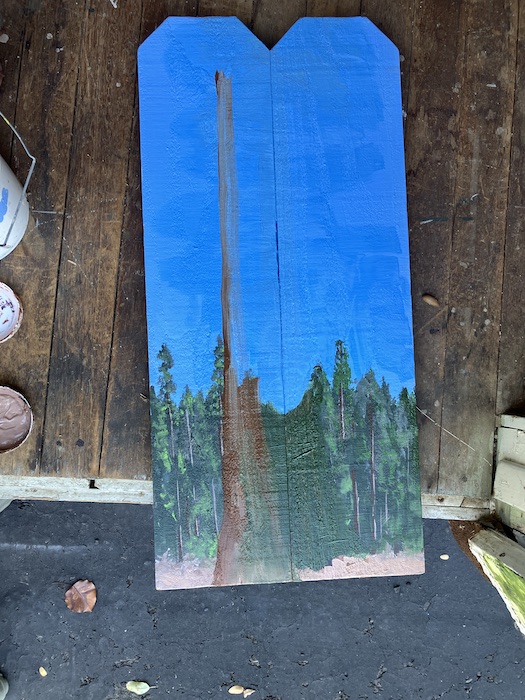
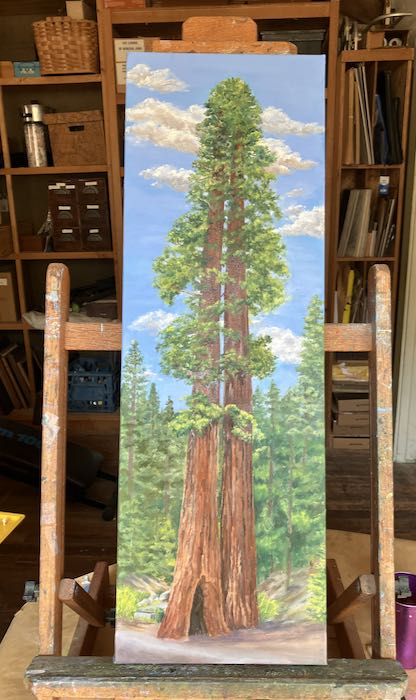
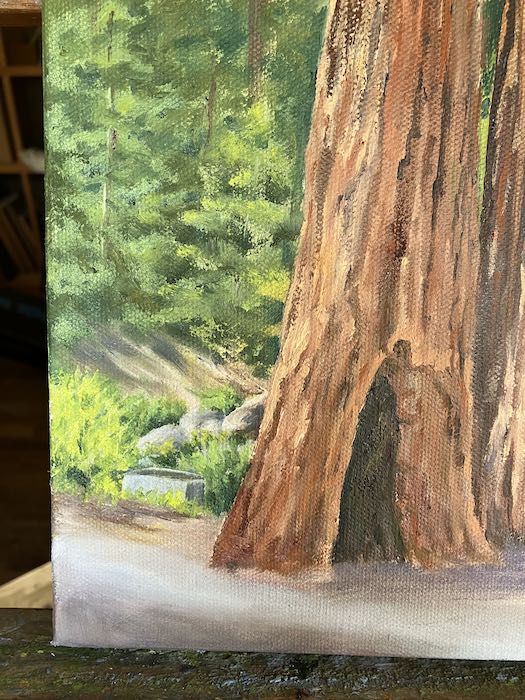
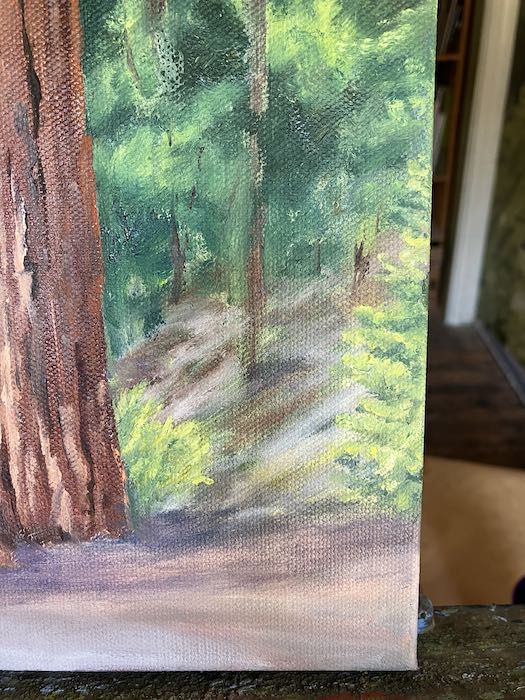
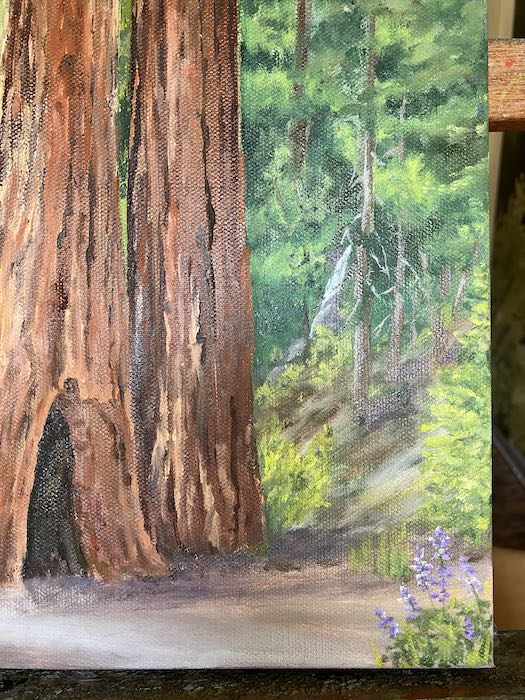
A sequoia gigantea painting sold and needed to be replaced quickly at Kaweah Arts, because this is Sequoia Selling Season here in Three Rivers.

Another painting hasn’t garnered proper appreciation, so rather than just wait indefinitely for the right customer, I will turn it into something else. What else might that be? The Honeymoon Cabin in Mineral King, the little museum of the Mineral King Preservation Society.

Finally, here is our alla prima painting, another speedy piece of work because one sold and needs to be replaced quickly at the Silver City Store.

The paintings were all painted during a not-too-hot day when the swamp cooler was adequate, while knowing very hot weather was coming, perfect for quick drying. Paintings need to be dry before getting scanned (duh), and they need to be scanned (or photographed at the very least) before delivered to stores and galleries. This is particularly important when one paints the same scenes over and over and over. . .

A Little Painting Session

Recently, I had to leave Three Rivers at 10 a.m. This presented two choices: A. waste time until 10, or B. paint for an hour or two before leaving. Being the responsible mature adult that I am (oh hush, you!), I wisely chose B. Creating Tulare County-based paintings is what I do; wasting time is normally not what I do (or want to admit to doing here on the world wide web.)

After viewing this on my screen while it was still wet, I decided it needed some leaves.

It looks better in this photo because the previous photo was taken at the end of the day. Morning light makes better photography conditions in the painting workshop.

That’s better. When it is dry, I’ll scan it and maybe remember to show you.

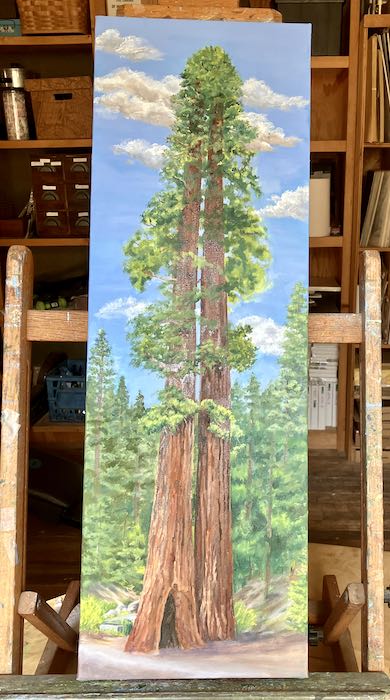
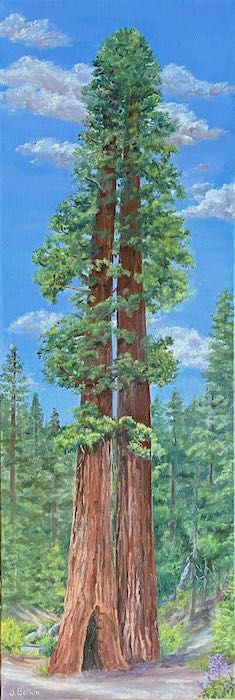
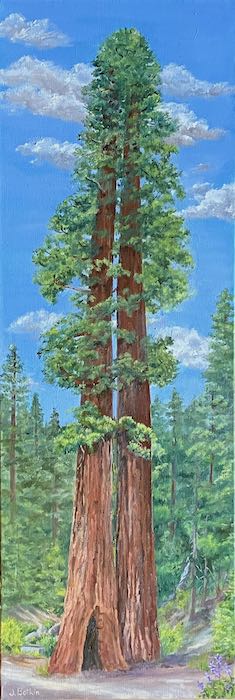
There was paint left on my palette and time left on the clock. It is prudent to always have a 6×18” sequoia painting ready for Kaweah Arts to sell to the thousands of visitors who pass through our town on their way to see Sequoia National Park’s sequoia trees AKA redwoods AKA the Big Trees. (These are sequoia gigantea, not to be confused with sequoia sempervirens, which are coastal redwoods.)

Yeppers, I worked from a black and white photo and began the painting upside down. I can fake these trees, so I can certainly guess how this snowy scene might look in summertime.

I started this one differently than usual. I “drew” it on the canvas rather than completely covering the canvas with thin sloppy paint.

It’s a little sloppy, but this was as far as it got when my internal chronometer said to make like a tree and leaf. Or was that to make like a cowpie and hit the trail. . . such colorful images and language from that internal chronometer.

Growing an Oak Tree (in Oil Paint)

Let’s review. I really liked this painting, but no one was willing to give me green pieces of paper with dead presidents’ faces on it in exchange. So, after going through some photos and thinking about my current inventory, I decided to grow a big oak tree on the canvas.

Jackson required some attention. He had a lot to say, but he wasn’t commenting on the painting.

Am I finished? Or shall I add some leaves?

More will be revealed in the fullness of time.

Drastic Do-over in the Painting Workshop

A friend of mine sells agriculture real estate. When I used to waste time on LinkedIn*, occasionally I’d see a photo of his and ask to paint from it. That’s where I got this painting, Springville Ranch.

Apparently, no one else shared my interest in this subject or my happiness with the colors.

Bye-bye, Springville Ranch.

This got worked on flat on a table because the easels were all occupied with other wet paintings. Large ones.

This painting session was to cover the old paint and get the shapes mostly drawn in. When this layer dries, I’ll mix more accurate colors and DRAW WITH MY PAINTBRUSH (because that’s how I like to paint, you ArtSnobs, so there.)

The painting will go to Kaweah Arts, where Nancy steadily sells my paintings that pertain to Three Rivers and Sequoia.

*A few years ago, I quit LinkedIn, Instagram, and Pinterest. I read a few blogs and am getting to know people from all over the country that way, and have even had a few sales from it, which is more than I can say for those social media sites. Much more enjoyable, and less time wasted. I tried and quit Facebook in a three-week time span in 2012.

Finishing Tasks in the Painting Workshop

The reason I refer to “the painting workshop” instead of “the studio” is because I paint in a different building than where I draw. The drawing studio came first, and when I began oil painting on March 8, 2006, it was imperative to keep that mess away from my pencil drawings. It still is imperative; the operative word here is “mess”.

After spending several weeks working on large-ish (large for me means it won’t fit on my flatbed scanner) paintings, there were many little tasks to complete. Each painting needed a title and inventory # on the back, hardware for hanging, a signature, the edges to be painted, and a good photograph.

For these larger paintings, I put them outside on an easel in the sunshine, and then do my level best to take photos with my PHD* camera, which has a screen that doesn’t show up in bright sunshine. Operative word here is “level” —try to hold a tiny camera perfectly parallel with a painting when you can’t see the screen.

Someday I might buy a grownup camera again, but one of my guiding principles in life is “The more stuff I own, the more stuff breaks” (and needs maintenance, storage, cleaning, battery charging, and for Pete’s sake and for crying out loud, STOP GETTING LOST ALREADY!) My PHD is doing fine for now, so I’ll just push onward. Thanks to Photoshop Jr., I can make this work.

Trail Guy came into the workshop with a maintenance-man sort of aura, so I told him that it was time to reupholster my chair again. The duct tape from the last reupholstery session was no longer satisfactory, so he used gorilla tape this time. Classy, eh? The stool came from an abandoned artist studio where some jerk refinanced his place, then took the money and ran. Some friends of mine bought the property from the bank, and I had the good fortune to comb through and claim what I needed. Back then I stood to paint, but thought it would be a useful stool in the workshop. Now I sit more often (stupid peripheral neuropathy).

Tomorrow I’ll show you a few more finishing tasks.

*Press Here, Dummy

Sold in Spring

Learned in May? Who had time to learn anything when I was painting like a machine and paintings were selling at warp speed. Okay, that’s a bit of an exaggeration. It only felt like warp speed (nope, no idea what that actually means) compared to a s l o w s l o w s l o w winter.

That was really fun. People love to ask where artists get their inspiration. I get mine from real life, the beautiful things and moments. People don’t often ask where artists get their motivation. Mine comes from sales. It validates me, gives me the oompf to keep painting when people give me green pieces of paper with dead presidents faces on them. Those pieces of paper are hard to come by, so I feel very honored when someone thinks my work is worth it.

Finishing Two More Oil Paintings

This painting has been on hold for many months. Finally, I felt able to finish it. After working on Sawtooth #66 with the water, and Sawtooth #65 with all the made up things, this suddenly felt quite manageable.

Marble Fork Bridge, 16×20, needs to dry, be photographed and varnished, all for the solo show in Tulare in August.

Success breeds confidence. Let’s paint a sunset at the beach.

First, I mixed a bunch of sunset colors, trying to be close to the colors on the several photos while knowing that the sunset had changed continually while we sat and watched (and photographed) it.

The 16×20” canvas had a basic first layer but needed refinement on the rock shape on the left. That’s Morro Rock in Morro Bay, in case you are curious.

I actually finished this painting of a sunset at Morro Rock, but the mosquitoes were buzzing and I was hungry too. So I didn’t take a final photo for you. After it dries, I’ll try to remember to show you the finished product. Or, you might have to come to the solo show in Tulare in August (if I forget to show you, or even if I do, because remember, everything looks better in person except celebrities.)