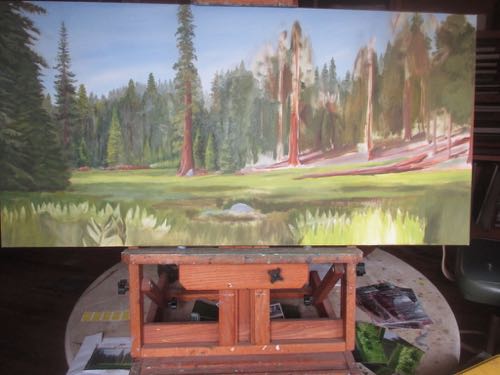
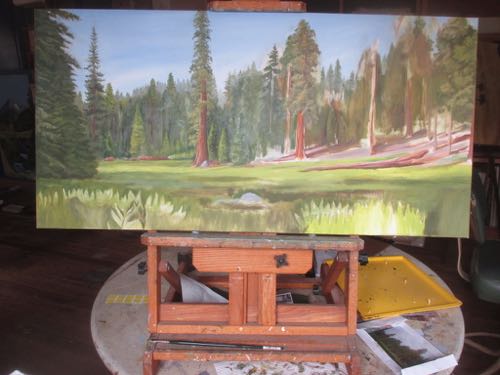
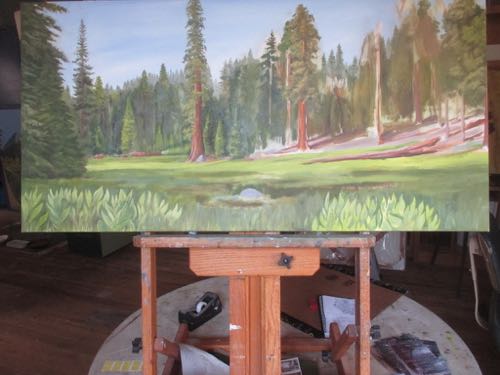
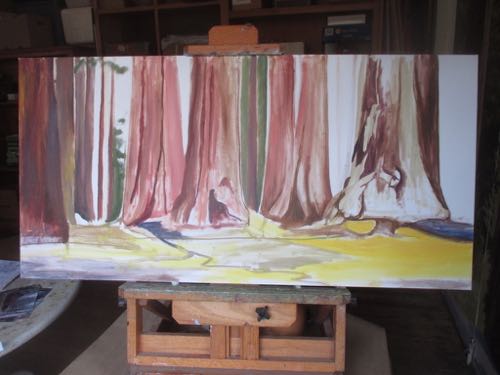
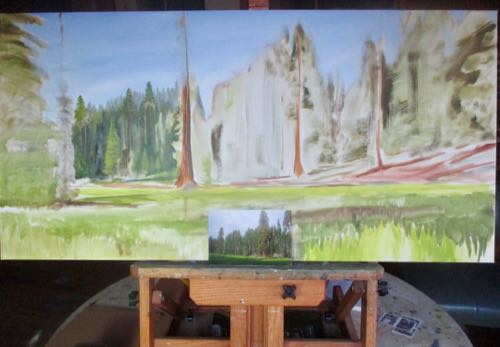
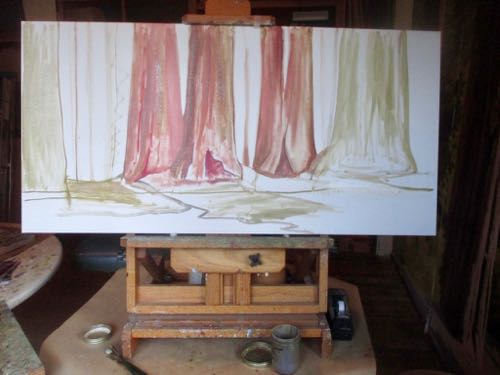
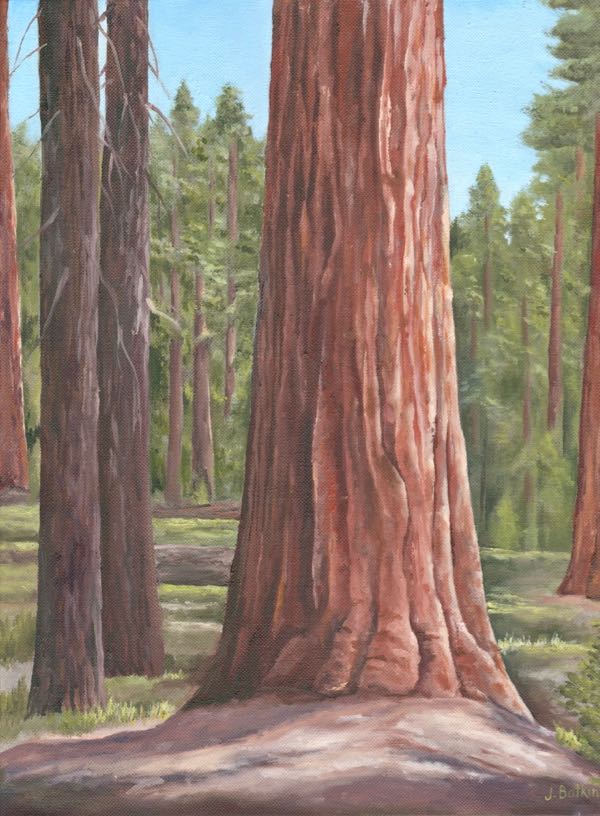
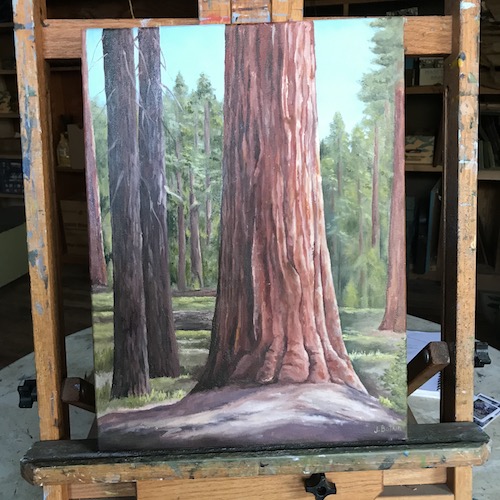
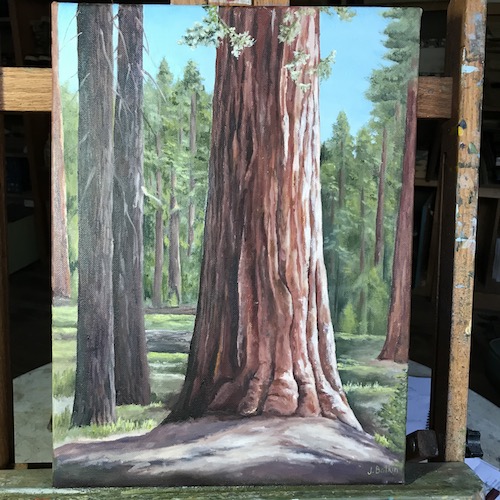
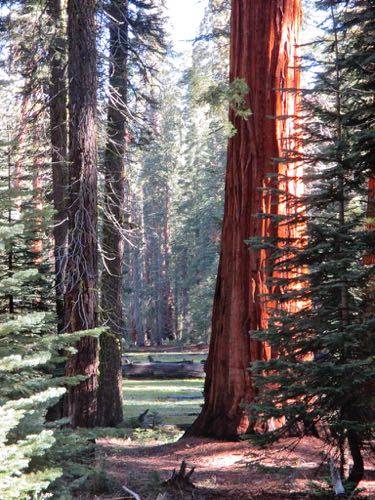
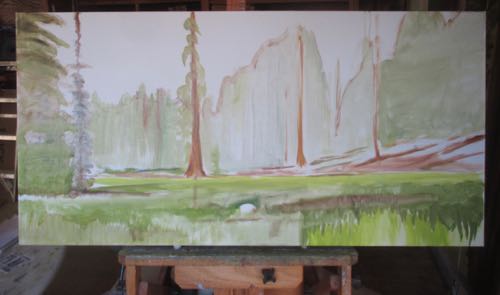
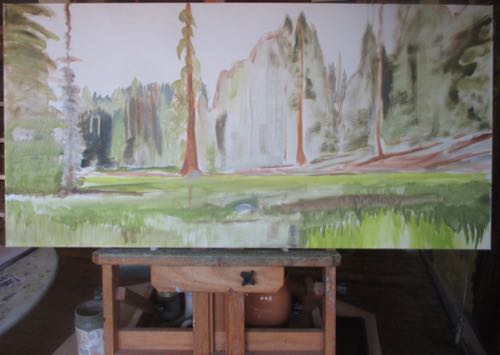
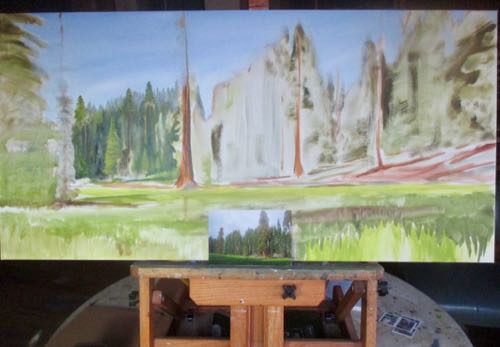
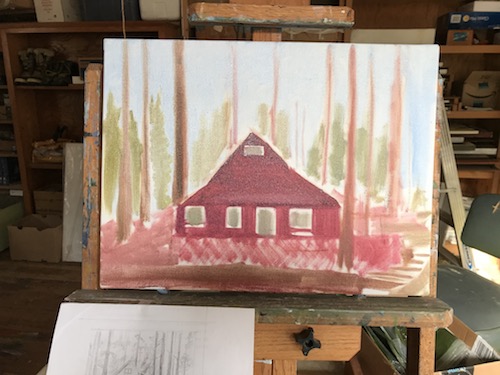
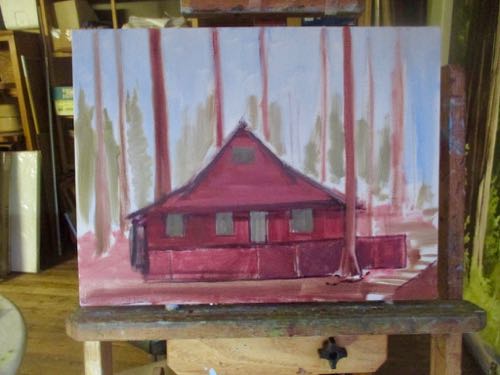
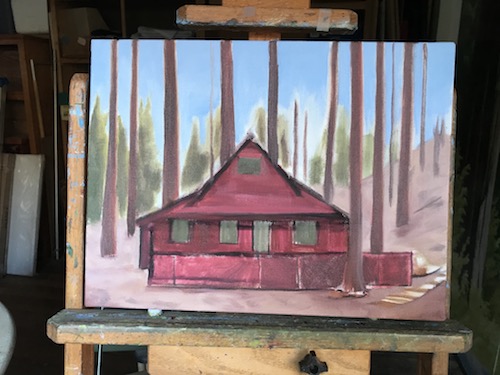
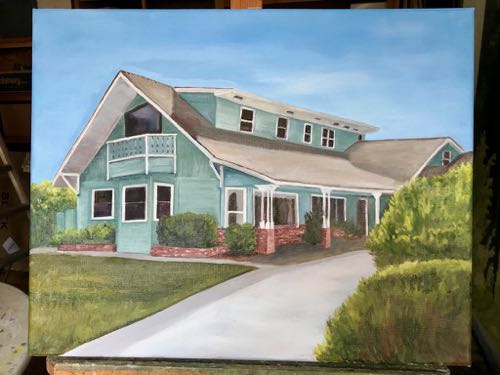
November is the busiest month in my business. This year is busier than ever, and there aren’t even any boutiques or festivals. It is so fun to have more projects than I can even show you. Here is the progress on the snowy sequoia oil painting commission. It is several days worth of painting.
The background will only need one more pass of detailing. There is still quite a bit of work left, which was puzzling to me. Why is this painting taking me so long? It feels as if I should be covering more territory in each painting session, but instead, I am inching along.
I’ll tell you why this is on Friday after a bit more time to process the ridiculousness of this situation.
At the beginning of the painting session, it felt daunting. When this happens, I think about the basics. Start in the background. Since the white paint was still quite wet, this was good advice to myself.
Beginning of the day’s painting sessionUpper left with detail startedUpper left, afterBetween two trees, beforeBetween two trees, afterJumping around, all over the sequoia grove. Maybe I’ll try the tree with moss on it.End of the day’s painting session
When it was time to move to the mural project, I didn’t want to stop oil painting. It is hard to shift gears. At least the subject matter of the mural is the same, with the added bonus of the light coming at the trees from the same direction.
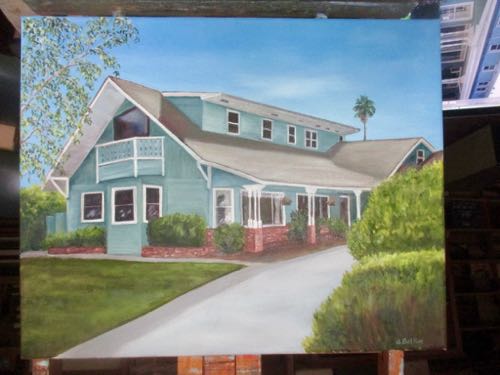
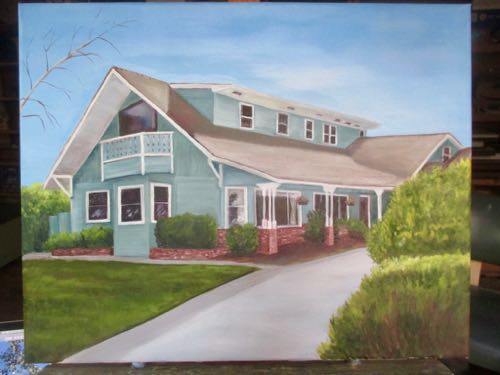
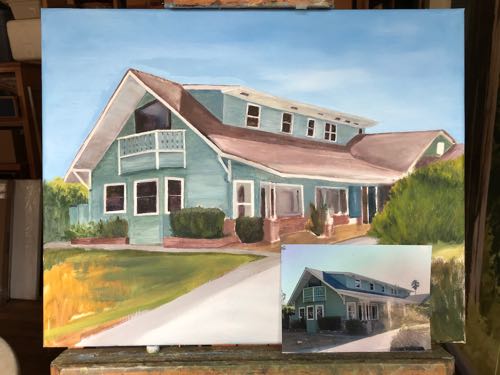
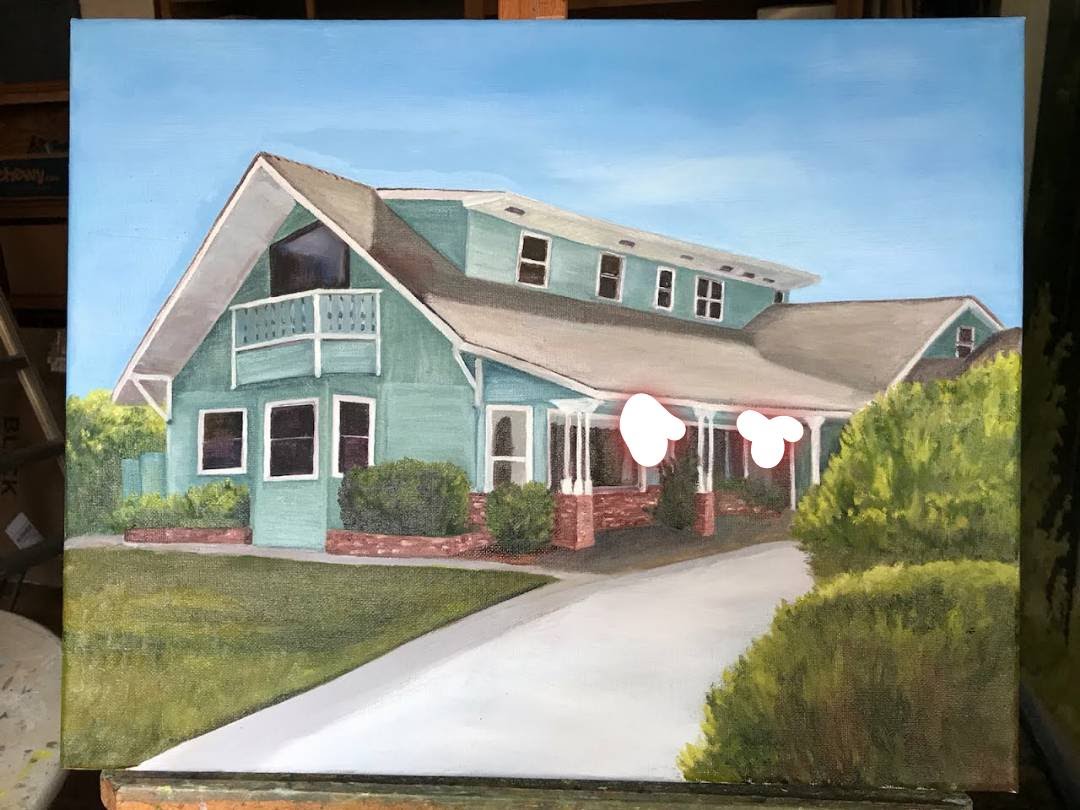
The house painting looked like this at the beginning of this painting session.
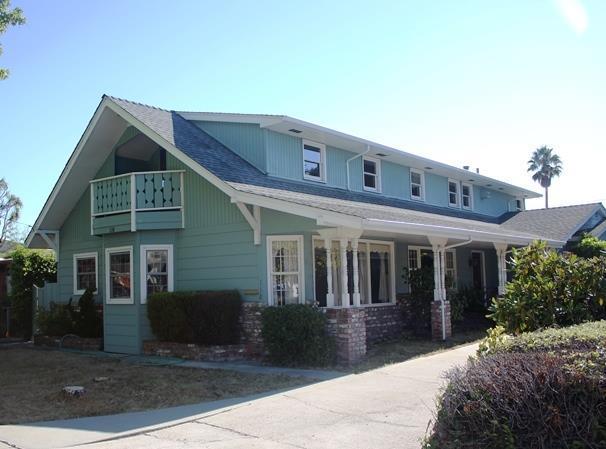
This amount of specific detail without a lot of choices in reference photos requires that I resort to the dreaded “drawing with my paintbrush”. Why this is so despised in the Art World remains a mystery to me. In my little world, I want to provide what the customer wants, and if it requires drawing with my paintbrush, then so be it.
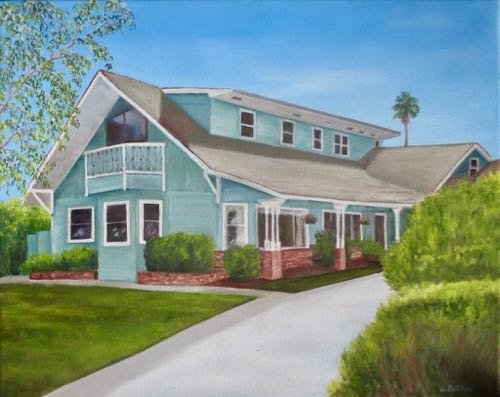
It’s getting there! I’ve got to figure out the details on the porch, do something with the landscaping, and then talk to my customer. She has some old home movies that she is converting to video, and then I will look through them to see if I can get to a better understanding of what she remembers.
First, the sky, then the roof, and next, the details that I can see.
Greenery helps.
I’ll keep working at the details that I can see, then move to the parts that I have to make up, and finally, I’ll ask my Customer/Friend to help me understand the parts that she remembers.
Then, I’ll tighten up the details and correct the color and who knows? Whatever it takes to make it look the best I can make it. I can do this! (Like the Little Engine That Could – “I think I can, I think I can. . .”)
Ran out of daylight to paint during the last session. Hence, the darker photo.
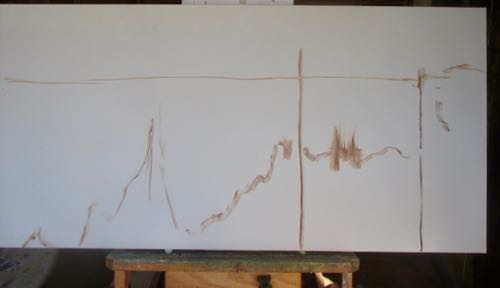
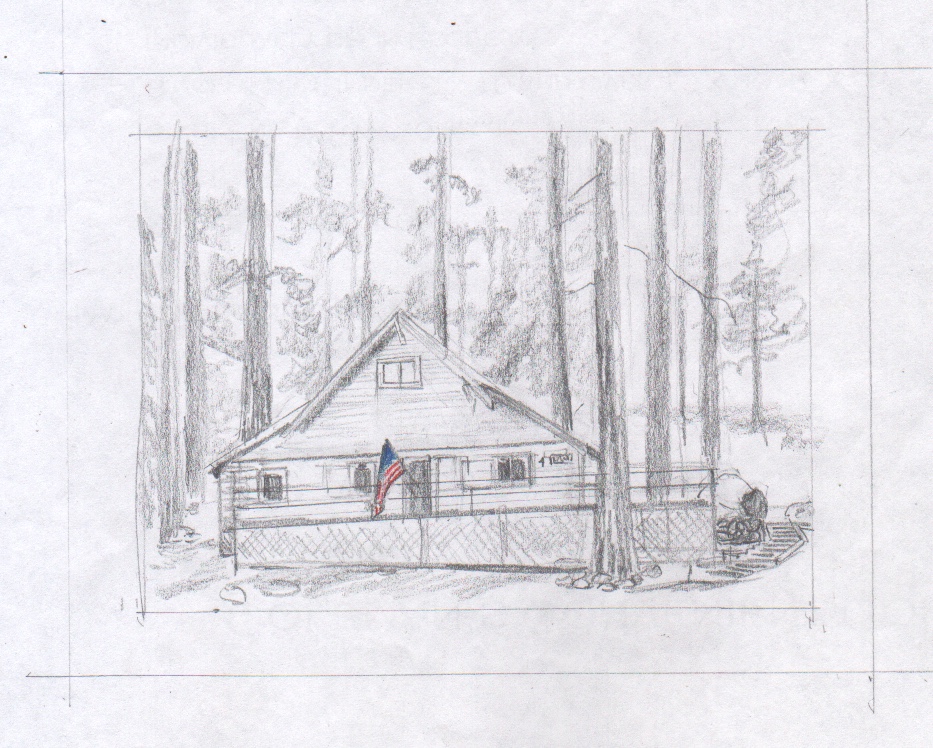
A friend from down south (that means Southern California or “Socal”) called to see if I could paint sequoias in snow for his company to use for their holiday card this year. (Companies aren’t allowed to send Christmas cards anymore.) We discussed sizes, timelines, and designs. After those preliminary decisions were made, I sent this sketch for approval.
The sketch vanished into the atmosphere, and another sketch of different proportions was requested. I sent this, but knew it wasn’t as good as the 18×36″ proportioned one, so I sent the first one again. (Did it vanish because I had the audacity to write the words “Merry Christmas”? Don’t be a conspiracist!!)Then the requested time frame to receive the finished painting shrunk. People who don’t paint don’t know how long it takes for oil to dry; people who do paint don’t really know either but realize it isn’t an overnight situation. People who live in cities don’t know how long it takes for giant blank canvases to get shipped; people who don’t live in cities don’t really know either, but understand that time must be built in for snafus.
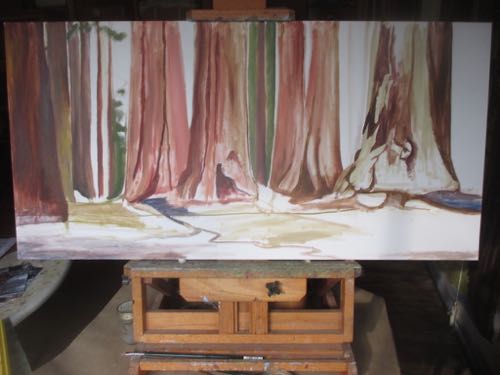
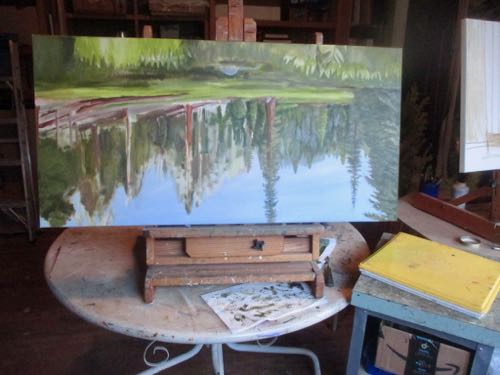
So, I looked at the 18×36″ painting of sequoias on the easel that was set aside because I have commissions, which always take precedence over the paintings I do to build up my inventory.Necessity is the mother of invention and being innovative is part of living rurally. I decided that this unfinished summer scene could be converted to winter, because there isn’t enough time to wait for a new canvas to arrive.
White is the slowest drying oil paint color, so this will need a few days before the detail begins.
Yippee skippee, I can do this!! (Why didn’t I think to add on a rush charge? Does anyone out there want to be my business manager? secretary? coach?)
Because I can’t start painting on the mural until afternoon, I can work on a new custom oil painting in the morning.
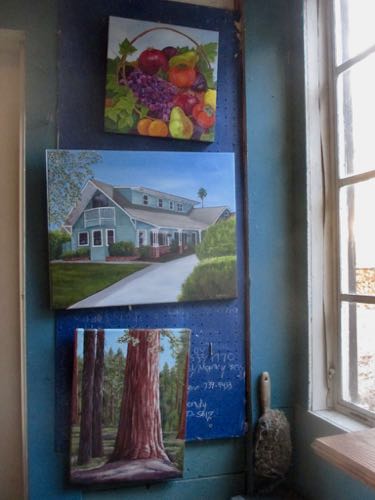
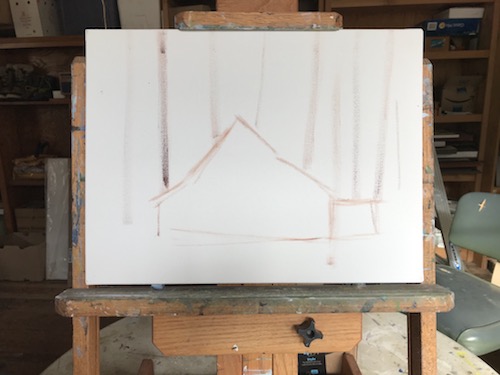
This is for a friend of mine. This house belonged to her grandparents, and she doesn’t have many photos other than the ones taken after the house changed owners. So, I am working from mediocre photos and verbal instructions from my friend/customer. Tain’t easy, but we can do this.
The way I decide whether to paint or to draw is: (1) Is someone waiting for this? (2) Is there enough light to paint? (3) Is it too hot or too cold in the painting studio?
Someone has commissioned me to draw 5 different cabins belonging to 5 different friends, all of whom lost their places to the wildfires all over the Central California mountains. This is an uncommonly generous man, and each one of these drawings will be a surprise, so I am not going to show you any of them. It is a little tricky for him to get photos from these friends and then to get answers to questions about the photos without giving away his surprise.
While I waited for the next batch of helpful answers and maybe some better photos, I returned to the easels. The smoke was abating some, and the weird dark orange-ish light was changing to a bit more normal color so I could paint (to the unsettling sound of helicopters overhead.)
Where to begin?
This one? (The greenery is lemon geranium, supposed to help keep the mosquitoes from chewing me to pieces while I paint.)
No, I need green. (The orange on the table got a green streak on it, so I touched it up first.)
Sky firstDistant hills nextNot sure what is next, so I just bounce around the canvasWhen in doubt, add detail. Lower left, lower right, mud banks, and main tree.
This bouncing and detailing too soon approach is not the usual artistic method – it is just the way I cope with indecision at the easel. The helicopters and continuing fire were unsettling, it was getting too hot to paint, and I lost focus.
There is no rush on any of these paintings, but I have 4 large ones in progress and a fifth one in mind. I figured that any progress was better than just quitting.
Will it ever rain again? No fires? No smoke? No helicopters? Will we see some green?
See? Unsettled. I shut myself in the studio with the roar of the A/C to drown out the helicopters, write this blog post, and maybe just hold my pencils for awhile.
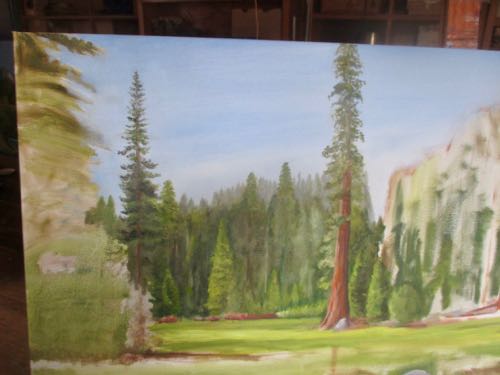
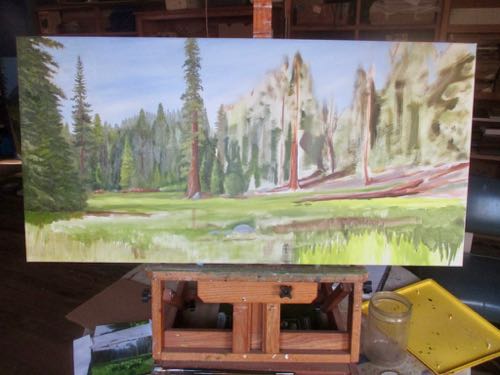
With orange light, smoky air, hot temperatures, dirty skies, and ash everywhere, I am CRAVING GREEN. This desire made the decision for me on the Yokohl Creek oil painting.
Fall used to be my favorite season. Now I dread fall, because it is fire season, and I want spring to last forever.
BLOVIATION WARNING: The next paragraph is something I learned about fires, based on an interview I heard with a former employee of the National Forest Service, followed with my usual stack of questions.
There weren’t giant forest fires when I was a kid. That is when forests were managed and before logging was outlawed. The National Forest Service used to keep the trees to about 30 per acre; now that logging has been shut down, there are about 400 trees per acre. The man described this as “too much vegetation for the landscape”. He also talked about the high percentage of fires that are human caused (84%), and that most of them (90%) occur along roadways, which are no longer being cleared adequately. He was only speaking of Forest Service land, but I’m guessing the info is consistent throughout our state. Until the 1980s, there were 151 sawmills in California; now there are 30, with only one in Tulare County.
Where are we getting our lumber? Why are we importing it if there is so much just going up in flames right here in our own area? Doesn’t anyone care that smoke is ruining our lungs and our air? Doesn’t smoke hurt the environment? Isn’t it causing some unwanted warming of our tiny piece of the globe?
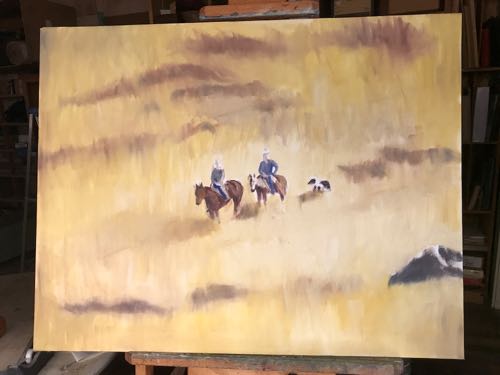
After many days of hunching over my giant magnifying light in the studio, the urge to paint became stronger than the desire to avoid smoky air, hot temperatures, and handicapping orange light. My paintings receive many layers, so if the colors and values are wrong at this stage, it is only temporary.
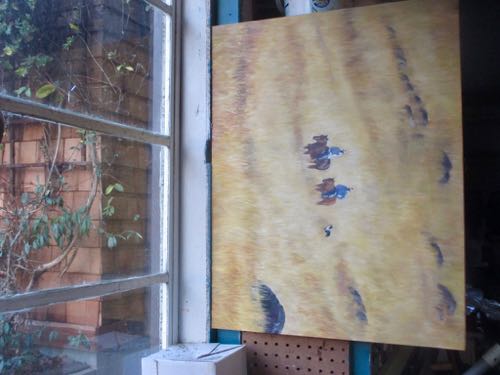
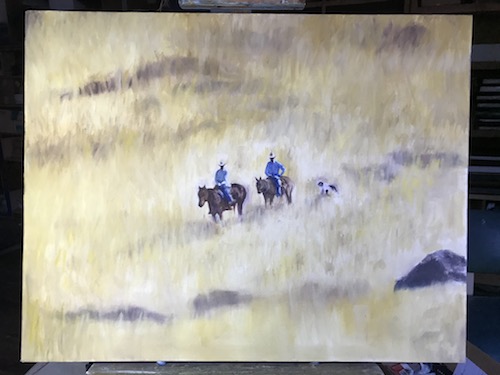
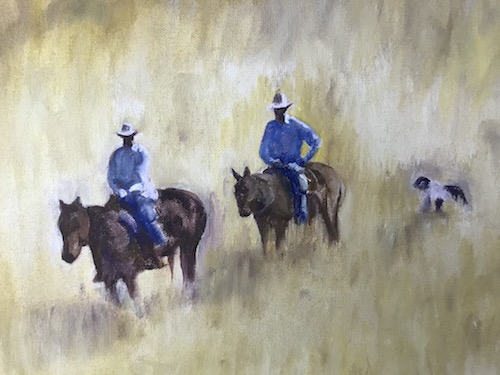
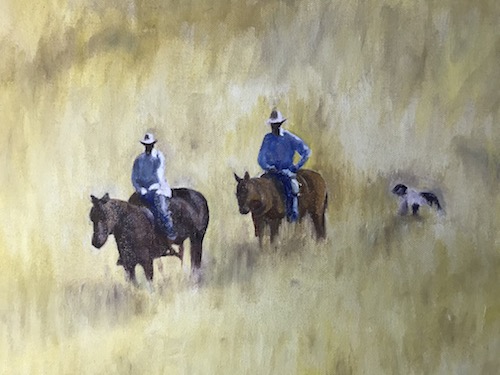
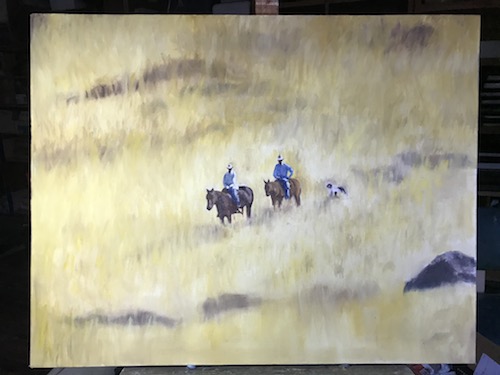
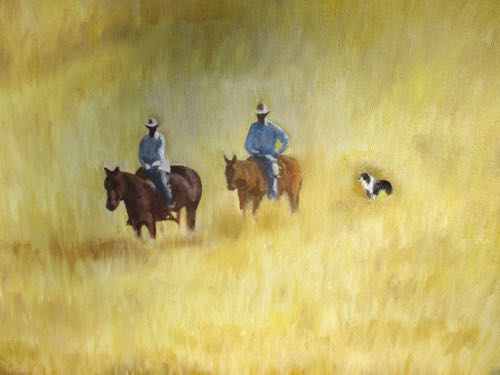
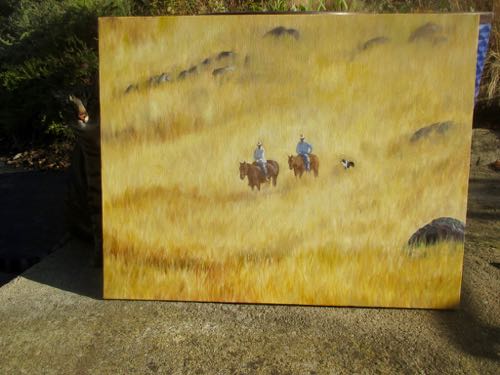
The photos are blurry. I am taking each cowboy and the dog all from different photos and sincerely hope to gather enough visual information to not mess any of them up. Entirely new territory for this Central California artist, but not outside of my declared geographical area of Tulare County. (Thank you to my friend Susan for supplying the photos!)