Do you like walnuts? When I was a kid, I thought gleaning was punishment, in spite of being paid a king’s ransom of 25¢ a bucket. There were always stinging nettles on the ground, and it was boring. Then, I would say to my poor mama, “WHY do you have to put walnuts in EVERYTHING??”
I grew up.
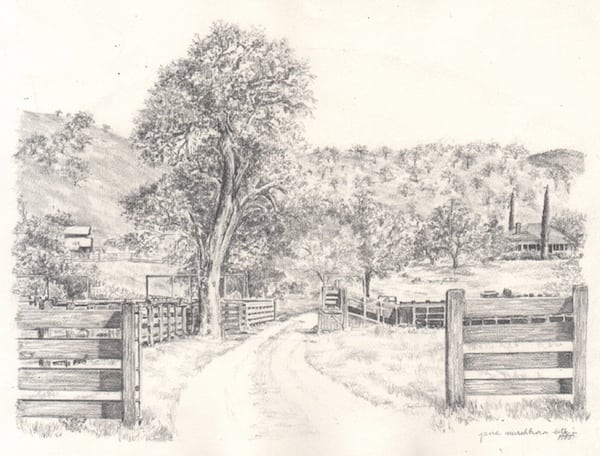
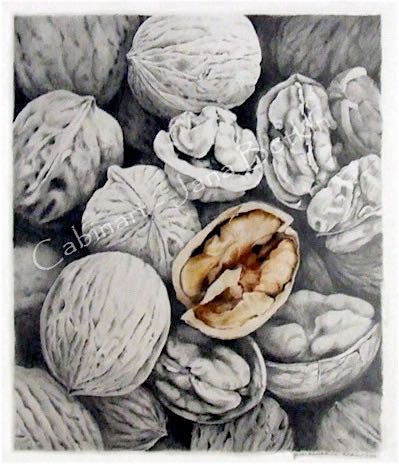
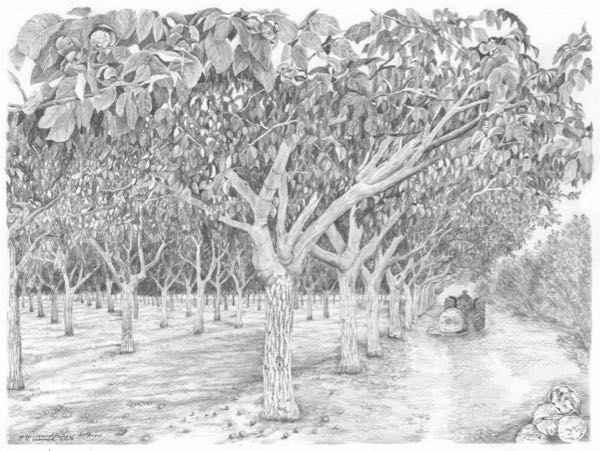
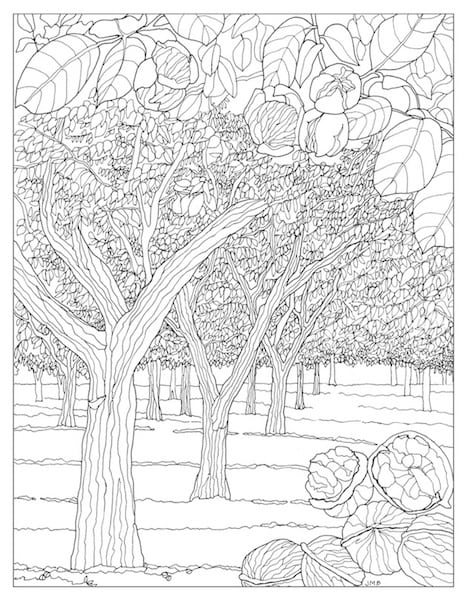
Look at the walnuts in my art. These are only the ones that I saved photos of; I did two other pencil commissions with walnuts before I had a digital camera, a computer and a blog.
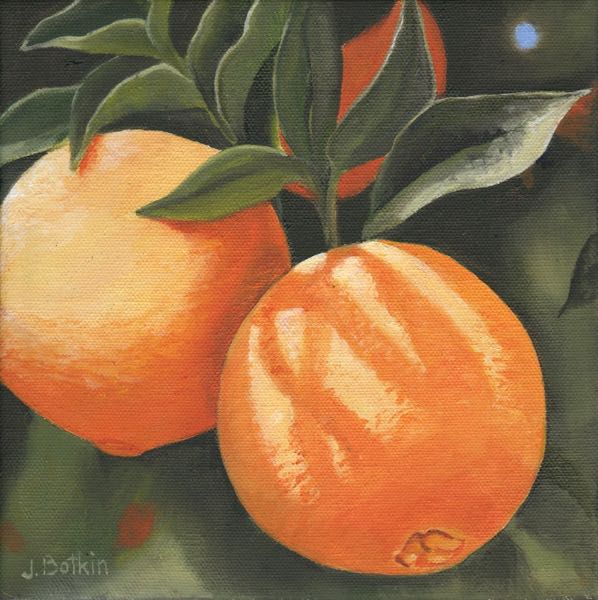
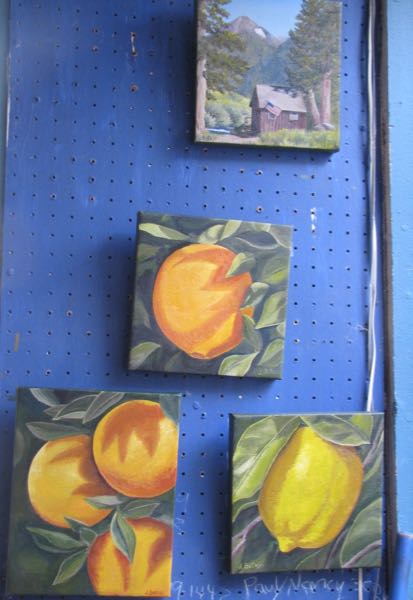
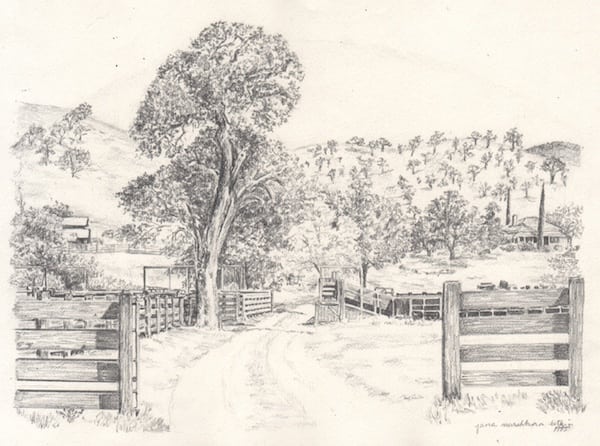
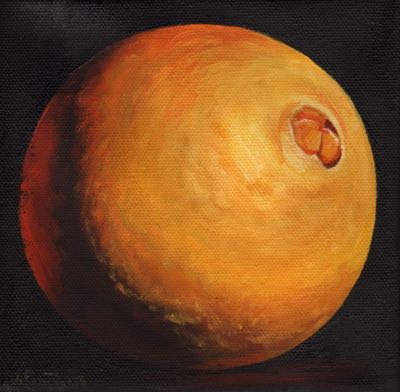
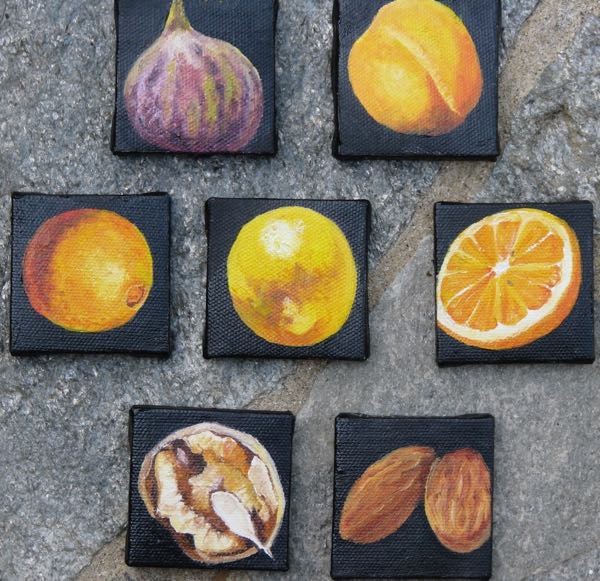
This won a prize in the Madera ag art show AND, this is bigger to me, it sold. The title: “With, Please”.A friend commissioned me to paint seven 2×2″ oils of important crops in California. Left to right, top to bottom (in case you can’t figure these out): fig, apricot, navel orange, lemon, valencia orange, walnut, almonds. (Hi, Craig!)This pencil drawing was commissioned earlier this year as a gift for the retiring farm manager. (Hi John! Were you surprised?)This page is inside my coloring book, “Heart of Agriculture”.
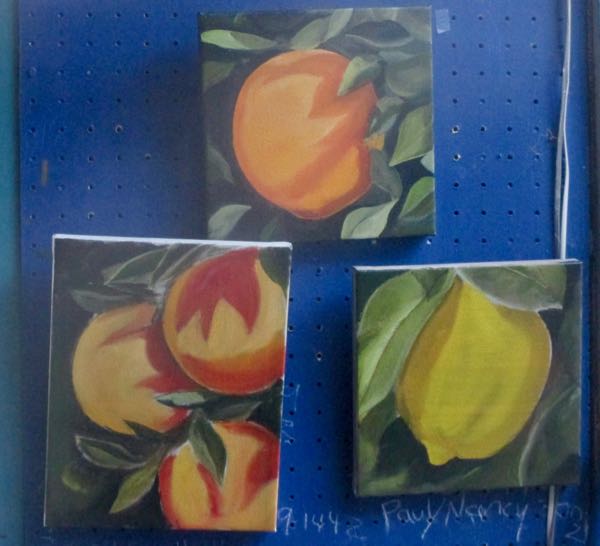
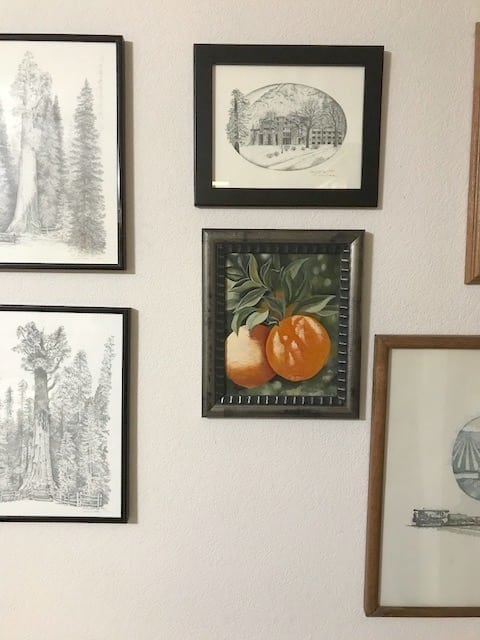
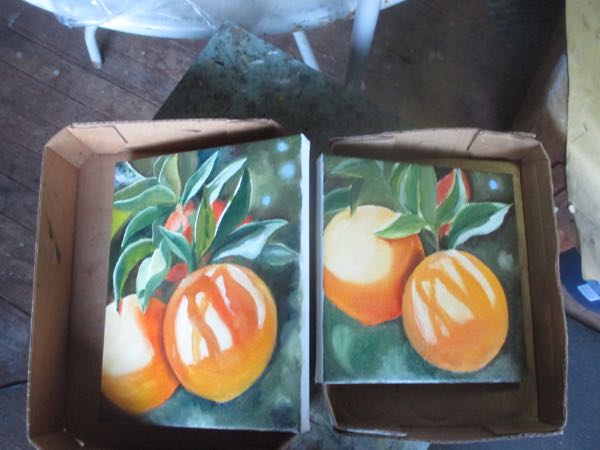
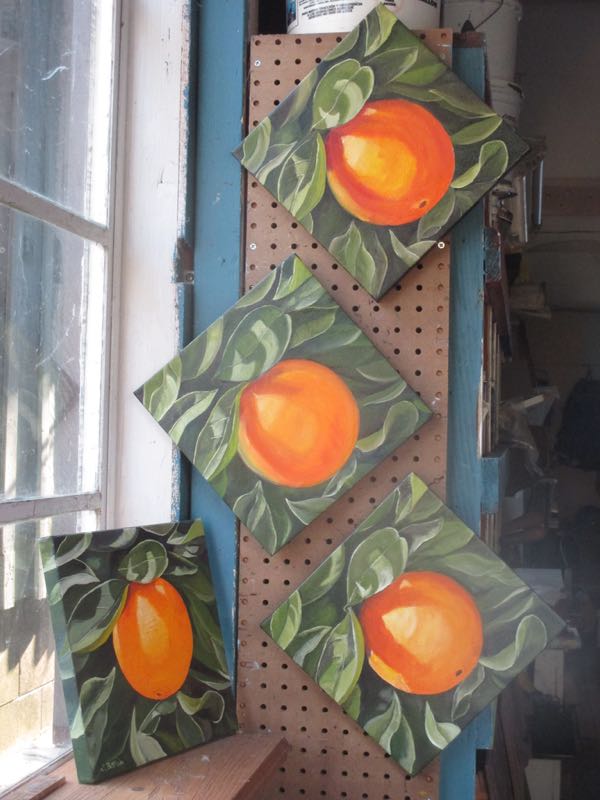
Whoa. That was a sprint. Three new orange oil paintings in a week’s time, begun and completed.
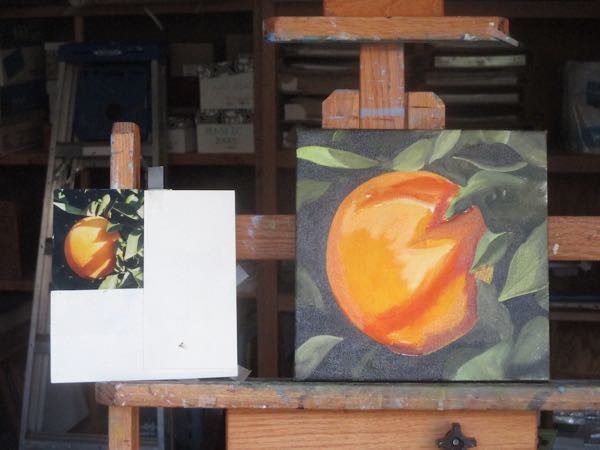
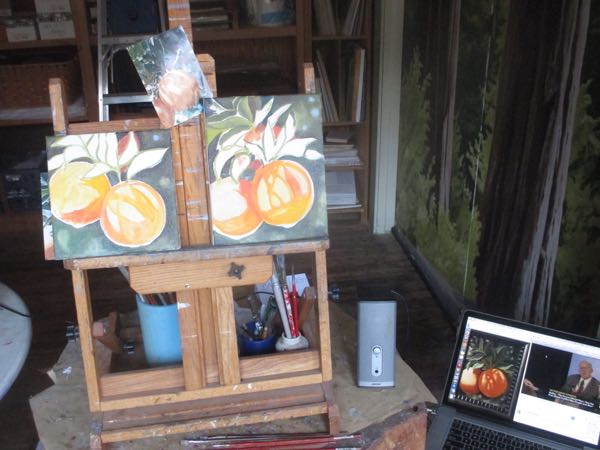
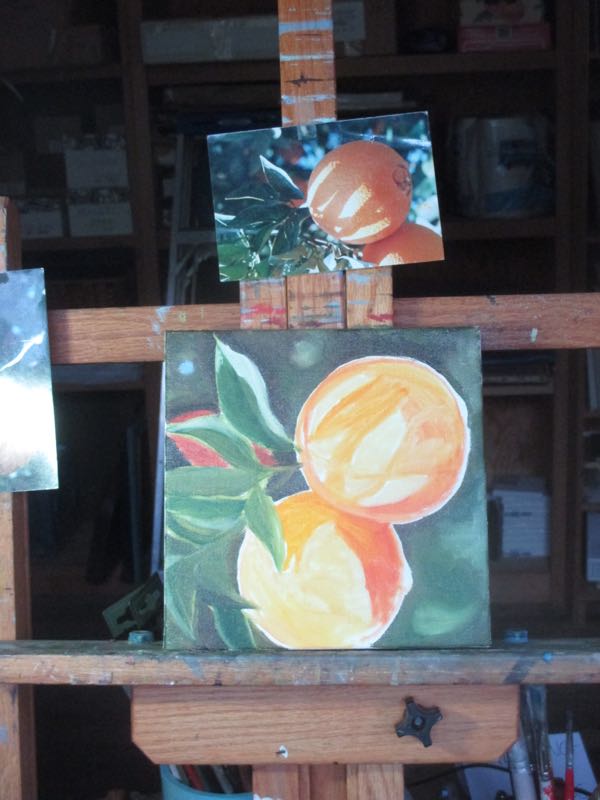
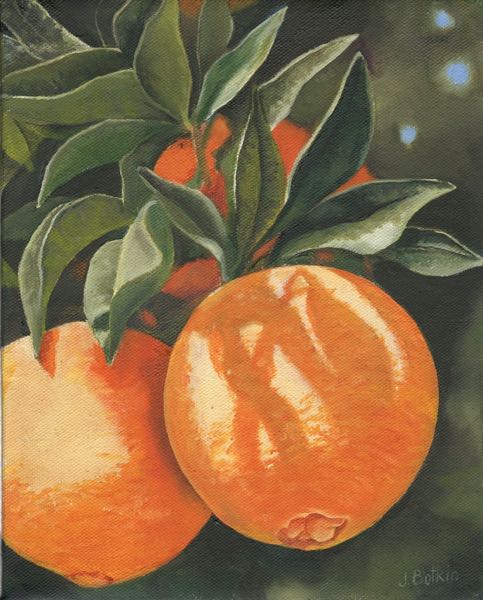
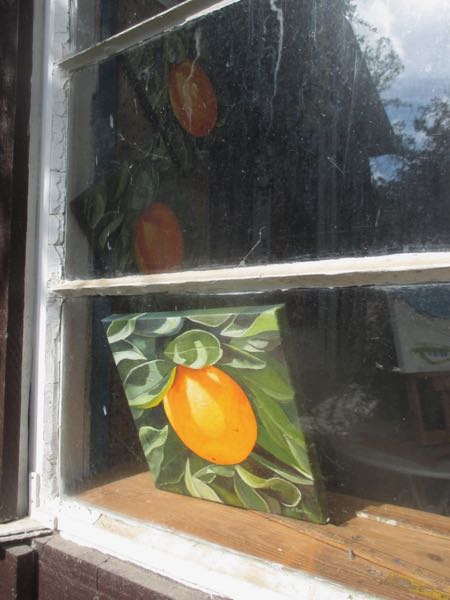
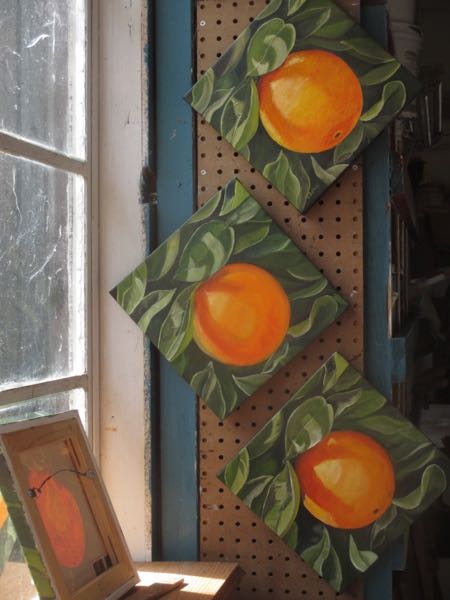
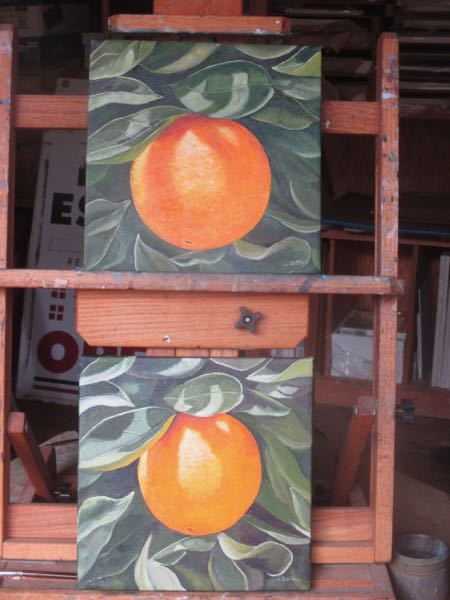
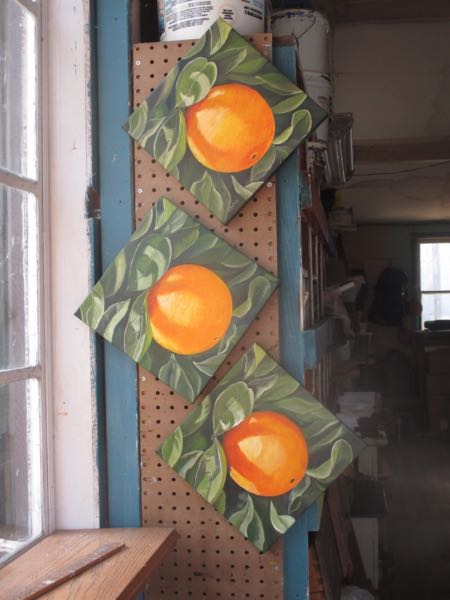
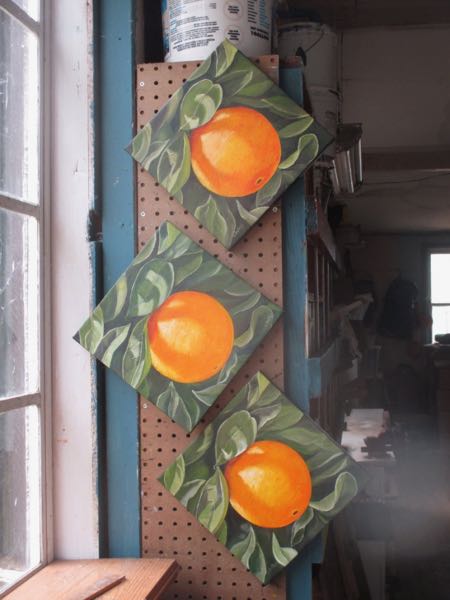
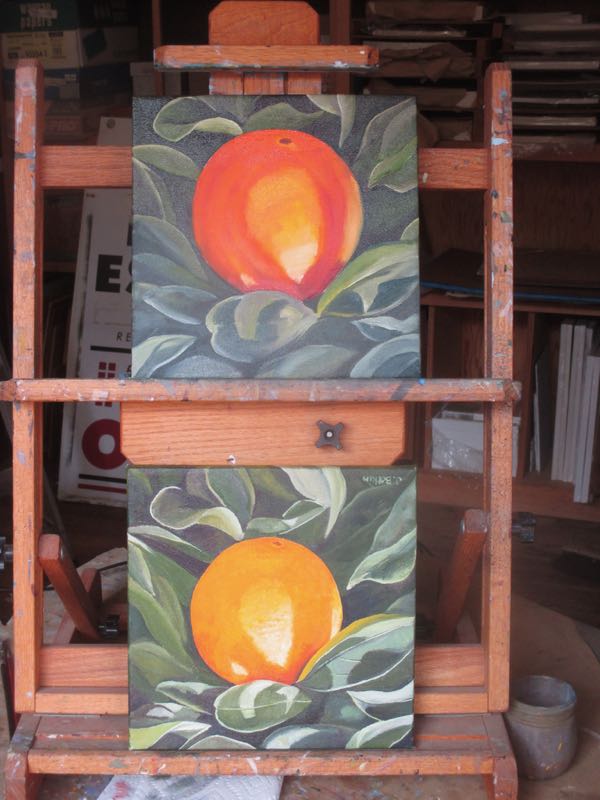
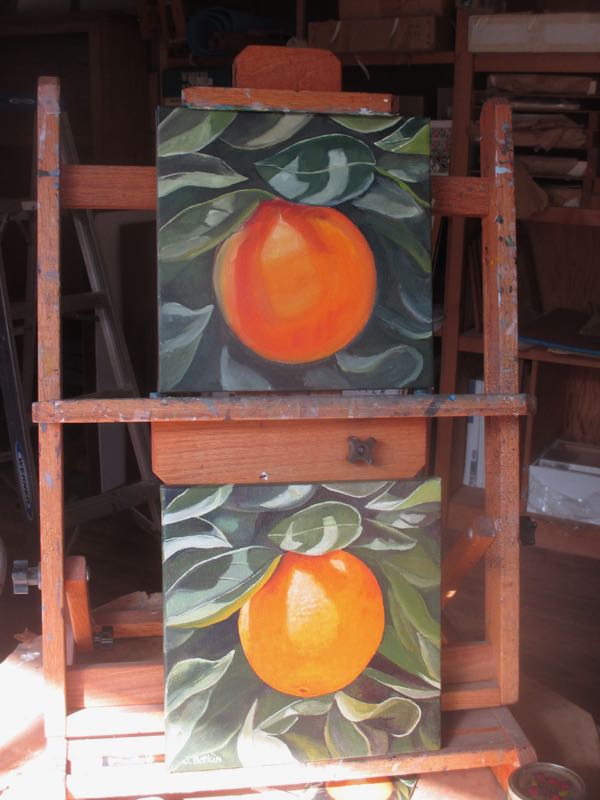
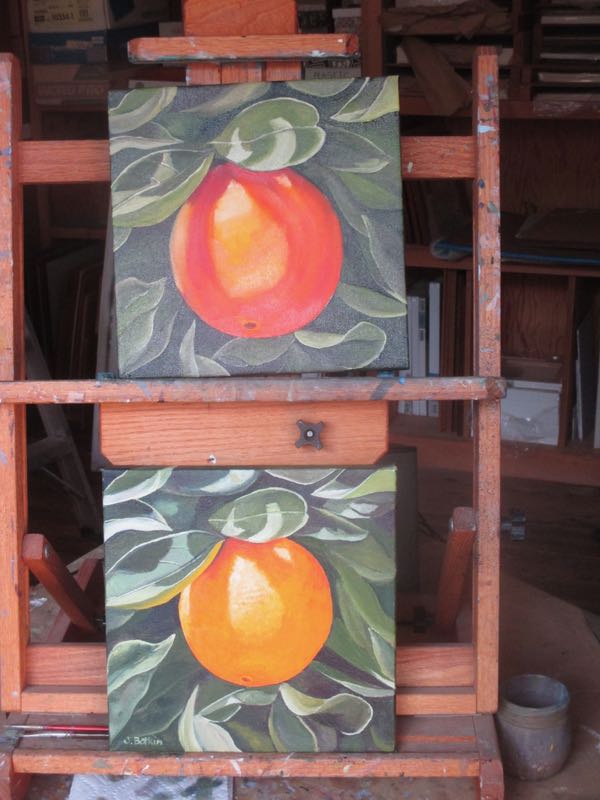
This is the original orange painting; it is drying in the window because I had to re-sign it so that the frame wouldn’t cover my name.Top orange completed. The color and clarity are definitely better after the 2nd coat. Good thing.It was very helpful to have the original painting right there to match the colors.Two down, one to go.Compare the bottom painting in this photo to how it looks in the photo above.
It is a privilege to be thought of when local businesses have Art Emergencies; it is a thrill to be able to handle those situations. I’m very happy to be able to help, and particularly happy to help out in ag and especially in citrus.
It’s my blog, I’m 58 and I can make up words if I want to. Any questions?
Oh. What does “oranging” mean?
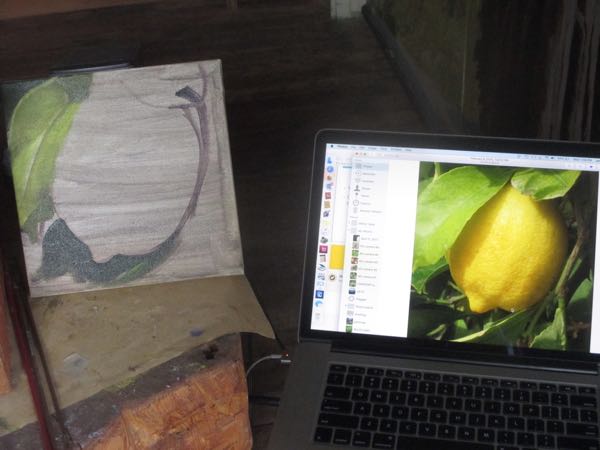
It means painting oranges, although I was just painting greens that day. Because this commission job was for 3 oil paintings in 2 weeks, I had to plan the most efficient method of delivering mostly dry paintings.
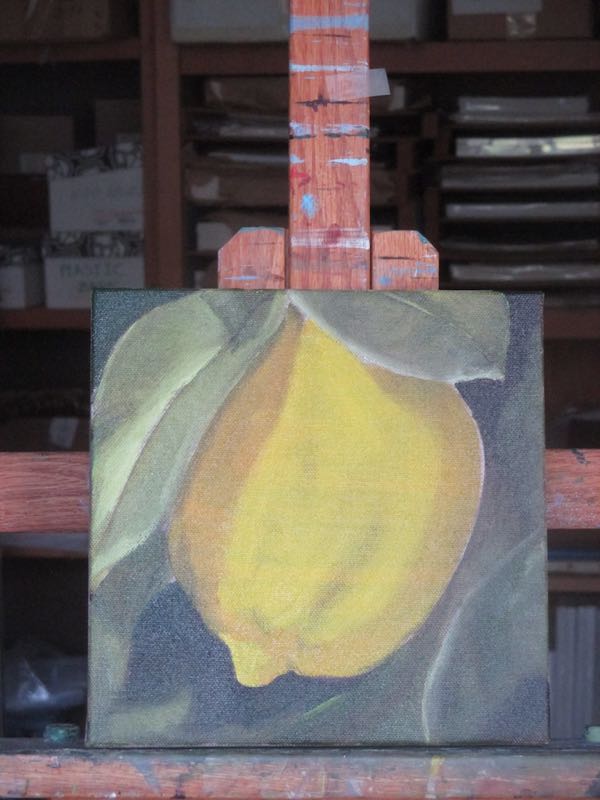
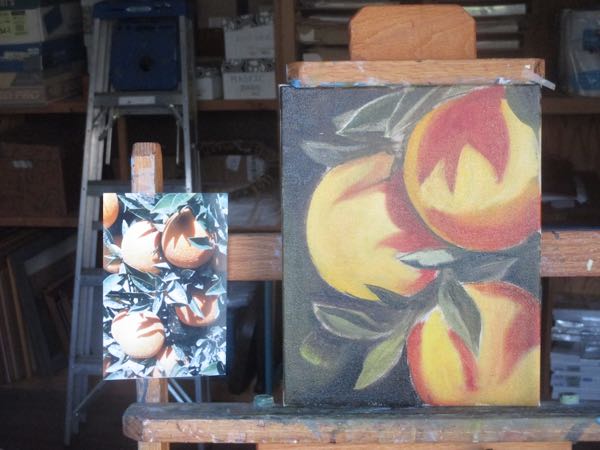
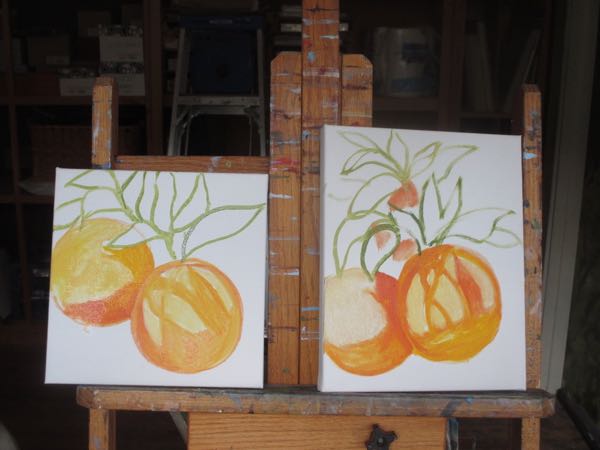
Day one: get the first layer down, all the canvas covered, the basic shapes and colors in place and the edges with one coat.
Day two: Perfect the background greens so that on. . .
Day three: sign on the green area after perfecting the orange area. Finally, put a second layer on the edges, which may or may not show. I don’t know what the framer has in mind and won’t get to see the final product.
This gives the paintings a week to dry. Would have been better to know about this job sooner, both for more time to work and also for summer’s heat, which makes for quicker drying. They might be a little tacky (in the tactile sense of the word, not the quality of the job.) But, a little pressure is sometimes a good catalyst for action.
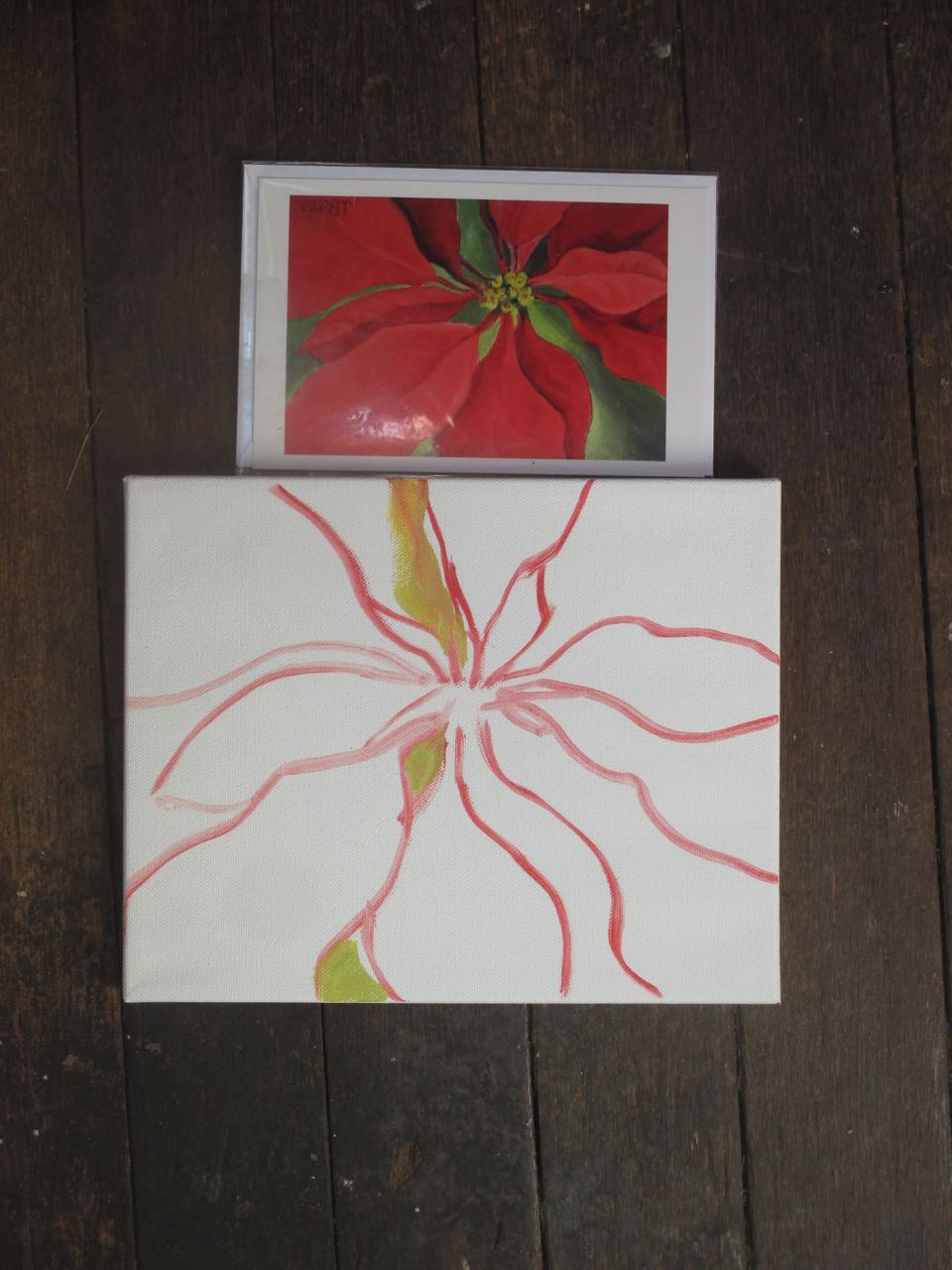
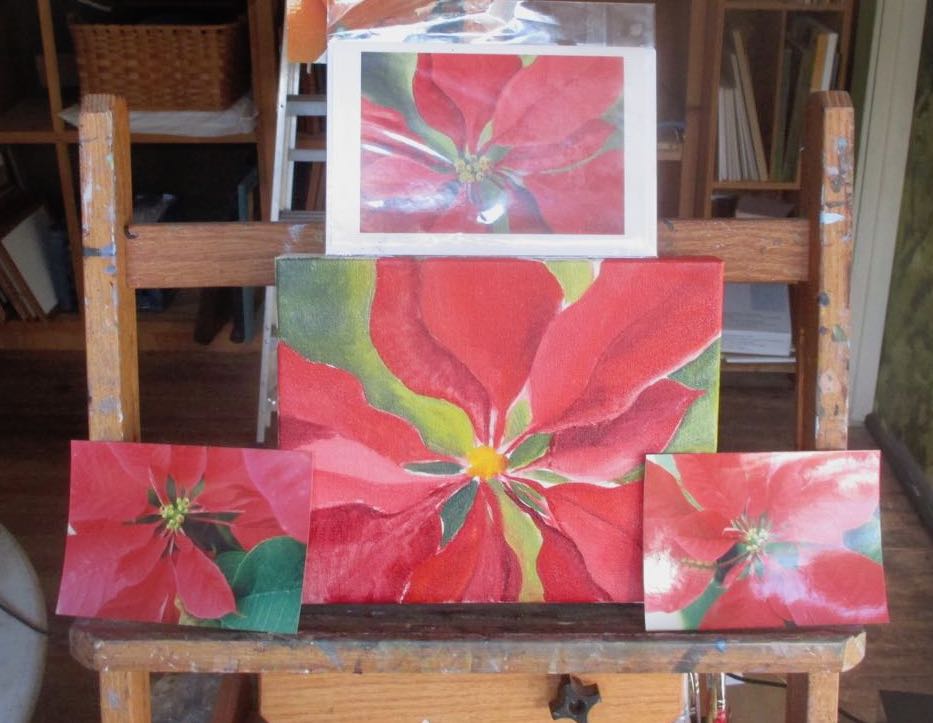
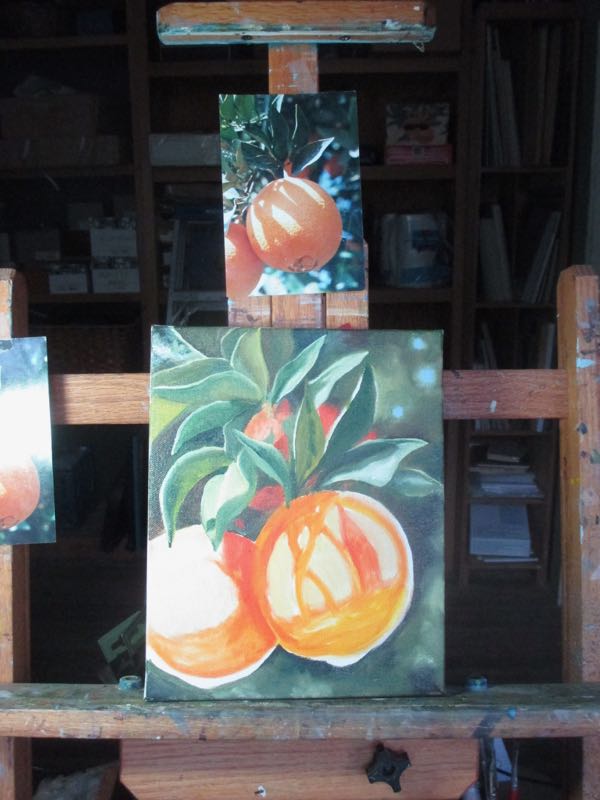
Working upside down is helpful both for seeing shapes accurately and for a more comfortable hand position. The finished painting is on the bottom, and it is my guide.The second painting.And here is #3. Bet you are wondering if there really are 3 plus the original. . .Yeppers. Three orange oil paintings with the original sitting alongside on Samson’s shelf.
Speaking of Samson, he is pretty tired. He’s been working the night shift lately.
Two weeks to paint three oranges, but really, only one because of a planned 2 days off and because of drying time.
No problem. . . just get outta my way! They don’t have to be truly identical, because each one will end up in a different home.
That sounded weird. If they were all in the same home, they really wouldn’t have to be identical. Never mind.
They will all be presented at the same time, so they need to be close. That way, no one says, “But I like his better!”
This is how it looked over the course of Day One at the easels. The last step of Day One was painting layer #1 on the edges. When I return to the project in two days, they will be dry enough to put on the next layer. The second day of painting will be when I perfect all the details.
Two days isn’t some formula; it is because I teach drawing lessons on the second day and have a prescheduled appointment on the third. On day four I can continue.
A yearly customer emailed me to ask for a painting she saw on my website, but she didn’t just want that painting. She wanted four of that painting.
Well, oops. My paintings don’t get reproduced by machines; my paintings get reproduced by a paintbrush in my hand.
But wait! There’s more! She wanted them in two weeks time.
Ahem. I paint in oils. They take awhile to dry (unless it is July or August). This could be a tricky assignment.
First, I found the original painting and got in touch with the gallery showing it to set it aside for me to retrieve. This meant that I had to paint “only” three. That helps.
Second, did I even have blank canvases the right size? Yeppers, I did.
I know, you are just dying to see what painting she wants.
The pencil drawing commission might be finished. I often run things by my drawing students, telling them to be as “mean” to me as I am to them. It gives them an opportunity to practice the skills of looking very critically, and articulating clearly if they see any weak areas of a drawing.
And here it is in its second iteration:I am more confident that the roof angles are closer to reality this time, and I think it has tighter detail. I’m guessing that the shocking difference in darkness is due to the computer preparations required for printing in the book. It wasn’t that dark in person because my pencils aren’t that dark. It almost looks like ink to me! (Nope, not participating in Inktober.)
Drawing architecture in pencil is my favorite thing. Since this drawing is gone, I get to redraw it. Second chances, opportunities to improve, do-overs–all good things.
This is how it looks after about three short sessions with my pencils. Cabin closing, oil painting, teaching drawing lessons, taking inventory and planning for shows, editing, book design, blogging, these things all cut into time to do my favorite thing. But, pencil drawings don’t take up a lot of room, there is no palette to secure or brushes to clean. (More reasons why pencil drawing is my favorite thing.)
Would you believe these roofs all belong to the same structure? This cabin in Wilsonia contains some of the most interesting architectural oddities and details of any of the cabins. I hope to see it up close and personal next summer!
I was working on the Sawtooth oil painting. This is the first time I had painted in a few weeks, so I started over with fresh paint on my palette.
White, 2 yellows, 2 reds, 2 blues, and a mixture of the darkest blue with the darkest red. All that the Sawtooth oil painting required was a brown and about 3 greens. No need to waste all that paint once Sawtooth was finished. What to do?
I could have covered it and put it in the freezer. Eventually, I did that. But first, do you remember the hot peppers that I painted for a friend’s kitchen?
Now I get to paint a tomato for her. There is no deadline, but I started it now because the paint was just itching to be used.
The photo is to help me know how to place the darks and lights. Because it is a tomato and they aren’t supposed to be identical, I don’t care if the shape is exactly the same. Because I like brightly colored tomatoes, I am relying on my memory for the best colors. Because this is the first layer, it will get better as I go.
A customer asked to buy three of the original pencil drawings from The Cabins of Wilsonia.One of them is gone, so I offered to redraw it for him. He agreed.
The one he wants redrawn isn’t one I felt very proud of. Maybe I got sloppy in the midst of 272 drawings (can’t remember the actual number). Maybe I draw better now. Maybe it didn’t reproduce as well as I had hoped. Maybe I did a poor job prepping it for printing. Maybe my standards have been raised or tastes have changed.
Maybe it is all in my head.
Here it is:
I can’t wait to redo this! (Have I told you how much I love to draw, especially architectural scenes?)
First I ate my vegetables of fuzzy faces. I saved dessert for last.
What is she talking about? I can hear you thinking.
My customer brought me three commissions to draw in pencil. The first 2 were the fuzzy photos of faces with no discernible features. The 3rd was a beautiful building, designed by Julia Morgan, the architect most known for her buildings at Asilomar and for the Hearst Castle.
Drawing architecture in pencil is my favorite part of my art business.