3 Little Known Factors that Could Affect Your Ability to Draw

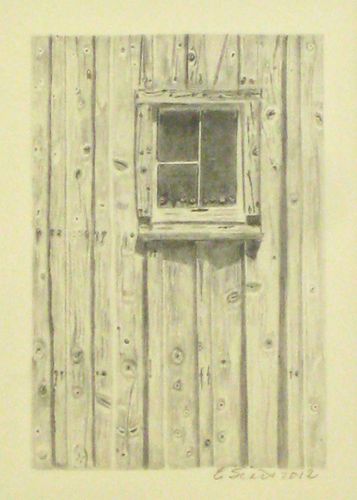
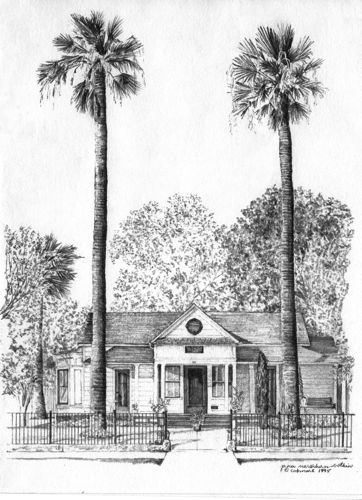
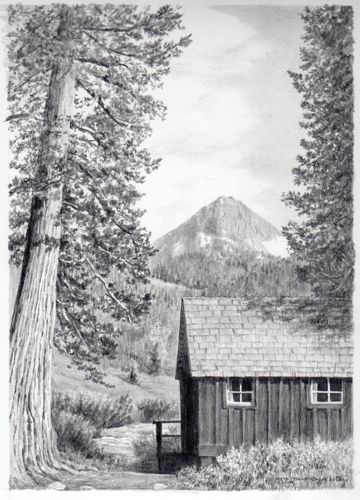
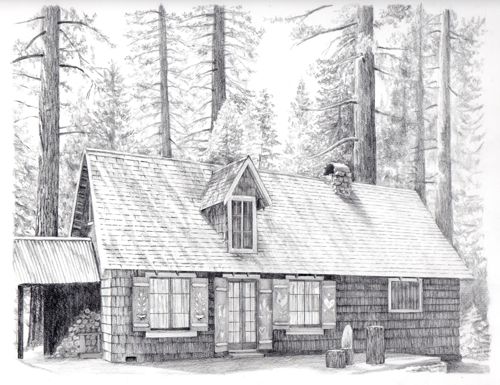
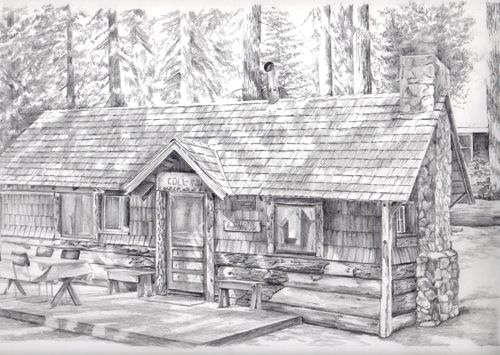
Pencil drawing from the upcoming book The Cabins of Wilsonia

I have a theory about people who draw. It is based on teaching people how to draw since 1994. In addition to teaching people how to draw, I draw myself. (Oh? You didn’t know that about me?) I have also spoken to many people who draw for fun and those who draw for profit.

If you have the following three qualities, I believe you might be able to really draw well:

  1. Perfectionistic tendencies
  2. Nearsightedness
  3. Lefthandedness

None of these things are necessary, but each one has its strength.

Perfectionism

Perfectionists seem to do well with the finicky detailed nature of pencil drawing. Detail is hugely important in drawing well. So are values (the lights and darks), composition, hard edges and soft edges in the appropriate places. And proportion – oh my goodness – gotta get those shapes and sizes right. Getting the idea yet? There are many things that have to be Just Right in drawing, because there is no color to distract.

I am not a perfectionist and have to work hard to remember to stop the “get-er’dun” tendencies. It is fun to finish things. It isn’t fun to think I am finished and have to return to fix something.

Nearsightedness

If you are nearsighted, you are more tuned in to detail. Sometimes it is all a myopic person can see! I think of it as an asset for a pencil artist. (Glass is always half full!)

Up until a few years ago (ahem) I was able to put my nose a few inches from a pair of ants playing checkers and know who was winning. (What? You’ve never seen ants play checkers?) I might still be able to do this if I pop out my contact lenses. Now, with the contacts, I have to wear old-people-sit-on-your-nose magnifiers. Sometimes they aren’t strong enough. And have you noticed that all the lights are dimmer than they used to be?

Left-handedness

There is a connection between the left hand and the right side of the brain. (There is a book about it called Drawing on the Right Side of the Brain, by Betty Edwards.) The right side understands the non-verbal things in life such as proportions, perspective, and values. The theory is that left handed folks are right-brain dominant and thus more naturally equipped for tasks such as drawing.

I am right handed. Oh-oh, I can hear you wondering how I could possibly be an artist with 2 strikes against me. Here is the answer: I am left-eyed. A dominant left-eye is almost as good as a dominant left hand. (Phew, had you worried there, didn’t I?)

If you don’t have a single one of these three qualities but you want to learn how to draw, I can still teach you how.

The only people who haven’t learned to draw from me are the ones who quit too soon!
A Drawing Success Story

I have a favorite customer named Bob. In Artspeak, he would be referred to as a “collector”. (I try to avoid Artspeak in this blog, because I think it is read by more normal folks than those who use Artspeak.)

Bob has a wonderful wife, with whom I have been acquainted since 1973. Really! She began taking drawing lessons from me last fall, and was just sure she would be the exception to my assertion that I can teach anyone to draw. Bob was also sure she would prove me wrong.

Mrs. Bob worked her way through the beginning exercises. She did well. She likes to get an A on her work, so in spite of the fact that drawing lessons come with no homework, no grades, no tests and no deadlines, I happily gave her As. She earned them, too!

When it was time to start, she chose a hairy dog. It scared her a bit. (No, it didn’t bite her!) All my reassurances that it was only paper and we could erase didn’t help.

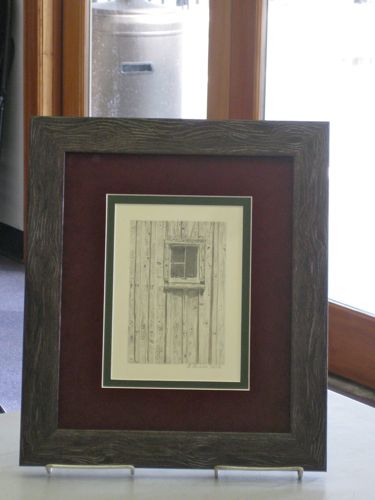
I realized that she needed a subject that meant less to her. Many of my beginning students have found it easier to draw old wood than anything else, so I found a photo of a window on an old shed wall.

Bob My Favorite Customer occasionally asked Mrs. Bob about her progress. He wasn’t encouraging. He is still My Favorite Customer. They are still married.

Mrs. Bob was very determined, and we slowly worked through many of the techniques that a good pencil drawing requires. She stopped showing Bob her progress, and he stopped asking.

Bob’s birthday was a week ago. Mrs. Bob presented him with this:

Want to know what Bob said?

“Who drew this??”

Isn’t that just the best ever drawing lessons story?? 😎

Here is a closer version, and it really looks better than it photographed while under glass.

Texture, depth, contrast, detail, and precision – WOW! Congratulations, Mrs. Bob!

Wise Up

I regularly read Michael Hyatt‘s blog. He addresses many topics, and words fail me when trying to describe his blog. Business? Publishing? Marketing? Being a better human? Life? All of the above!
Recently he wrote on the difference between a wise person and a foolish one. The definition of being wise came down to 3 things:

  1. Listens without being defensive.
  2. Accepts responsibility without blame.
  3. Changes without delay.

It occurred to me that in my quest to be a better artist, this is my method to learn and improve. I show my drawings to my students or friends and ask them to tell me honestly what they think. If they are new to the process of drawing and critiquing,  they are a bit reluctant to speak the truth. If they have known me awhile, they just let it fly without fear!

I appreciate the honesty so much. I depend on their unbiased opinions, their innate good sense, their experience, their wisdom.

Then, I usually follow their suggestions.

This is not to toot my own horn about my great wisdom. We are all wise in some areas and foolish in others. I’d be foolish to think myself capable of producing my best work without input. I just wanted to share my method of processing feedback in order to improve.

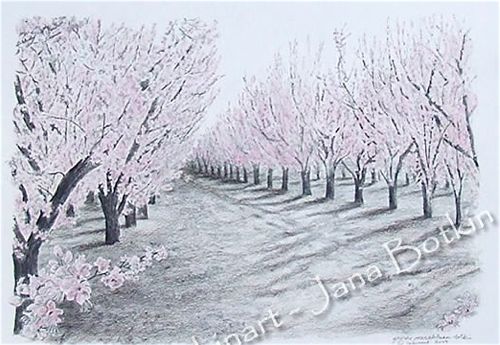
Here is a recent example of a piece that got some great feedback from my students. I listened, I accepted, I changed.

The Business of Art in Tulare County

This began as a plum orchard, then I added pink and renamed it Peach Orchard. February is so beautiful here in Tulare County!

The drawing is sold, but I can always do another one for you.

Today you can find me at the Farm Equipment Show, also known as The World Ag Expo.

I’ll be hanging out with my cousins who will be demonstrating a wood splitter. (I still prefer an ax.)

UPDATE – that was the best splitter I’ve ever seen. EVER!

It might seem like a waste of time, but I can assure you (and my Very Mean Boss) that I will have my camera so I can take photos while in transit. (Might even pull over and stop to do so.) And I will have a pocketful of my business cards. An artist has to interact with the real folks from time-to-time. This is all about the business of art. Really! The business of art in Tulare County means going where the people are, and they are at the World Ag Expo in great numbers.


Winery? Mountain? Vineyard?

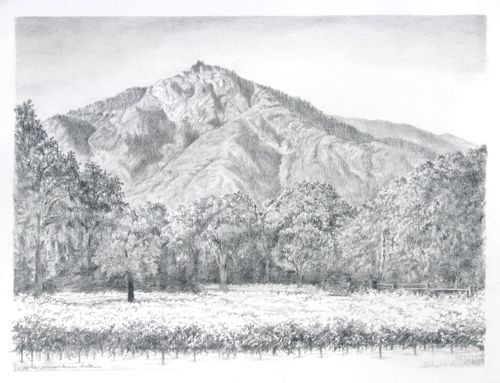
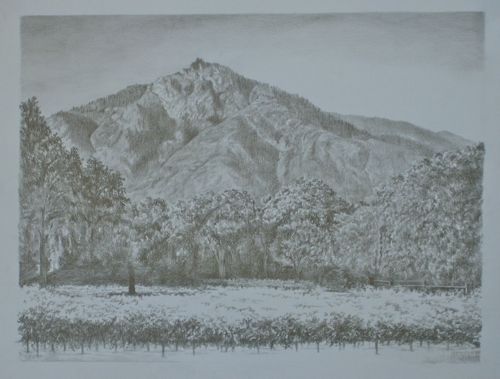
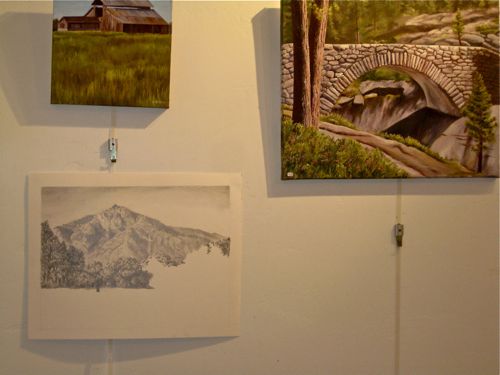
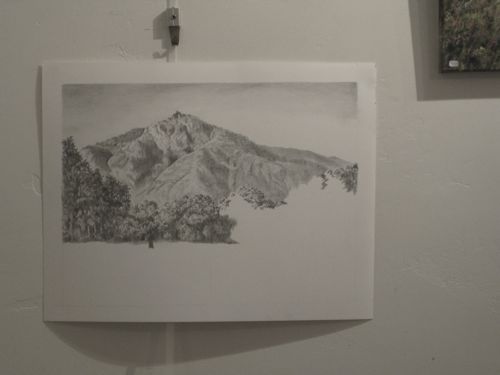
Remember seeing this sketch a few weeks ago? It was the preliminary step to beginning the commissioned pencil drawing of a winery.

After drawing for awhile, it is helpful to stick it to the wall and study it at a distance further than 8″. You can see the size in comparison to the 10″ square barn painting above it.

Is it a winery drawing? It looks like a mountain picture to me. Wait, I thought it was supposed to be a vineyard. It is all fitting for a California artist, doncha think?

More will be revealed. Stay tuned!

You Know You’re A California Artist When. . . Part 3

It was getting a bit long yesterday so here is the rest of my pencil version of California artist.

5. . . . the houses you draw often have palm trees.

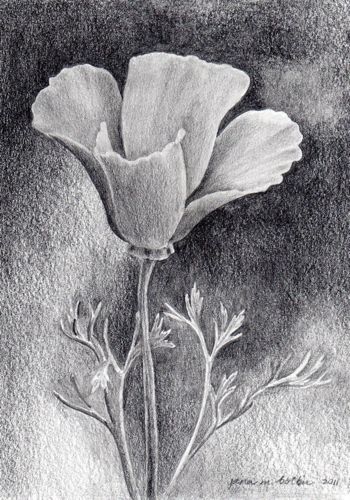
6. . . . sometimes you draw poppies.

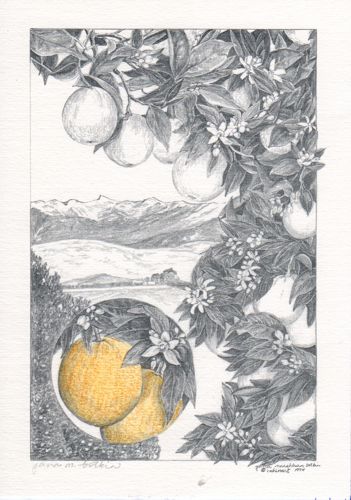
7. . . and you keep drawing oranges because everyone likes them.

5×7 reproduction with color added, $10, email me to buy  (not on website)

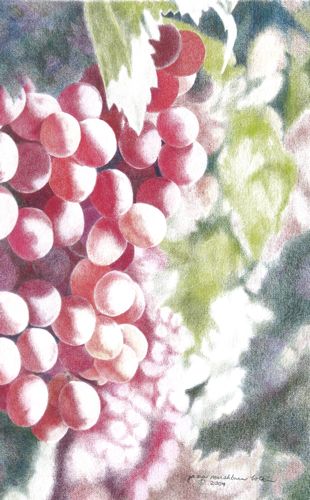
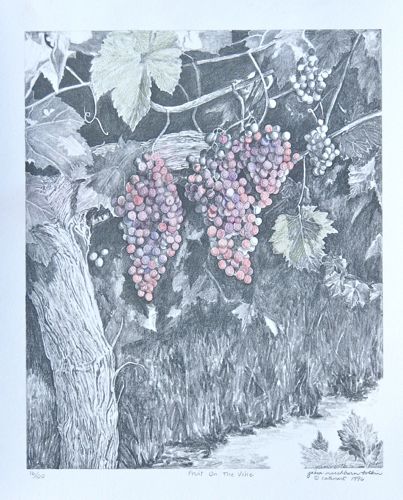
8. . . . you wade through dirt clods in your friend’s vineyard to get good photos of grapes for drawing.

Sweet and Seedless, colored pencil, matted and framed, 12×15″, $150

Fruit on the Vine, reproduction of pencil with colored pencil accents, 11×14″, $20

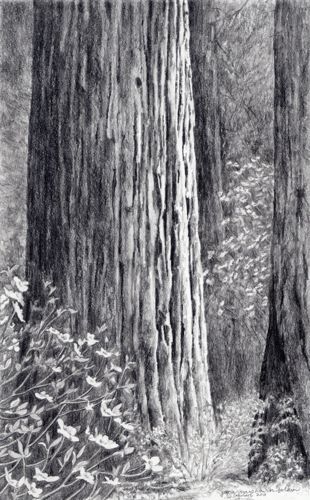
9. . . . you draw lots and lots of Giant Sequoias and call them “big trees” but think of them as Redwoods because you went to Redwood High School

Redwood & Dogwood, 14×11″, pencil, matted and framed, $400

You Know You’re A California Artist When. . . part 2

That was so fun that I decided to do it again in pencil. Split personality? No, same subjects (California, mostly Tulare County), same tight style.

1 . . . you draw the beach.

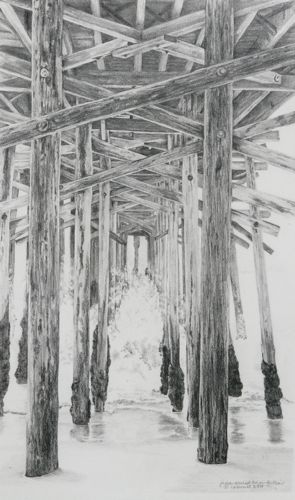
Wood, Wind, Waves, pencil on paper, 12×16, matted and  framed, $500


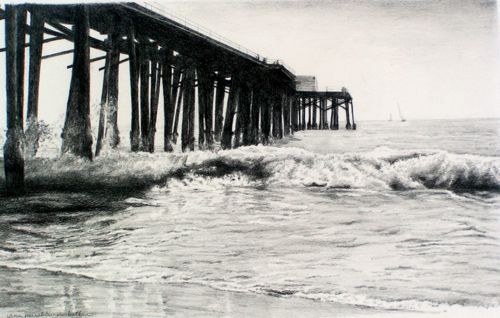
Central California Coastal Pier, sold

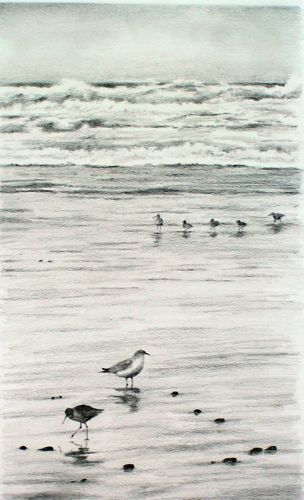
Beach Birds, sold

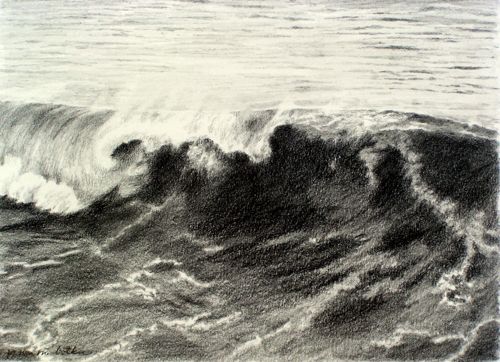
Wave Action, 11×14, unframed, $100 (email me, it’s not on my website)

2. . . . and the mountains

Honeymoon Cabin, pencil on paper, 11×14″, unframed, $300

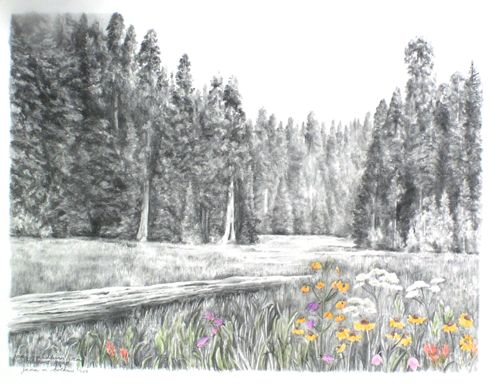
Crescent Meadow II, reproduction of pencil with colored pencil accents, $25

original also available here

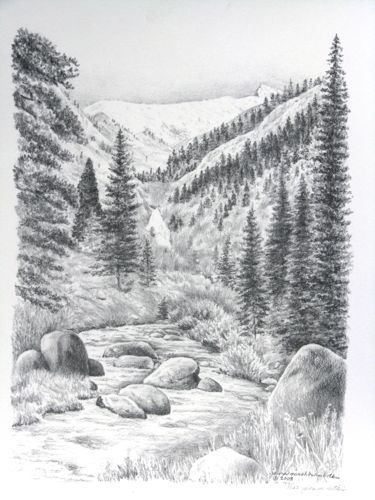
Sawtooth, reproduction of pencil on paper, $20

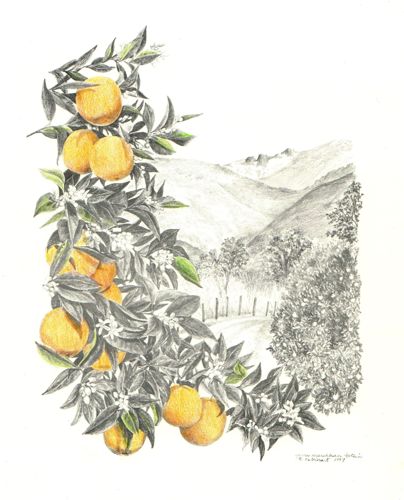
3. . . . you draw lots of oranges.

Sun Kissed, reproduction of pencil with colored pencil accents, $25, 8×10

4. . . . and sometimes you draw your friend’s tractors.

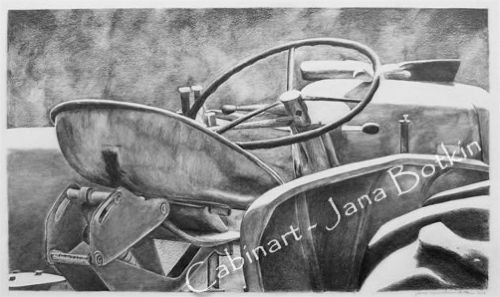
His Other Car, pencil on paper, framed and matted, 19×26″, $400

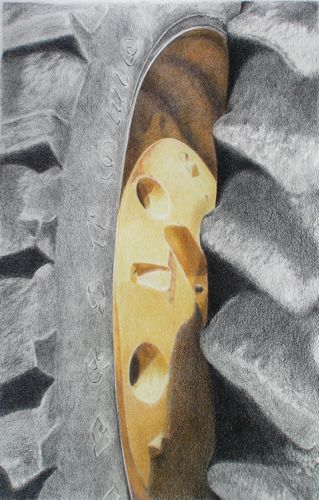
Size Matters, 16×20, pencil and colored pencil, framed and matted, $350

Too Wired

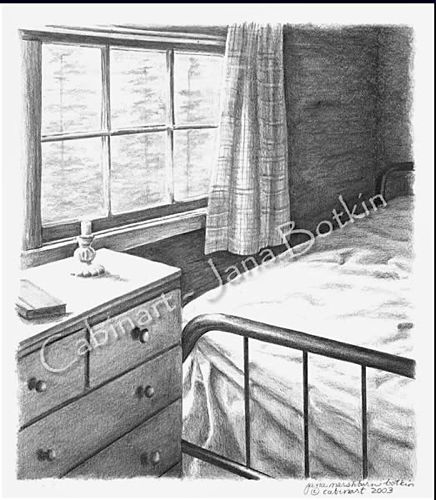
Pencil drawing, “Loft Bedroom”, sold

It is a frightening realization that I am very very dependent on electricity. My neighborhood was warned of a 2 hour power outage, and we were even told the time to expect it. Suddenly we were racing around to take care of everything that needed to be done before the power went off. Is the garage door open so we can get to our vehicles? Will the water boil for coffee before the power is off? Gotta fix my hair before my power tools are inaccessible! Better forward my studio phone to the cell phone while there is power so I can receive phone calls while down the hill! (no cell service where we live) Quick, check my email in case there is something urgent!

What is this all about? Don’t I draw with pencil and refuse to use an electric sharpener? Yes, but if the sun isn’t shining, it is too dark to see the details without a lamp, preferably a magnifying one.

I have lived very comfortably for months at a time without electricity in the past. Is this part of aging? Part of the creeping tendrils of technology, worming its way into my life in more ways than I care to admit?

Probably.

This California artist needs to go knit a few therapeutically unwired rows of a non-electric sweater.

The Great Talent Hoax

Pencil drawing for The Cabins of Wilsonia

Have you ever thought or said to an artist, “Gee, it must be great to have talent”? Or have you you ever said, “I wish I had talent like that”?

It’s all smoke and mirrors.

Actually, it’s not. It is practice, training, practice, rough criticism, more practice, a little success, practice, trial and error, practice, a little public embarrassment and yet even more practice.

Malcolm Gladwell wrote in his book “Outliers” that it takes 10,000 hours of intentional practice with a focus toward continual improvement to become an expert at something. He’s not talking about mindless repetition.

Practice makes perfect. Erasers help too.

The harder I work, the more talented I become.

Practice, practice, practice. And, have a second more objective pair of eyes that is connected to a truthful mouth that is connected to a kind heart have a look at your work.

My Very Wise Dad told me of a concert pianist who had to practice 8 hours a day. When he dropped to 6 hours, he could tell the difference. When he dropped to 4 hours, his audience could tell the difference.

The only people who don’t learn to draw are the ones who quit drawing lessons too soon. Those who persist begin to think they have talent.

They might be right.

Sometimes people quit drawing lessons (or piano or ballet or drumming or guitar or knitting) because they don’t love it enough to practice as hard as talent requires.

Think I put enough cliches in this blog entry? 😎 Perhaps I need to practice my writing skills more.