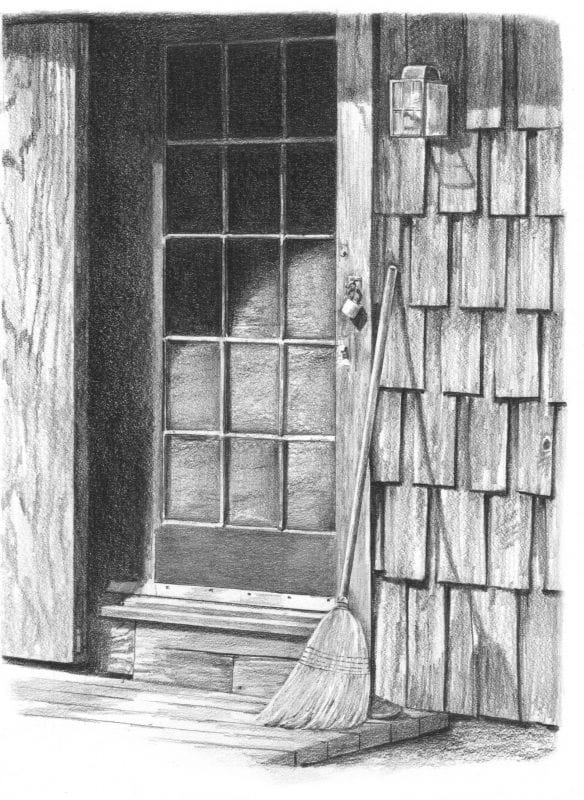
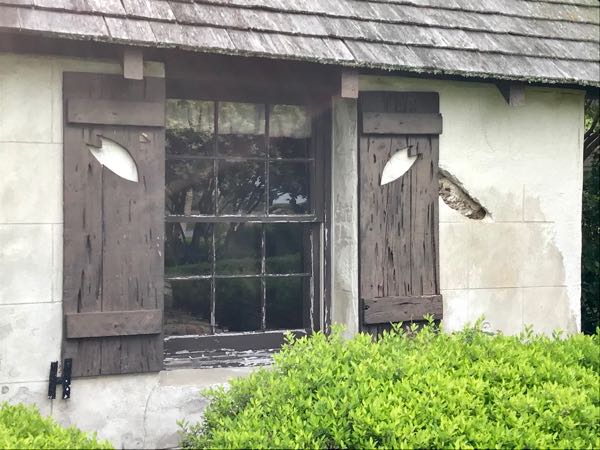
One of the many pencil drawings from The Cabins of Wilsonia
Yesterday I told you of some good ideas that came to me while I was organizing my storage shelves. Today I will tell you of two that aren’t complete. They are good ideas in terms of how to spend my time and energy with my art business, but will take more thinking on how to bring them about.
The Cabins of Wilsonia came out in December of 2014. Many of the 200+ drawings have sold, but many remain available. It is time to offer them at a deep discount, and then shred the remainder. They are doing no one any good in storage. Now I need to figure out how to best reach the people who are most likely to want the drawings. Keep thinking.
Sequoia Natural History Association used to be the name of the outfit that stocks the ranger stations and visitor centers in Sequoia and Kings Canyon National Parks. The name changed, the director I knew retired, and now I don’t know who to talk to about buying my prints and cards to sell in the Parks. They are doing no one any good in storage. Keep thinking.
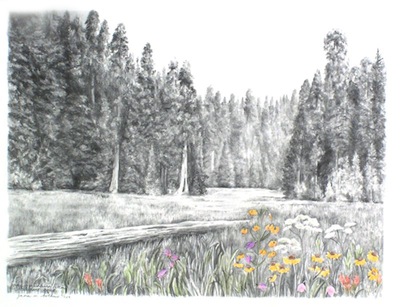
Crescent Meadow, 11×14″ reproduction print, wildflowers colored one at a time, one after another after another. . .
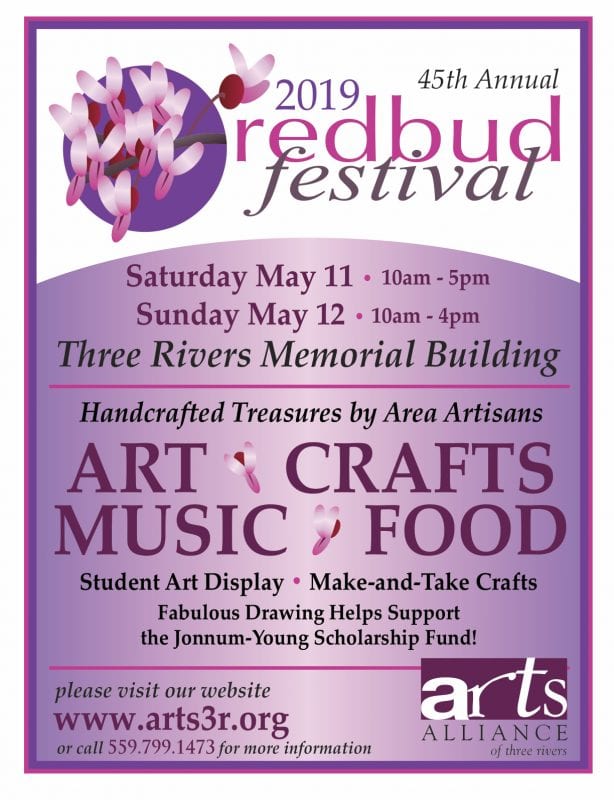
Redbud Festival is coming soon!
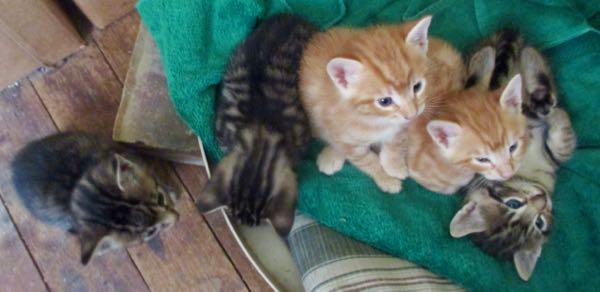
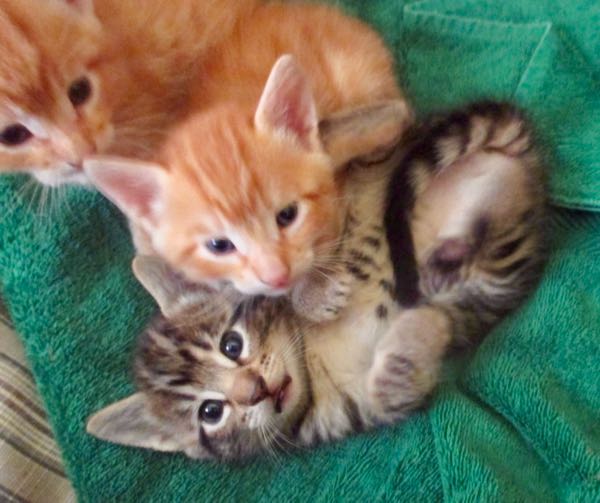
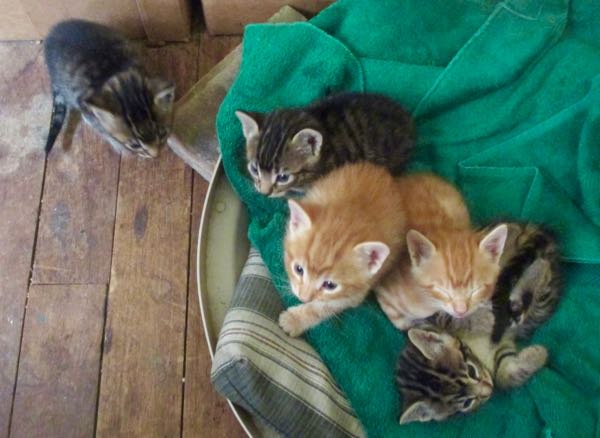
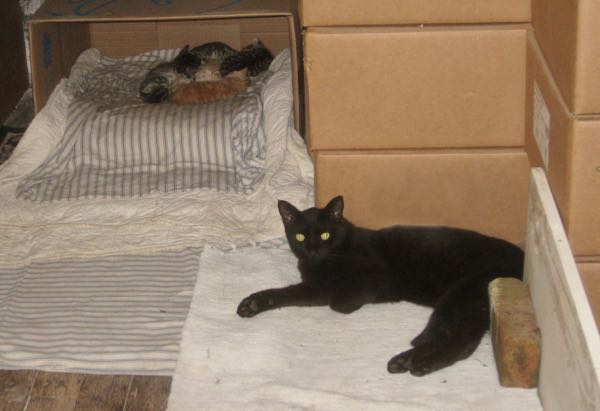
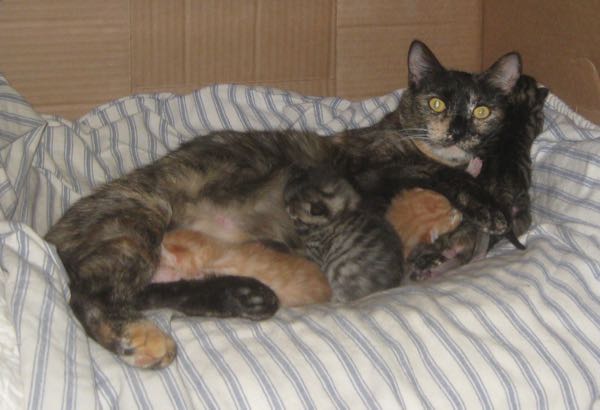
The kittens are getting quite busy at 4 weeks old. They tried canned food and spent a fair amount of time walking in it. It was too gross to photograph. You’re welcome.
Lately I have preferred to work in silence instead of listening to podcasts, music, or the radio. I seem to need lots of quiet in order to think. I don’t have an agenda; instead, I just let the thoughts roam freely, and sometimes good ideas show up.
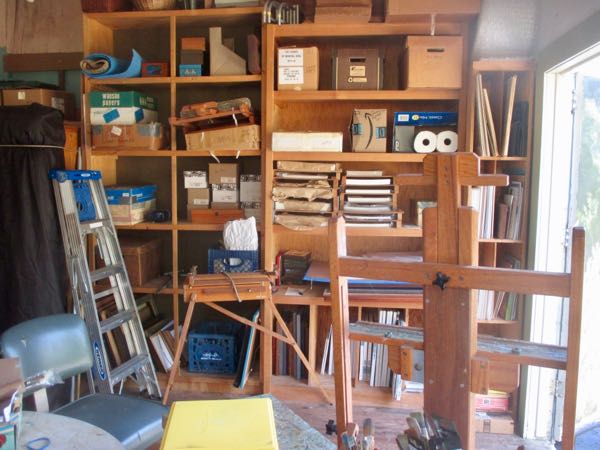
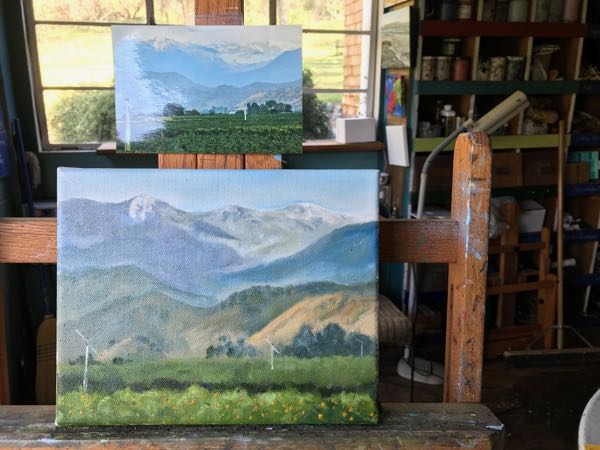
When I photograph my paintings on the easel in the painting workshop, I am often appalled by the state of the storage shelves behind the painting. What am I storing? Why is it such a mess? If the things aren’t useful, why I am keeping them?
Last week I went through those shelves, moving things that seldom get used to the upper levels, consolidating things, and evaluating their usefulness. I had some thoughts while doing this task, some new, some old.
Many of my art supplies and materials have been given to me. This makes me want to give things to other people, to be as generous and helpful to others as people have been to me. A cautionary thought occurred: I should be careful to keep mental boundaries in place, so that I don’t start just handing out my work. Good idea!
The 4×6″ paintings that I have been doing recently usually are priced at $50. I will be calling them “Show Specials” and offering them for $40 at the Redbud Festival. I’m not splitting with a gallery or a gift shop at that event, so why not? It is fun to offer something new and learn the response. Good idea!
After making an ordering mistake several years ago, thinking I was getting 12 2×2″ canvases and instead of getting 12 packages of 5 each for a total of 60, it is time to be finished with those. They are hard to paint, because I have to hold them in my left hand, and the opening in the back is much smaller than my fingers are able to squish. So, I will be painting quick Mineral King scenes, and offering them as a Show Special when I do the art show and sale at the Silver City Store this summer. Good idea!
There will be 4×6″ original oil paintings at the Redbud Festival, priced for $40 each instead of $50. SHOW SPECIAL!
In spite of the common practice of completing a plein air painting alla prima I think that many of my paintings in that style definitely need touching up. It takes awhile for me to see what I can fix, and it takes wisdom to know if it would be an improvement.
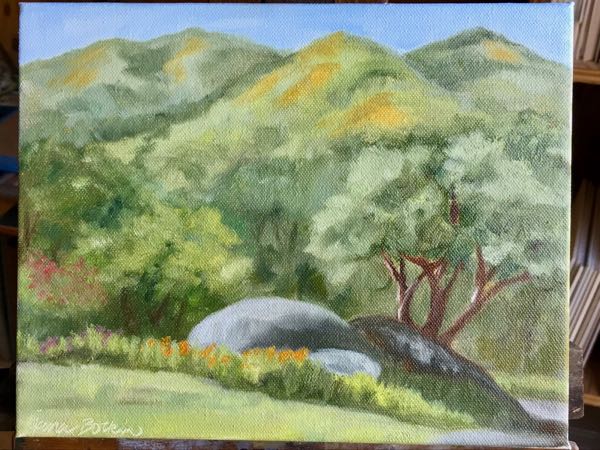
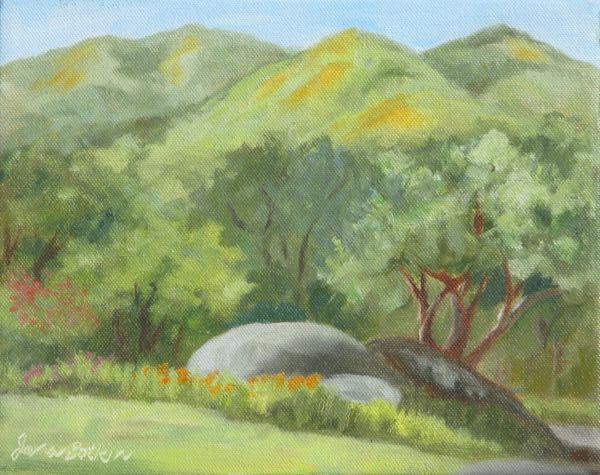
Today’s post shows the before, contrasted with the “New & Improved” versions of several of my plein air attempts.
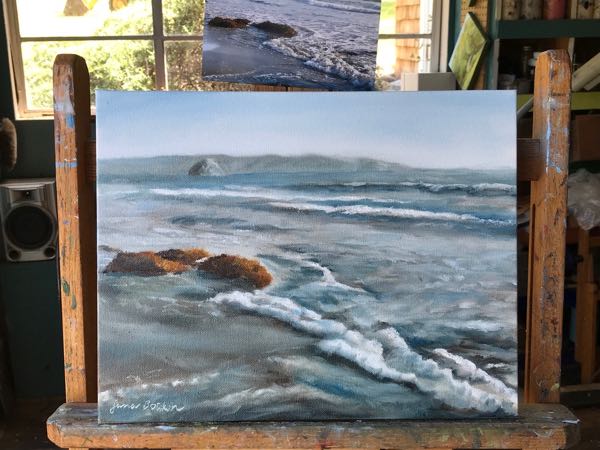
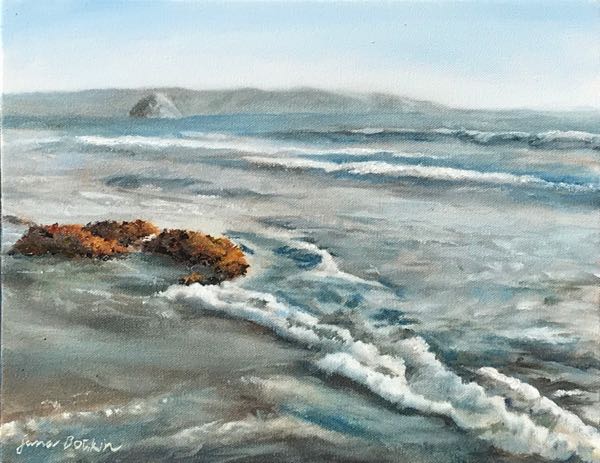
This was done plein air style from a photo. Actually, now that I know plein air means open air, this was actually painted alla prima, which means in one session. Although I like it, I wanted the seaweed to be seaweed and not get mistaken for rocks.
Never mind to alla prima. The seaweed needed to be improved upon. I like it better now. I named it “A Walk to the Rock”. That is a reference to the other Moro Rock, which is actually Morro Rock. And this time I photographed it in different light, so all the colors look different. Always something. . .
This one kept bugging me, so I put it back on the easel.
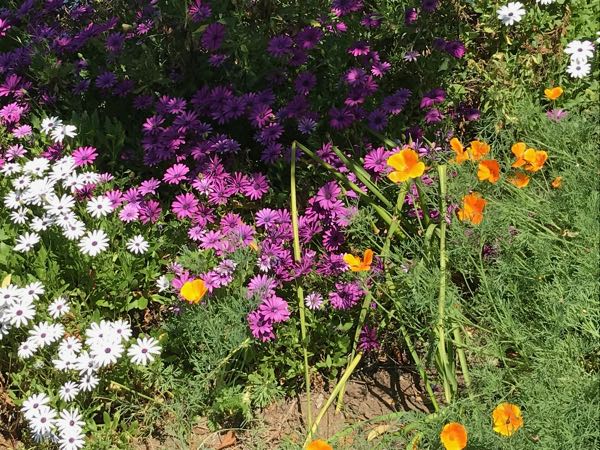
I like it better now and changed the name from “Yard 1” to “Poppies Far & Near”. This time I photographed it in softer sunlight.
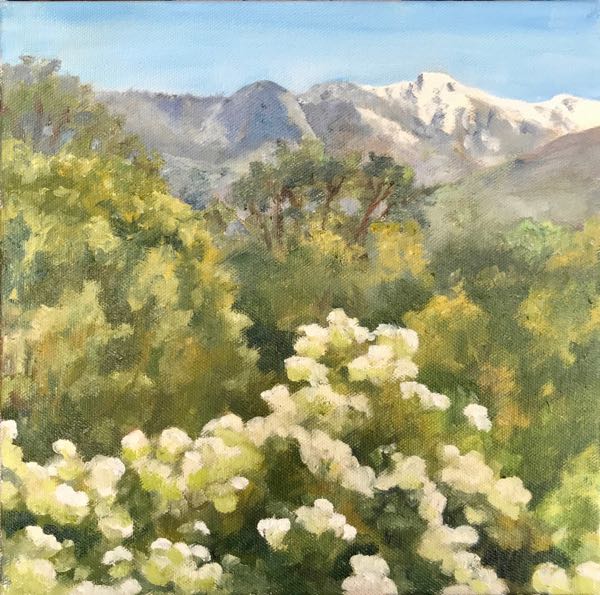
This didn’t have enough contrast the first time, and Moro Rock didn’t look right. I was so displeased with the first version that I didn’t even save a copy of the photo. This is the new and improved version, now simply titled “Snowball Bush”. No birdhouse, no pink roses, no red roses. Those might work if I was doing my old layering or “glazing” style. But now I am painting a new and possibly improved style.
New and improved? or just new? The verdict isn’t in yet. You will be able to see these at the 45th annual Redbud Festival.
A teacher once called me a “maverick”, because I kept testing the boundaries of the assignments. Gretchen Rubin would classify me as a “Questioner”, one who wants to know why and only does things that make sense.
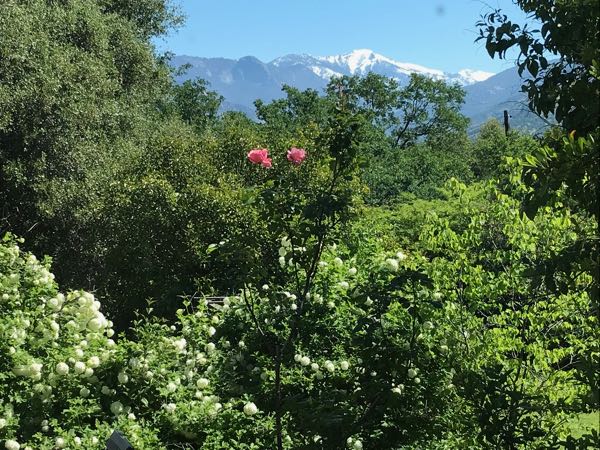
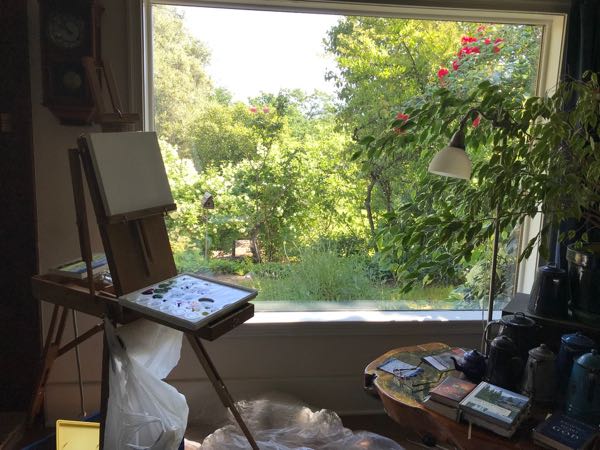
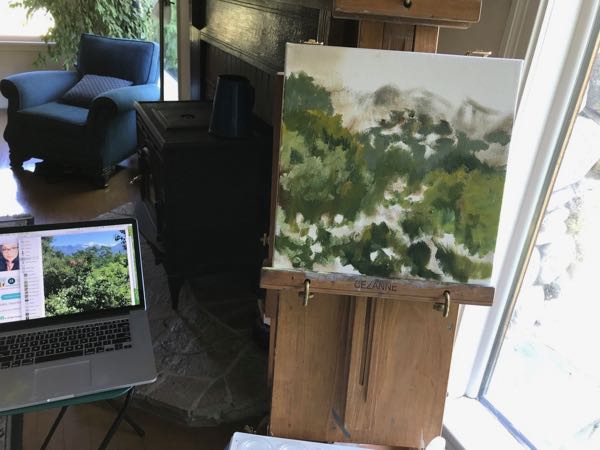
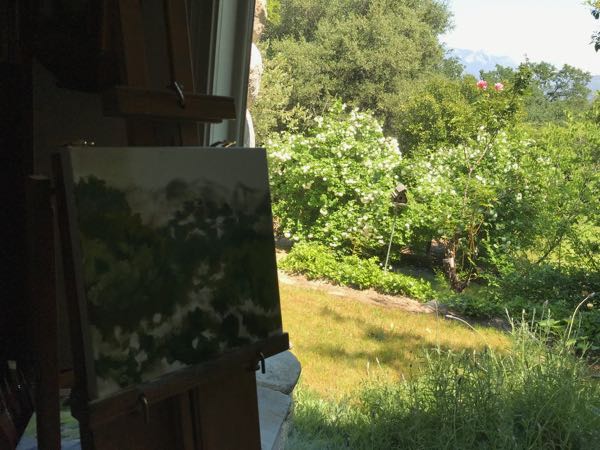
Last week we were admiring the view out of the living room window. While standing outside, the view is a bit different, and there isn’t enough room on that particular terrace to set up an easel. So, Trail Guy suggested I set up in the living room and paint the scene out of the window. Since it was a 95° day, that sounded like a good idea to me.
The view.
The set up.
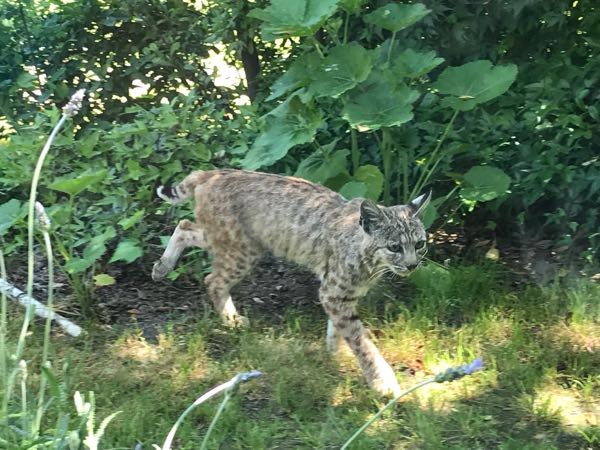
Whoa! That’s a bobcat! Are the grandkitties secure in the workshop?? Where is Scout? Where is Tucker?
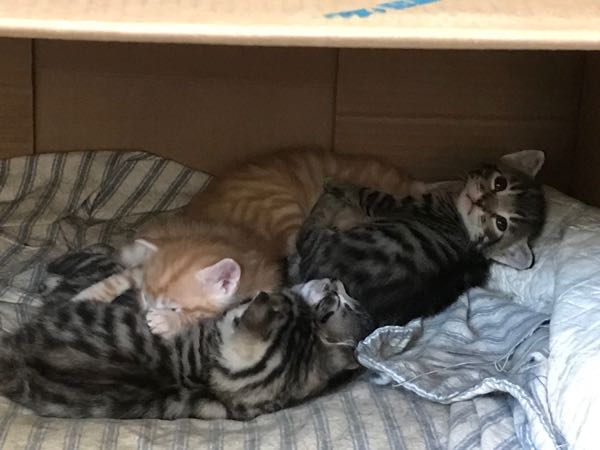
The 3 week old babies were fine.
Beginnings (and an emergency photo on the screen of the computer, on which I am listening to a podcast called “What Should I Read Next”).
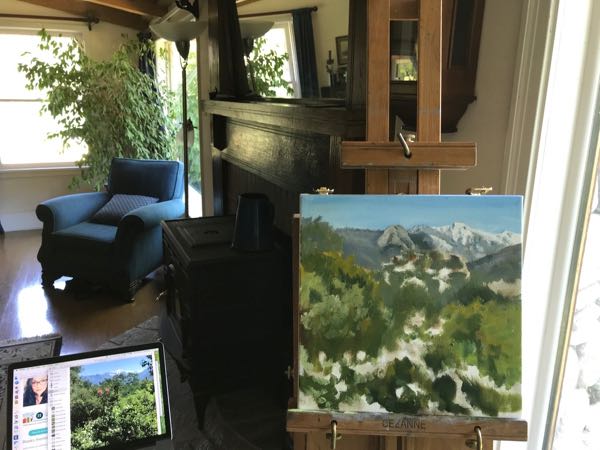
I can’t figure out where to stand to show you both the view and the painting in progress.
This one is looking sort of “meh” to me. I do believe it will require another session, preferably when the temperature is lower and there isn’t a plumber in the house (because distractions do make a difference in my ability to concentrate.) Will I add pink roses? Red roses (also visible from the window)? The birdhouse? This is why we are supposed to do sketches before beginning to paint.
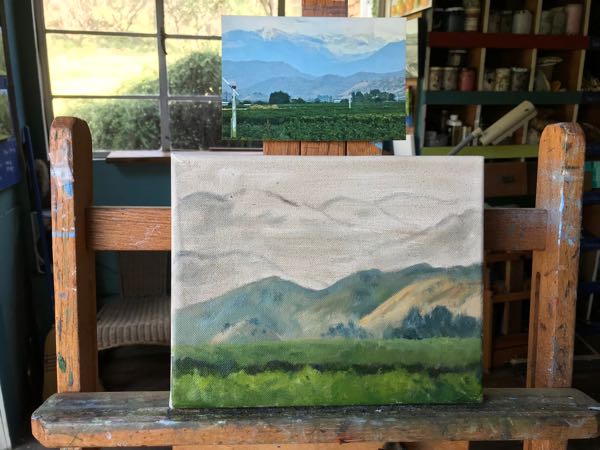
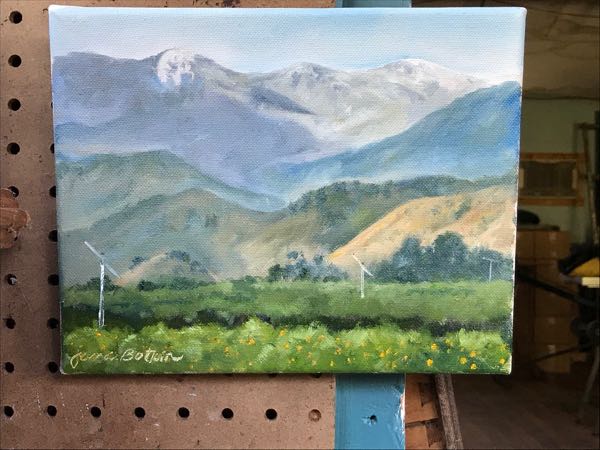
There is a scene I love, something I have wanted to paint for several years. It embodies the best of Tulare County to me – agriculture and the mountains.
I’m not sure where the best place is to set up to paint this, I don’t remember where I was, and I don’t want to go driving around. This scene will lend itself to the plein air style of painting, so why not try it?
Step one.
Step two.
Step three.
Done?
When I finished painting, I snapped this photo and sent it to my mom, a former orange grower. She said, “Where were you?” I said, “In my painting studio, standing in front of a photograph”.
I felt like a poser or a cheater. But why? This is a legitimate way to produce paintings, just different from the layers and layers that I am used to.
Now that I look at the photo of the finished painting, I want to “fix” it, detail it, color correct, tighten up things.
HEY YOU– PUT DOWN YOUR BRUSHES AND STEP AWAY FROM THE EASEL! (or else run the risk of converting it to the style I prefer and thus defeat the purpose of learning to paint differently.)
A friend wanted to hear my thoughts on plein air painting, so I wrote to her about it. Several other friends said they hadn’t known what the words meant until I started my detour down that road. (Or maybe it will become my main road. More will be revealed in the fullness of time.)
Plein air means “open air”. (Thank you, Dan!)
There is a snobbery in the art world, an attitude that real artists paint plein air. Studio artists? Meh, anyone can do that. I had a college professor who belittled those of us who signed up for photorealism studio painting; I quit at 1/2 a semester because he didn’t teach what he dismissed as “smoke and mirrors”.
Plein air is difficult for several reasons, including bugs and weather. There are no boundaries to the scene that ultimately will be enclosed by specific borders. Artists have to be able to see and decide what they plan to paint, ignore what they will not paint, and arrange those things in a pleasing manner. In order to “erase” the unnecessary details, they squint so that nothing remains except dark and light masses. When mixing the colors, the artists come up with an average color for various areas. They simplify textures, and memorize light when it appears in order to put it in at the end. And, it is assumed that a plein air painter will finish the painting “alla prima”, which means in one session.
An aside about the art world: why the extra languages? Plein air is French; alla prima is Italian. Go figure.
In order to finish something alla prima, one has to work very quickly and finish an entire painting within 3-4 hours. Artists who are honest will tell you that many paintings are finished in the studio later. This is possible even without photos, because very little is done with tight detail. The proportions are usually in place, so it is probably just values (the darks and lights) and color correcting that happens later.
The art world loves to throw around the term “painterly”, which I have concluded simply means “messy”. Since I was 8 years old, I have worked hard to see details, to have distinct, clear edges to things, and I find it completely counterintuitive to purposely blur things. But, I am willing to learn, to try, to improve (but how will I know if I have improved or if I have added more details than are allowed?)
Painting plein air is a great skill for several reasons:
Sometimes I need to paint quickly.
There are many people who like the softer, blurrier paintings that lack detail but focus on shapes and colors.
I live part time in a National Park, where being able to paint quickly could be a great business opportunity.
Since taking the 3 day workshop in Georgia 2 weeks ago, I have been able to produce many paintings. (I haven’t shown them all to you.)
So, my conclusion is that the skills are very valuable and that I will practice them: painting quickly, focusing on good composition and correct colors (not entirely perfect, just colors that look right together in a scene). Some of this will be done while looking at a scene in person; some of it will be done looking at photos. I won’t be able to paint like Laurel Daniel, but I can paint more simply than I have in the recent past and still add enough details to retain my own “voice” (and some dignity).
MAY MEANS THE ANNUAL REDBUD FESTIVAL IS COMING THIS MONTH!
The summary of what I learned in April doesn’t seem to fit my normal end of month list. A paragraph will suffice.
Uncle Tucker, the guardian
In April I learned how to plein air paint. I also learned to use a cell phone, how to navigate the world of travel that is now dependent on cell phone ownership, usage, and competency, and that a green lizard in Georgia is actually called an “anole”. I learned that a small cat can have 5 kittens, that a cat with a stump of a tail can have tailed cats, stumpies, and rumpies. (We don’t know yet if the “rumpie” is healthy. Stay tuned.)
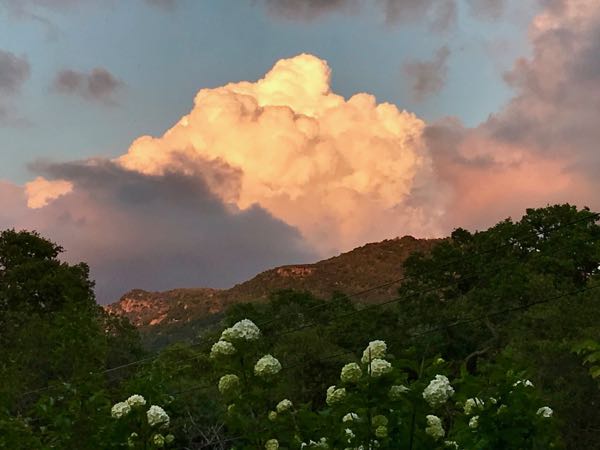
So, here is a beautiful and dramatic photo for you (because it was a beautiful and dramatic month) and tomorrow we will resume our adventures in plein air painting.
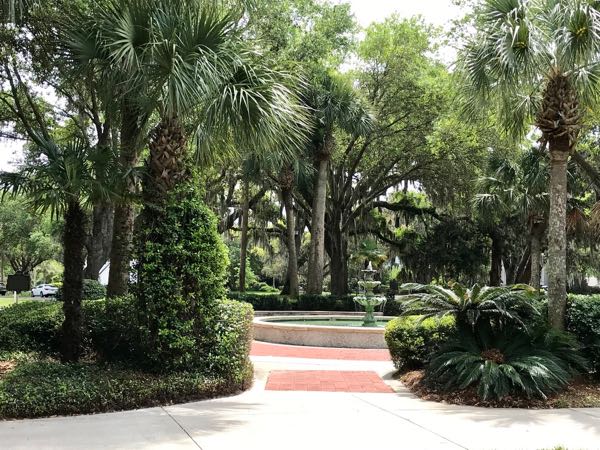
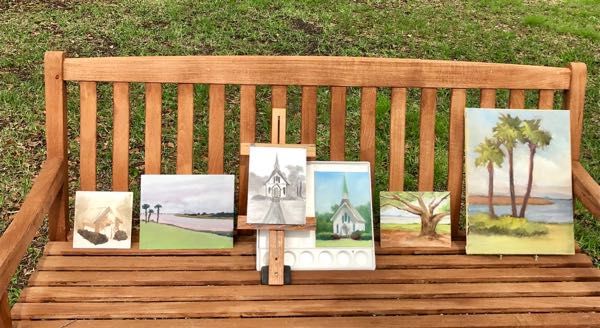
So many things to choose from for my final plein air painting.
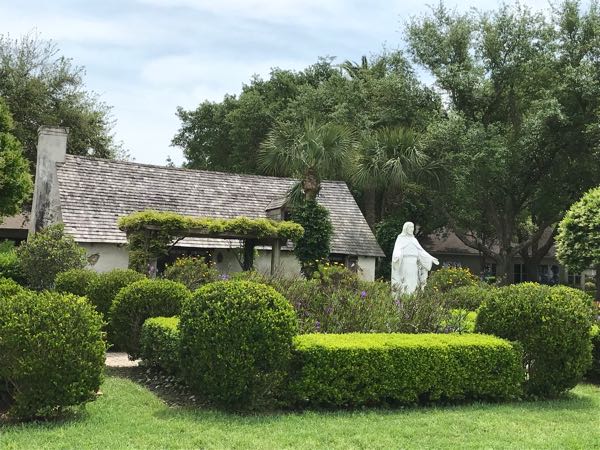
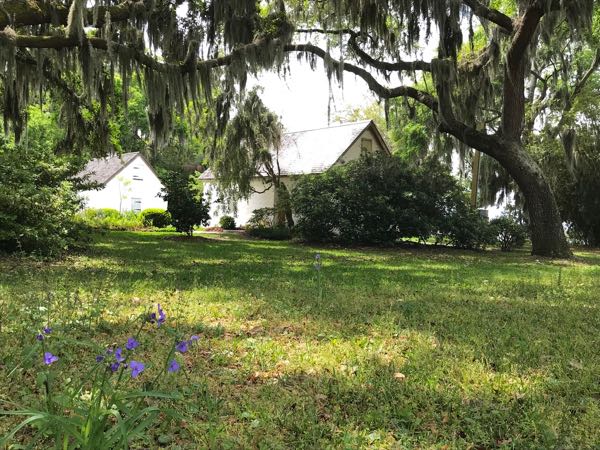
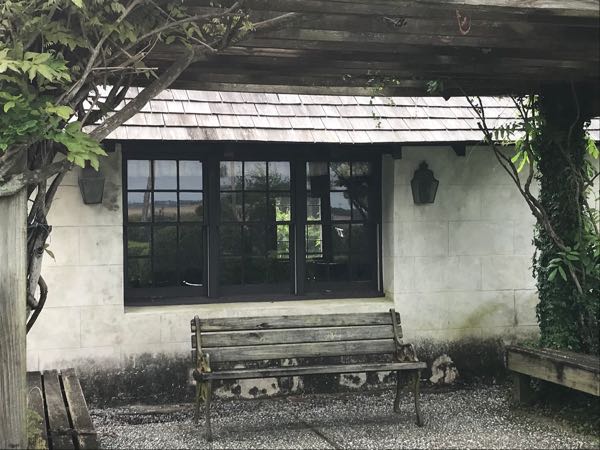
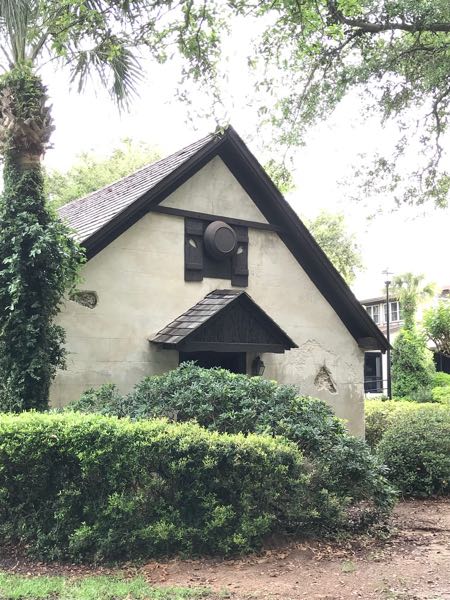
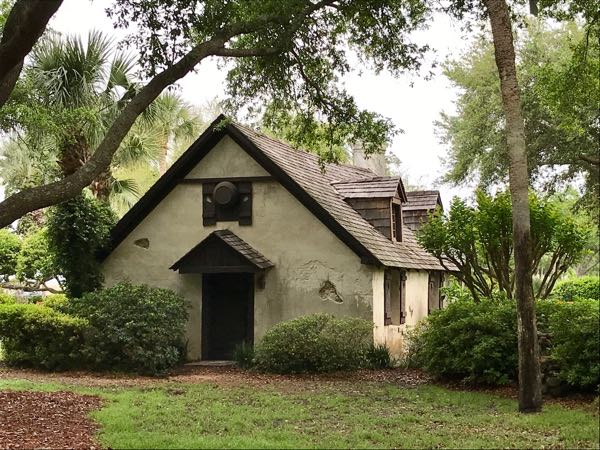
More “tabby cabins”. I don’t know why that name bugs me. Maybe because it is whitewashing a segment of our history.
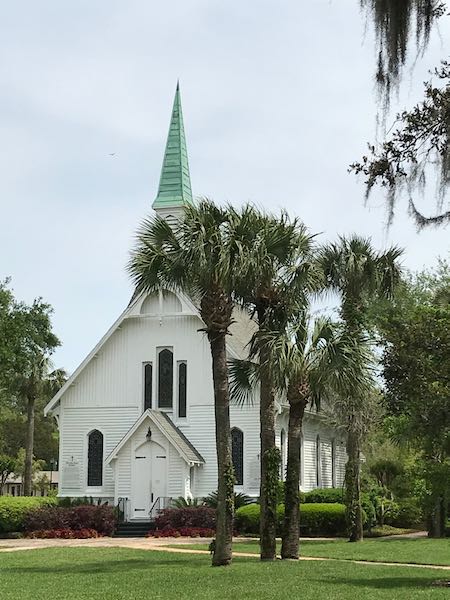
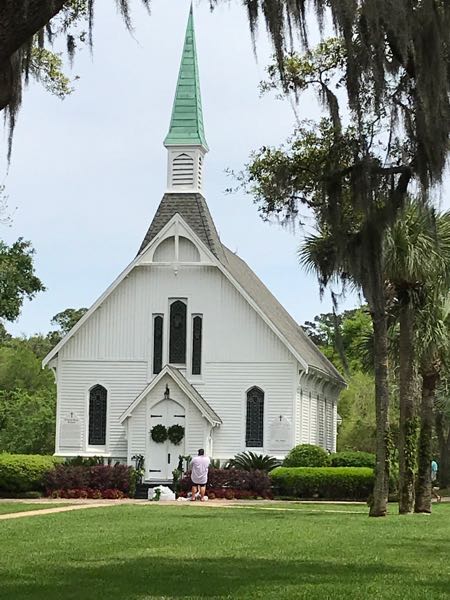
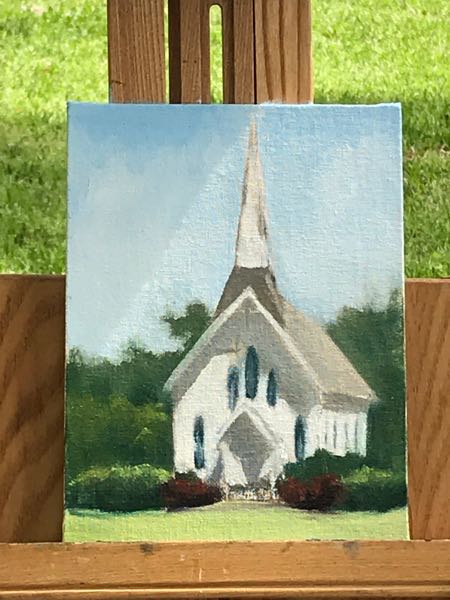
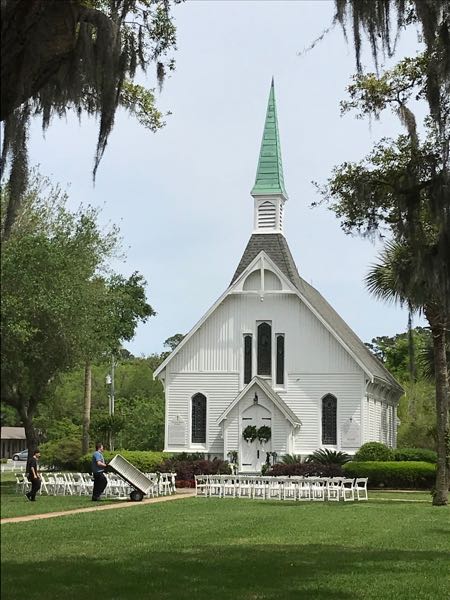
THIS is what I wanted to paint, but minus the palms.
Like this, but waiting for the light, which Laurel explained would come soon.
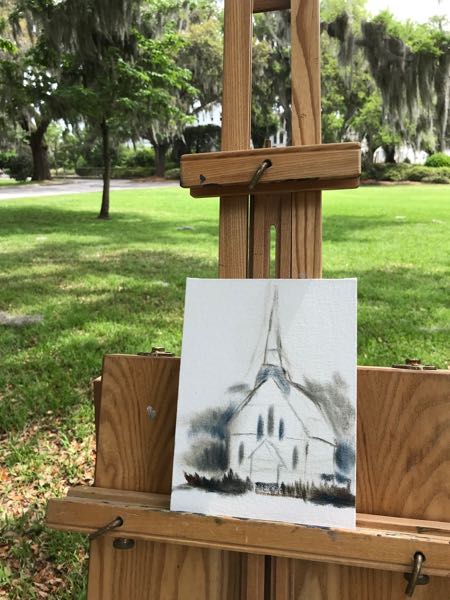
Step one, only 2 hours to complete this.
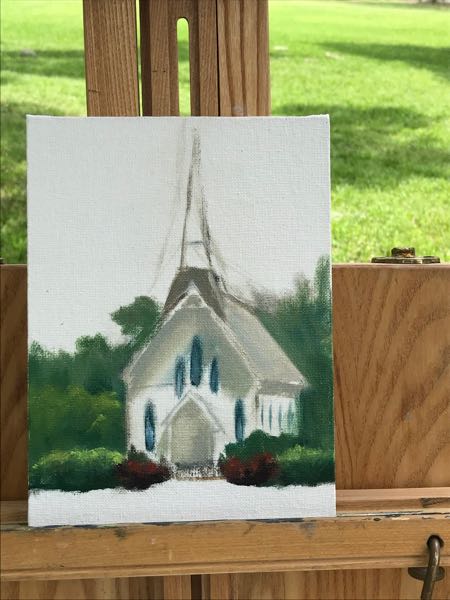
Step two, adding in the dark colors which make the light places appear.
Step three
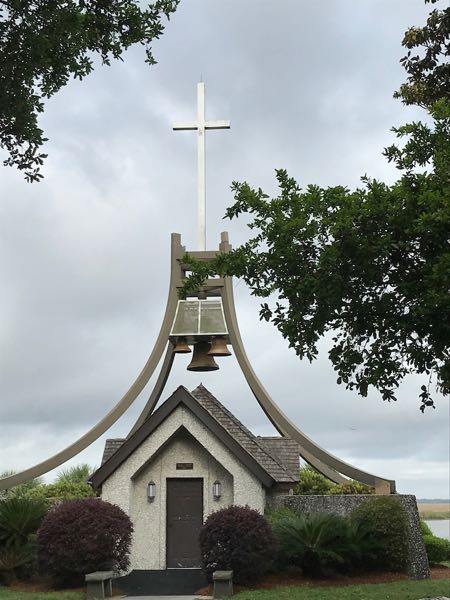
Preparations for a wedding on the outside of the chapel. That’s unusual. I thought people got married INSIDE churches. But actually, very few do anymore. That’s a different topic for a different sort of blog.
Time for the critique. I didn’t get a good photo of this painting but have asked my hostess to photograph it for me when it is dry. I left it on top of her refrigerator.
And that’s all, folks. Suddenly, the carriage turned into a pumpkin. I told Laurel that the entire experience was so perfect that I’d think it was just a dream if I wasn’t sweating so much in the humidity.
So, back to the host and hostess’s home in Brunswick, rearrange all my supplies to pack for flying, say a quick good-bye (like ripping off a bandaid), hit the road for a silent drive back to Jacksonville (since I never did figure out the fancy radio), return the car, oops, go back to gas up the car (less than $3/gallon in Florida when it is over $4 now in Calif.), get a ride to the hotel, find some dinner (grits! because I was in the south), fall into bed for a 4 a.m. wake-up call. “Pumpkin”? More like a squash.
It was a fabulous adventure, a time of new sights, learning, friendships, challenges, new wildflowers, and, umm, sweating.
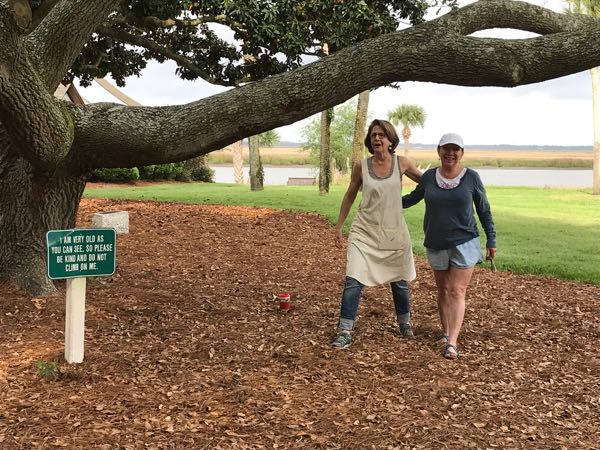
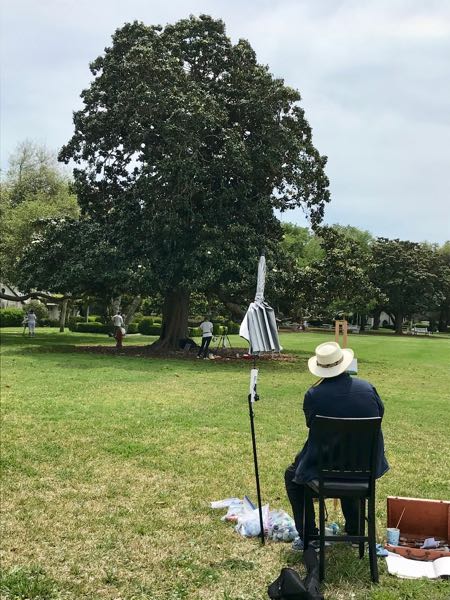
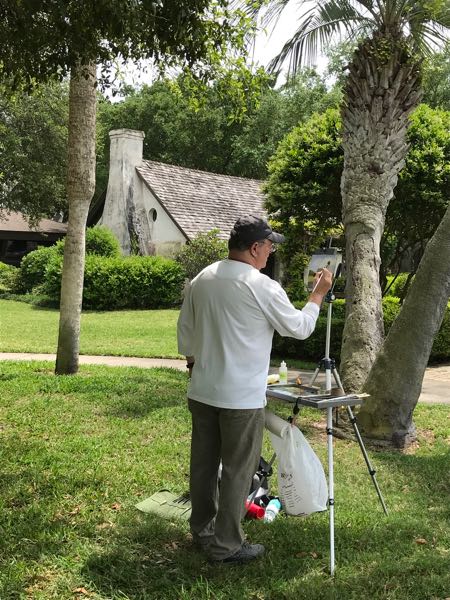
On day three of the workshop, we met at a conference grounds, full of chapels, tabby cabins (converted slave quarters), views of the water and marshes, bells playing hymns every 1/2 hour, weddings, guests wandering the grounds.
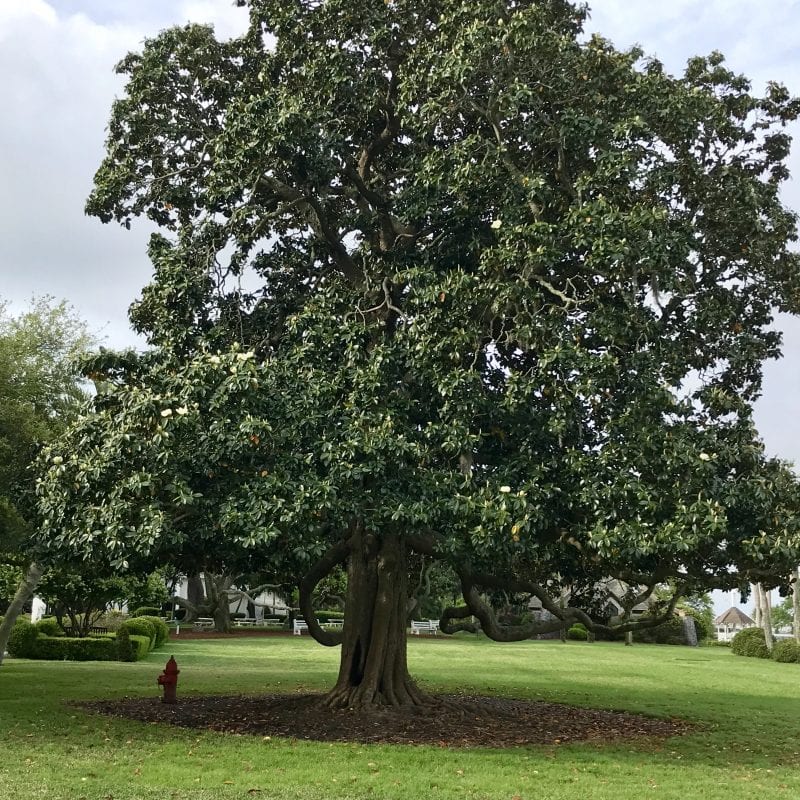
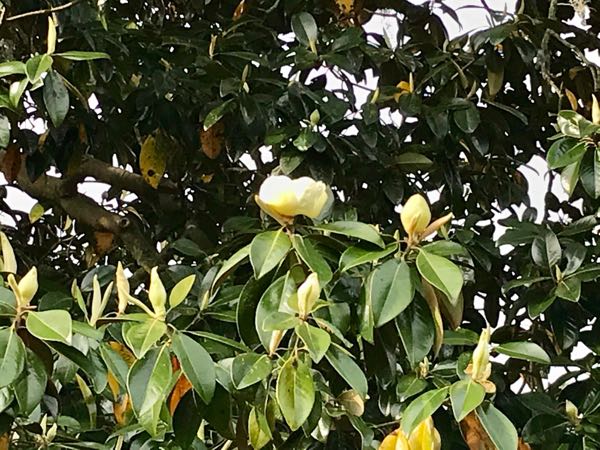
Perfect magnolia
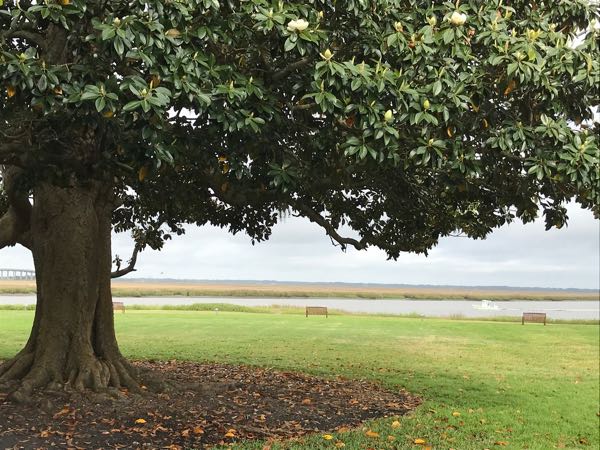
Bill chose the tree.
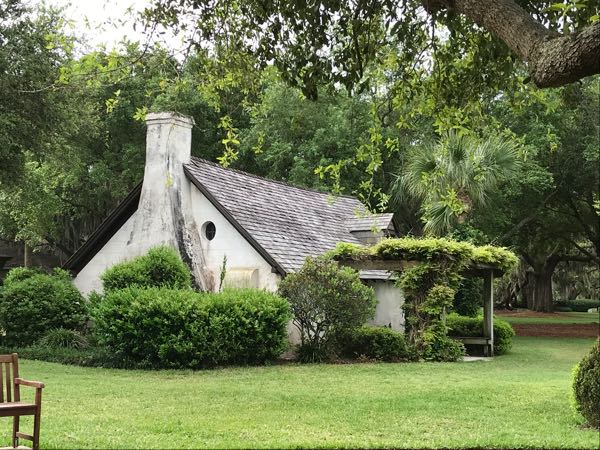
Marty chose the closer tabby cabin.
I wanted to paint this cabin, but made myself choose something harder.
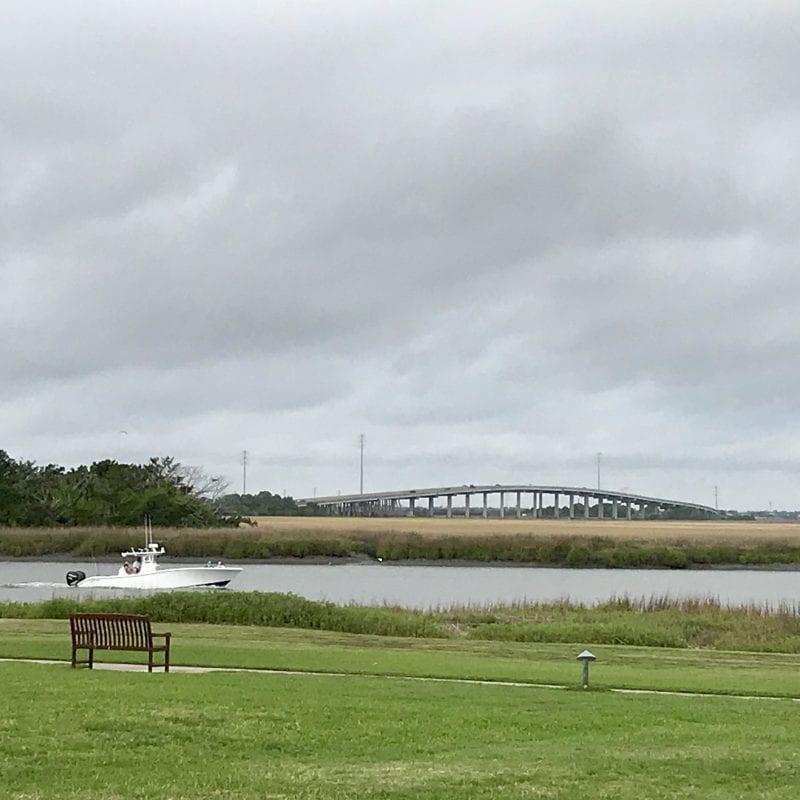
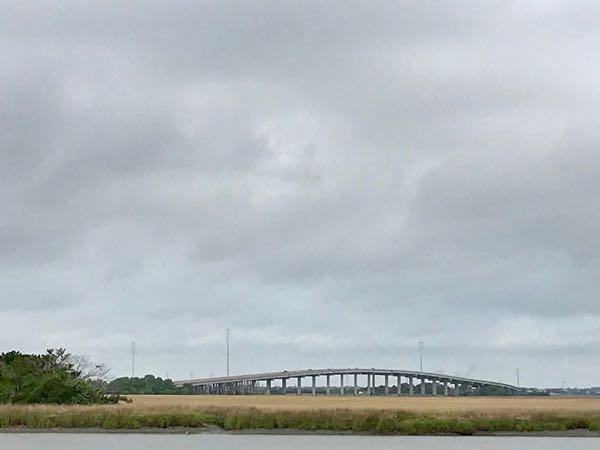
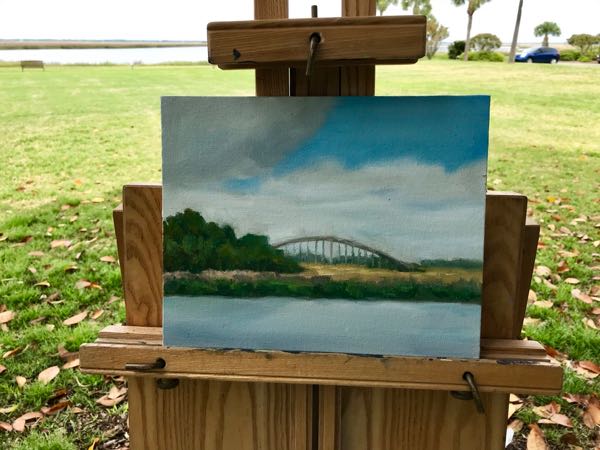
I chose this scene, because I have a bent toward bridges as a painting (and drawing) subject.
Funny to call this a “bridge scene” when there is more sky than anything else. Part of why I chose it was to learn from Laurel how to turn a fairly nondescript subject into something worth painting.
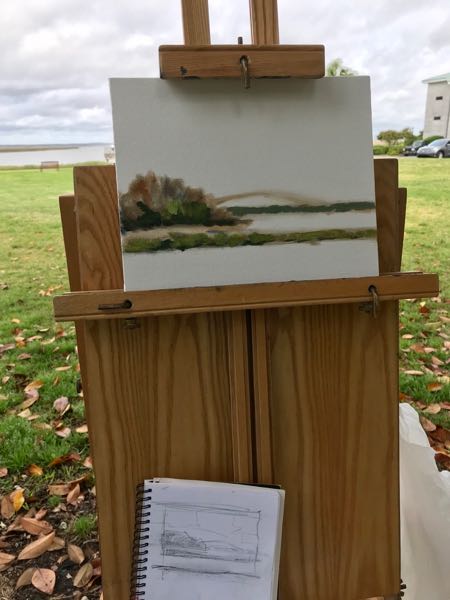
step one, following my sketch but with modifications after I eavesdropped on Laurel helping Peggy refine the same view (minus the bridge).
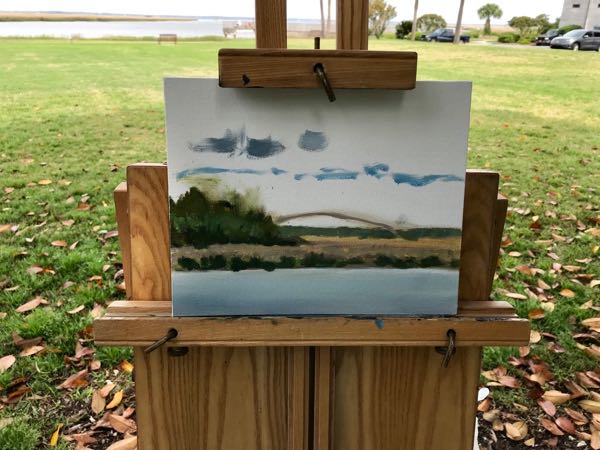
Step two, but what did I do this photo? It looks weird.
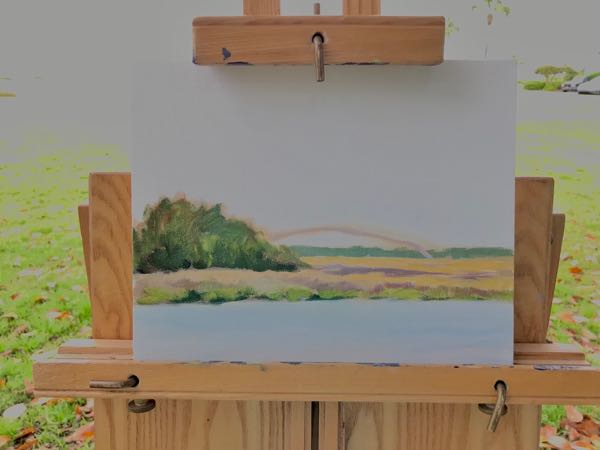
step 3
Step four
Then we had lunch, did a critique, and chose our afternoon subject. Not everyone wanted to do a second painting, but there was something I really wanted to paint.
And back at home, the kitties were just fine.
Show you tomorrow, our final travelogue post about my trip to Georgia.