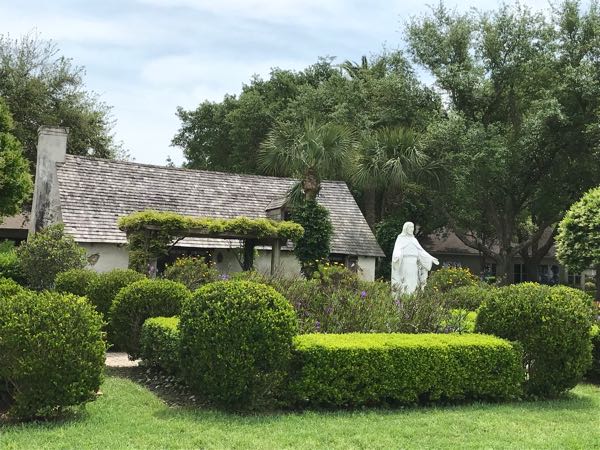
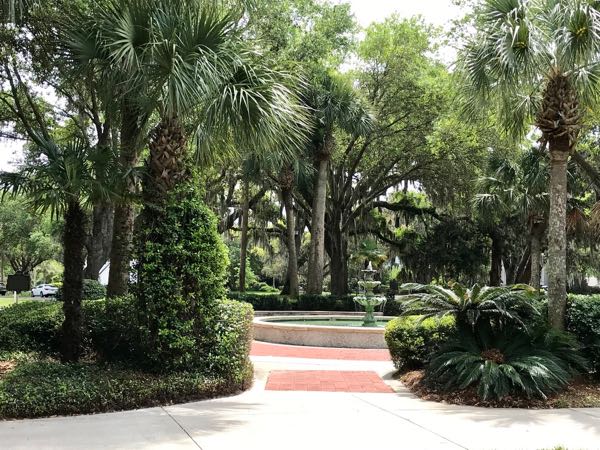
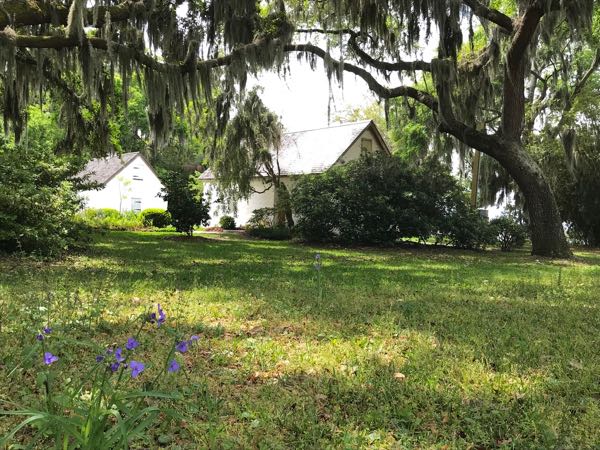
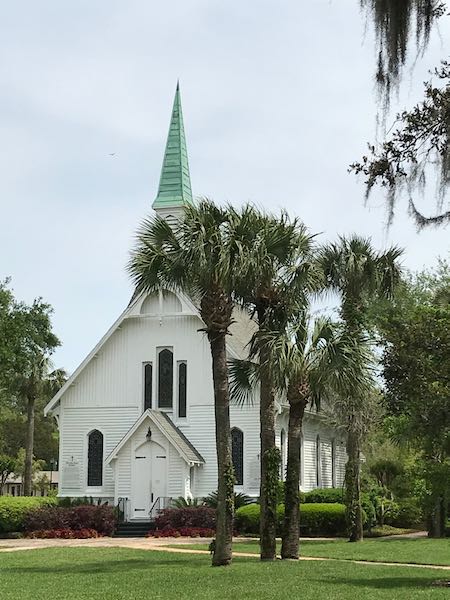
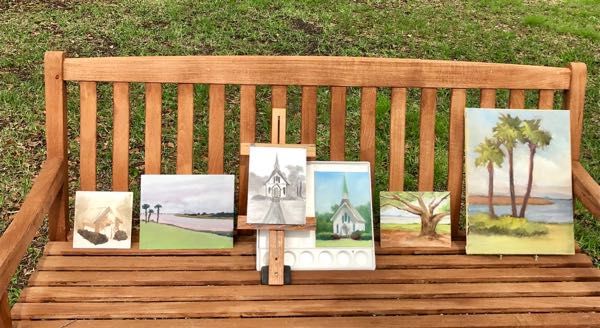
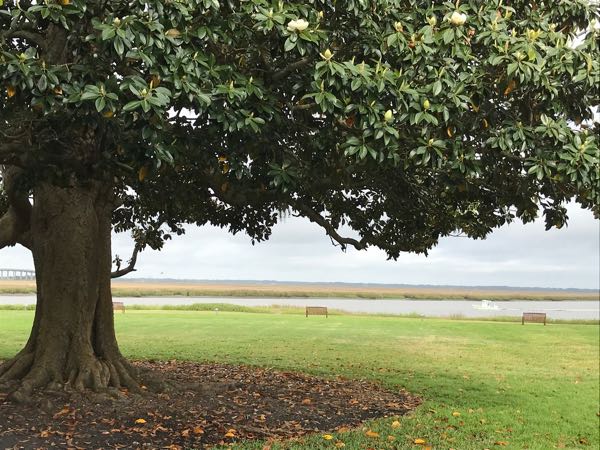
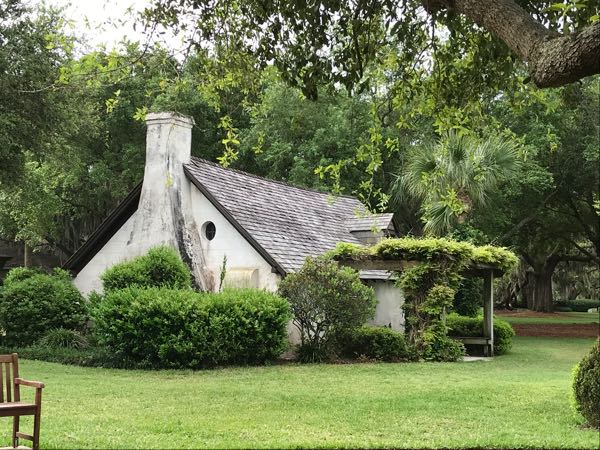
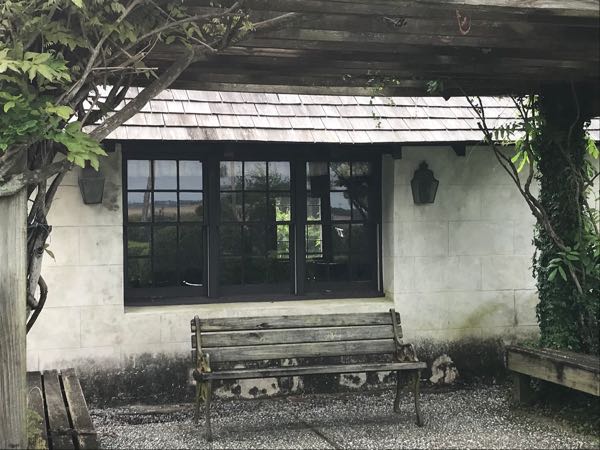
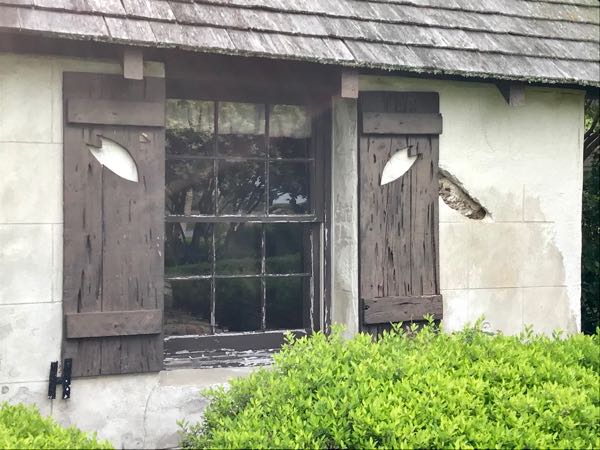
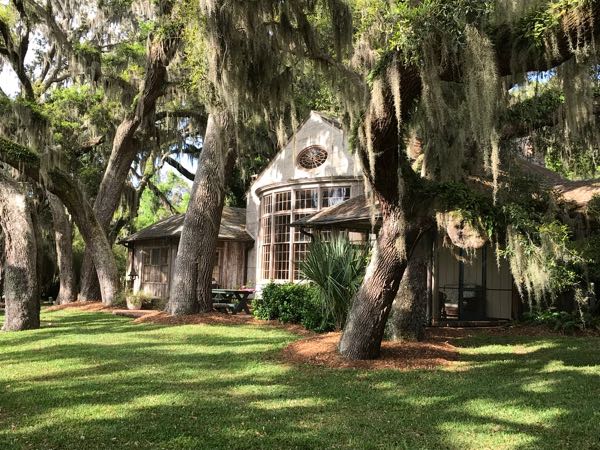
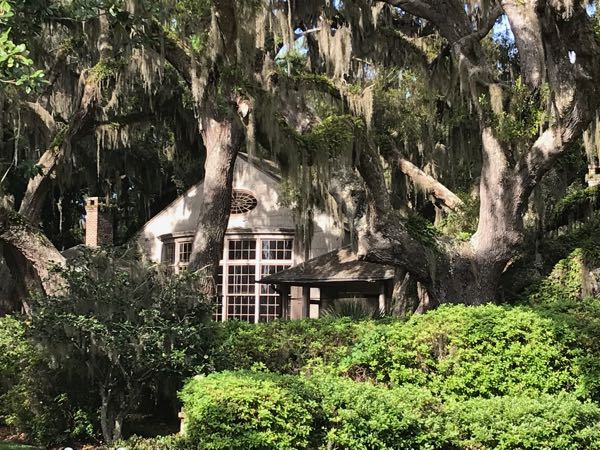
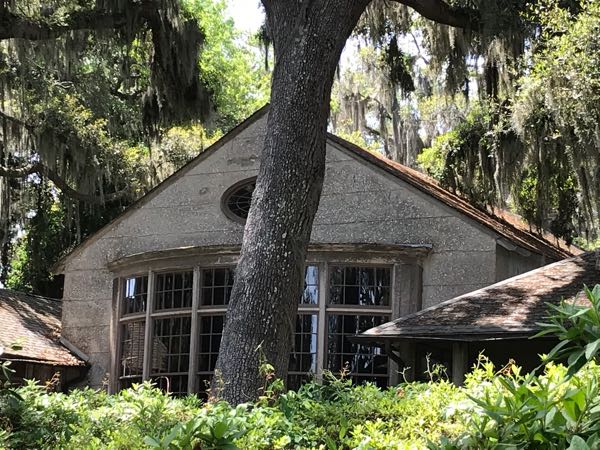
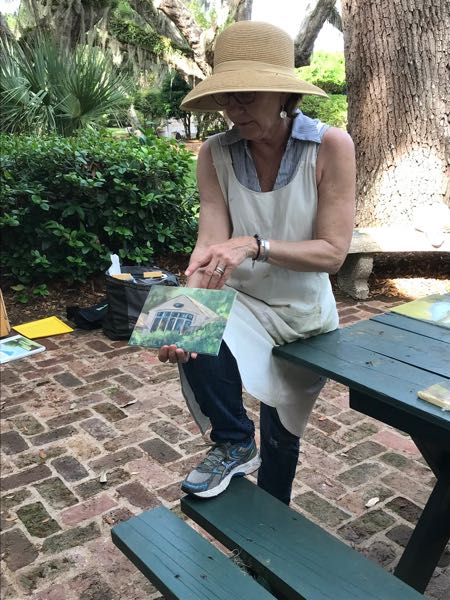
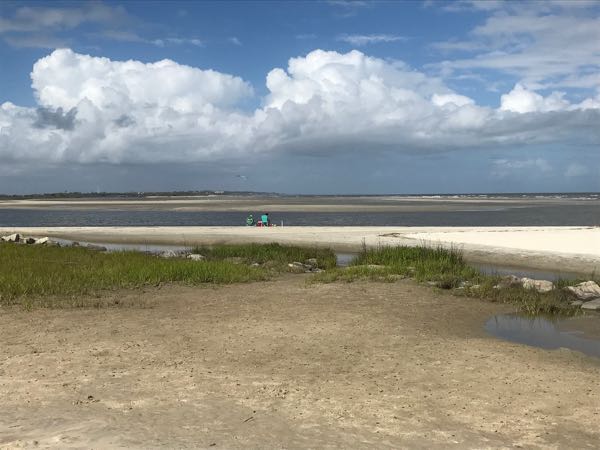
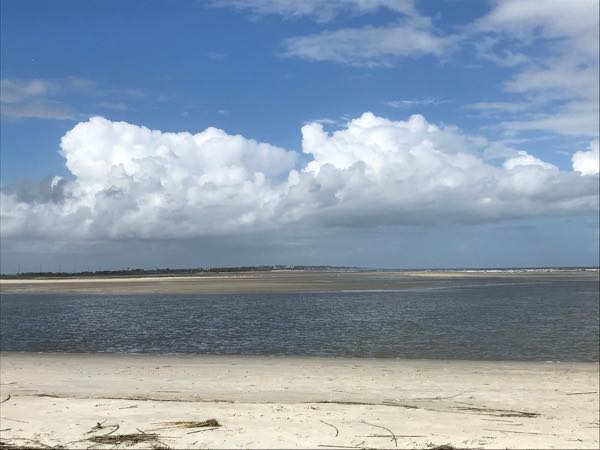
So many things to choose from for my final plein air painting.
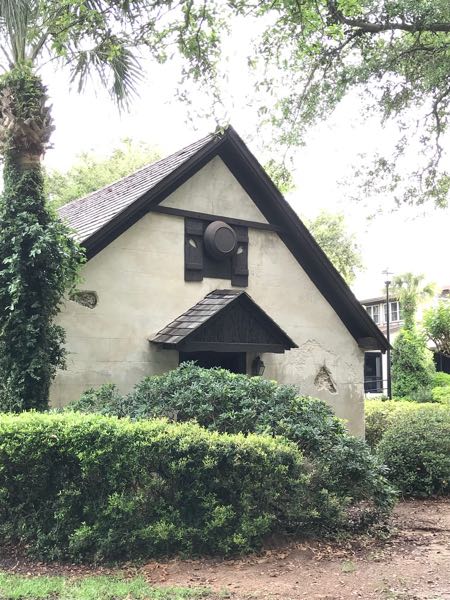
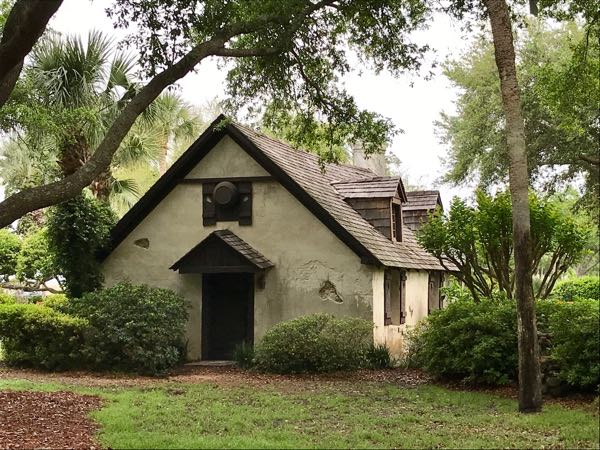
More “tabby cabins”. I don’t know why that name bugs me. Maybe because it is whitewashing a segment of our history.
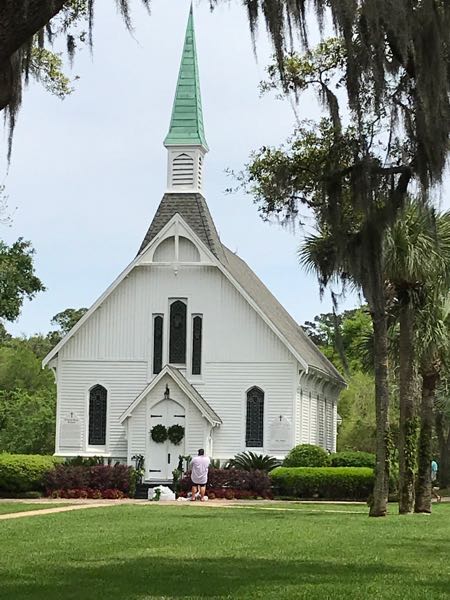
THIS is what I wanted to paint, but minus the palms.
Like this, but waiting for the light, which Laurel explained would come soon.
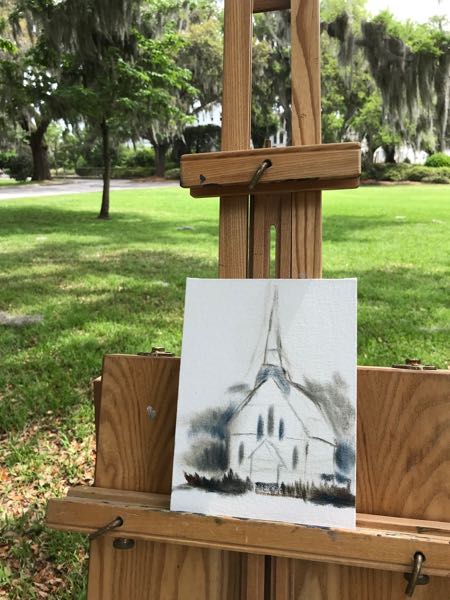
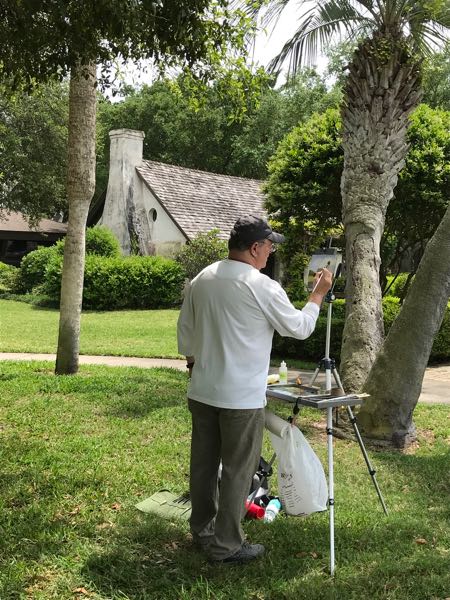
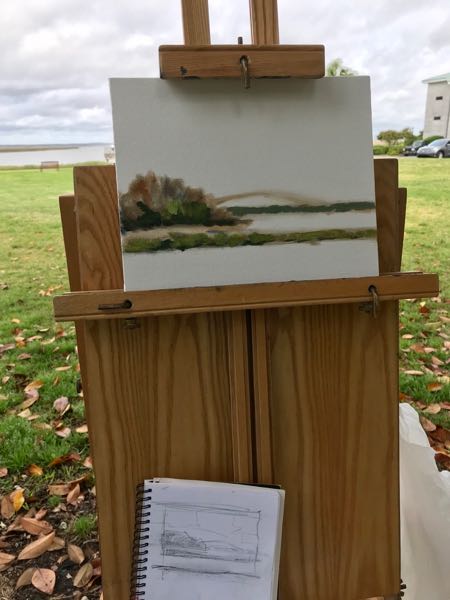
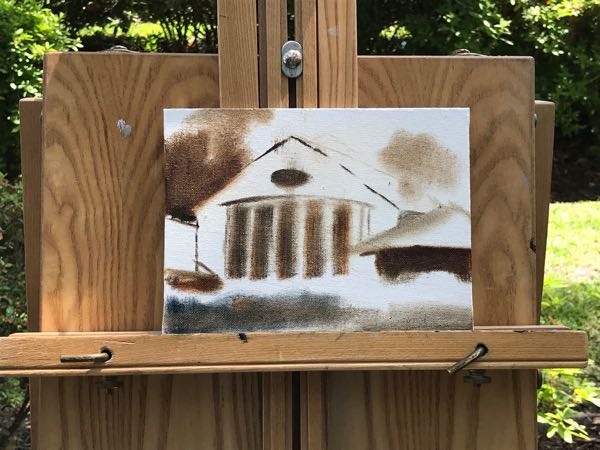
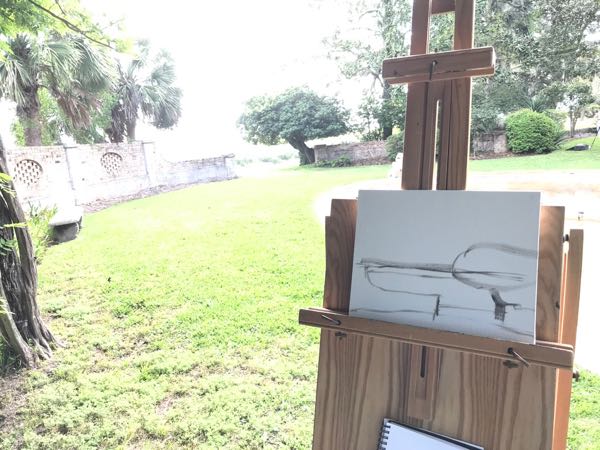
Step one, only 2 hours to complete this.
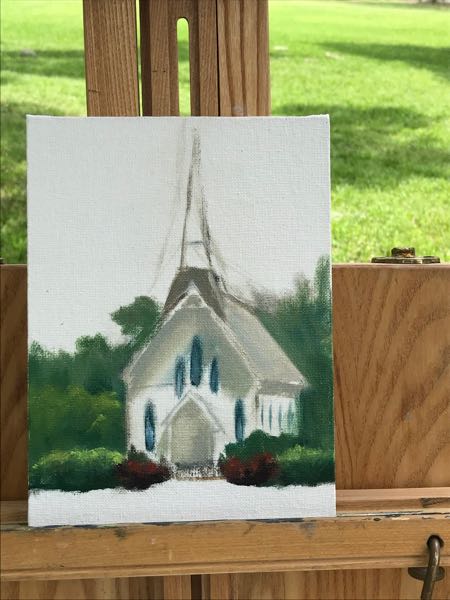
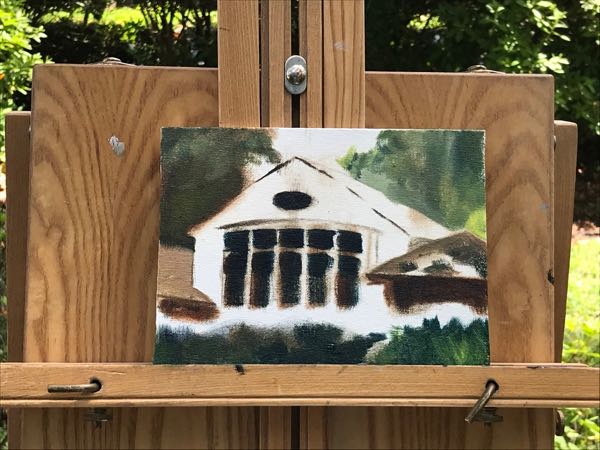
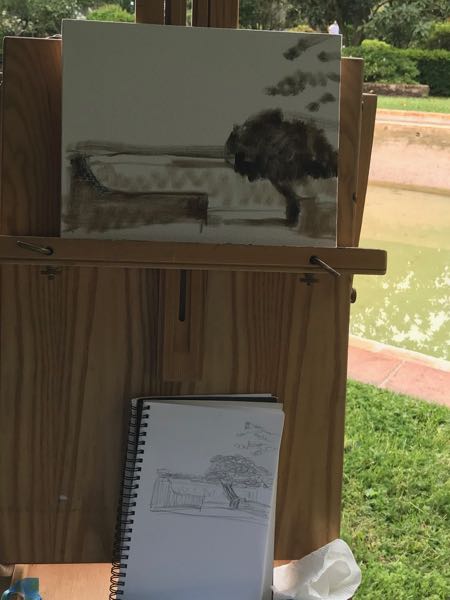
Step two, adding in the dark colors which make the light places appear.
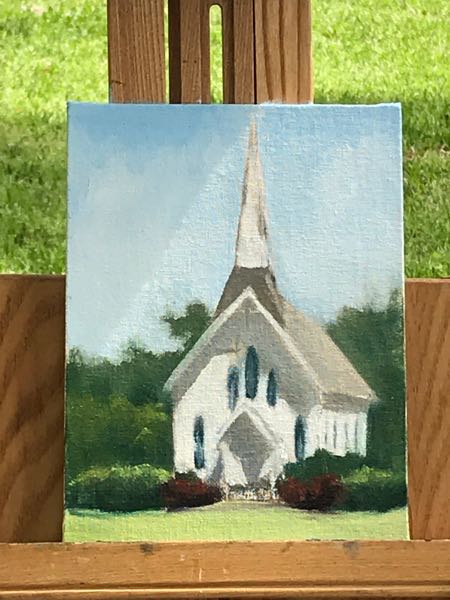
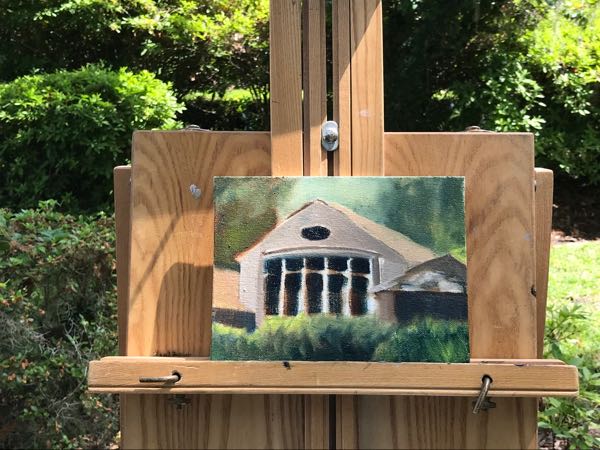
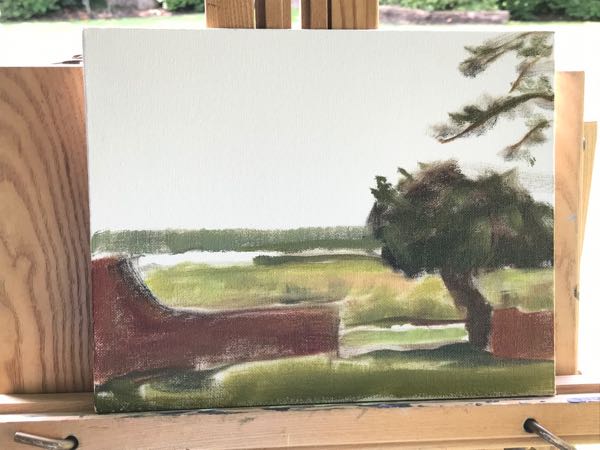
Step three
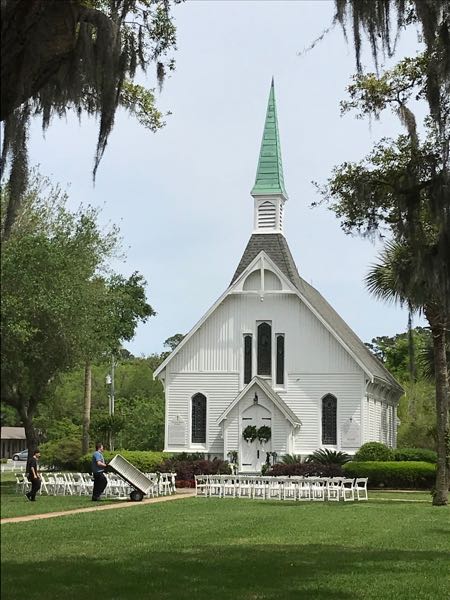
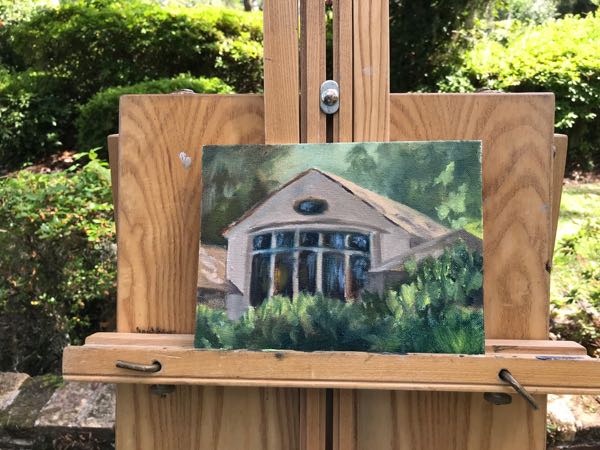
Preparations for a wedding on the outside of the chapel. That’s unusual. I thought people got married INSIDE churches. But actually, very few do anymore. That’s a different topic for a different sort of blog.
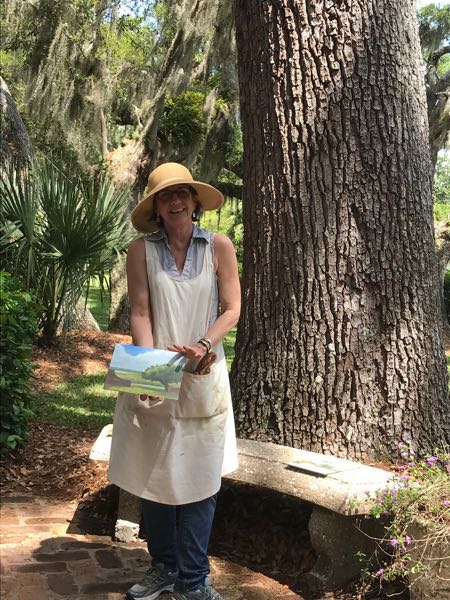
Time for the critique. I didn’t get a good photo of this painting but have asked my hostess to photograph it for me when it is dry. I left it on top of her refrigerator.
And that’s all, folks. Suddenly, the carriage turned into a pumpkin. I told Laurel that the entire experience was so perfect that I’d think it was just a dream if I wasn’t sweating so much in the humidity.
So, back to the host and hostess’s home in Brunswick, rearrange all my supplies to pack for flying, say a quick good-bye (like ripping off a bandaid), hit the road for a silent drive back to Jacksonville (since I never did figure out the fancy radio), return the car, oops, go back to gas up the car (less than $3/gallon in Florida when it is over $4 now in Calif.), get a ride to the hotel, find some dinner (grits! because I was in the south), fall into bed for a 4 a.m. wake-up call. “Pumpkin”? More like a squash.
It was a fabulous adventure, a time of new sights, learning, friendships, challenges, new wildflowers, and, umm, sweating.
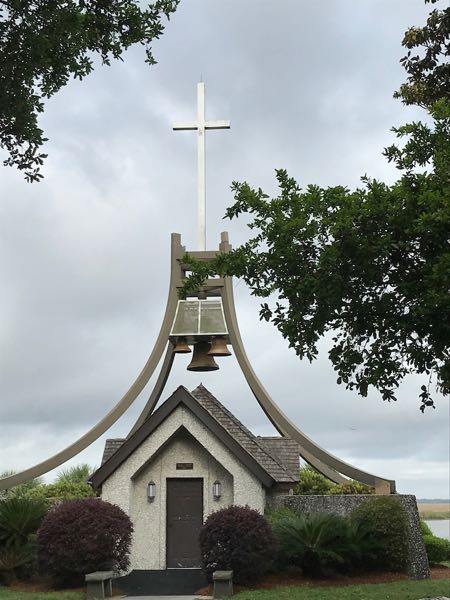
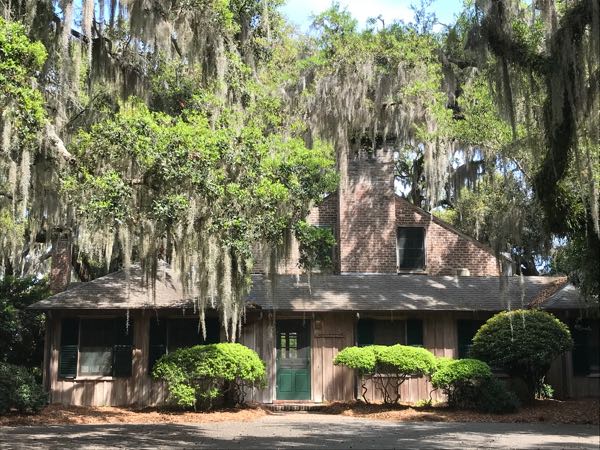
On day three of the workshop, we met at a conference grounds, full of chapels, tabby cabins (converted slave quarters), views of the water and marshes, bells playing hymns every 1/2 hour, weddings, guests wandering the grounds.
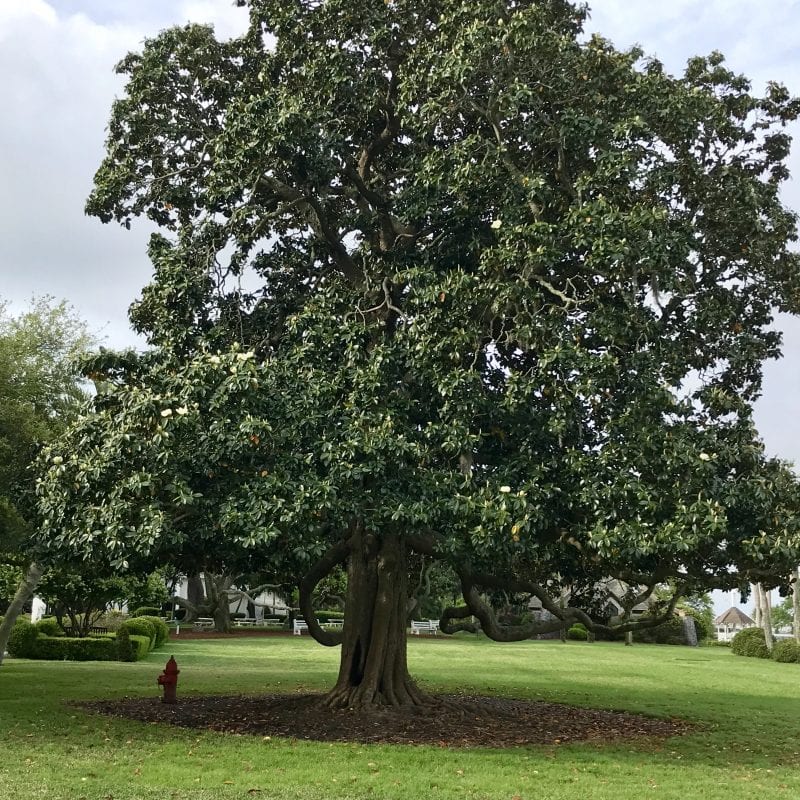
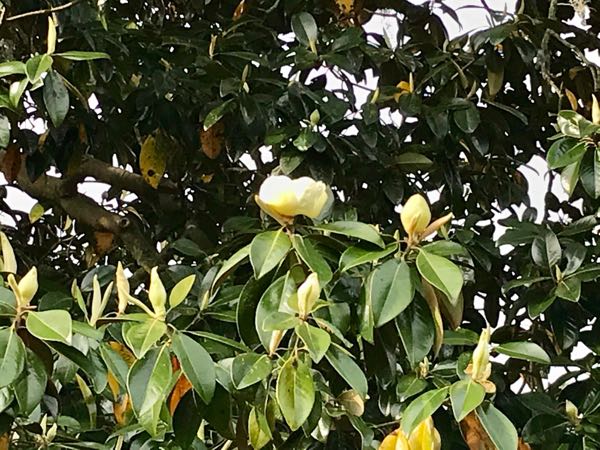
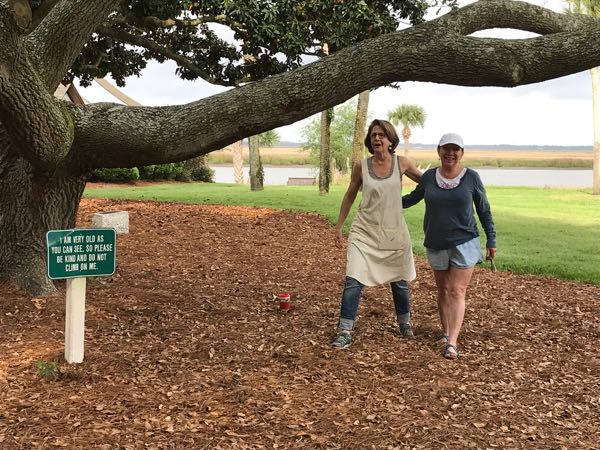
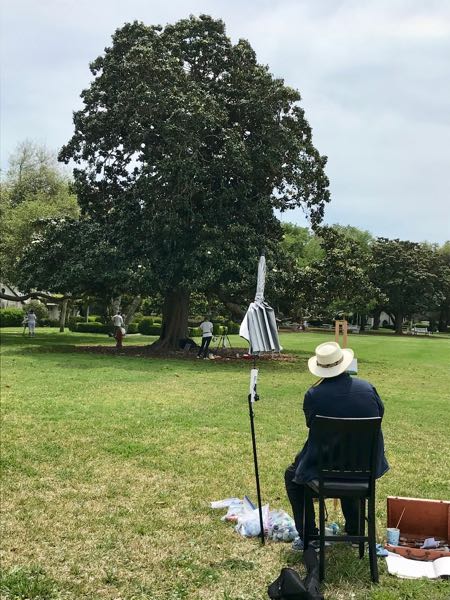
Perfect magnolia
Bill chose the tree.
Marty chose the closer tabby cabin.
I wanted to paint this cabin, but made myself choose something harder.
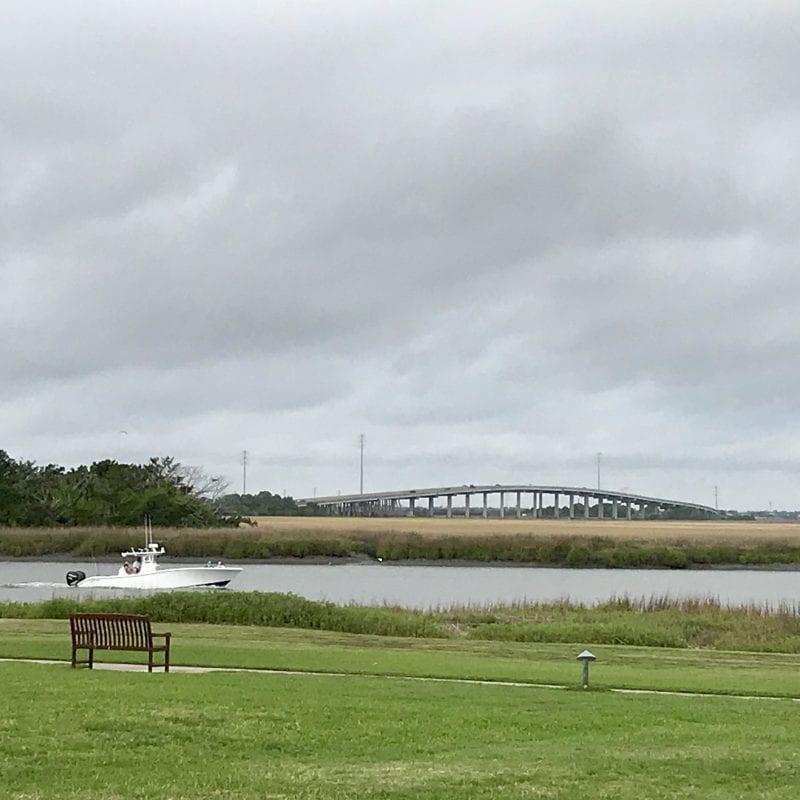
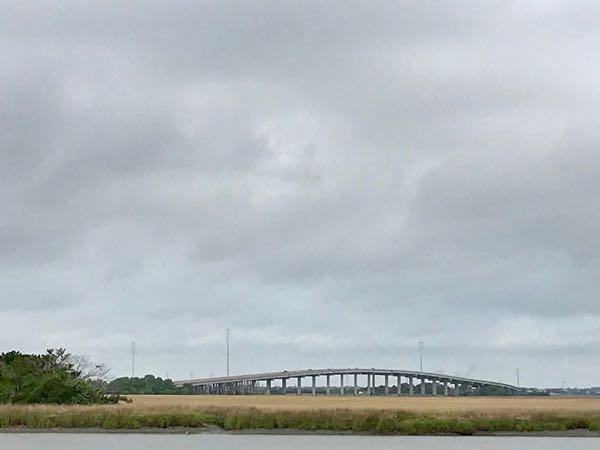
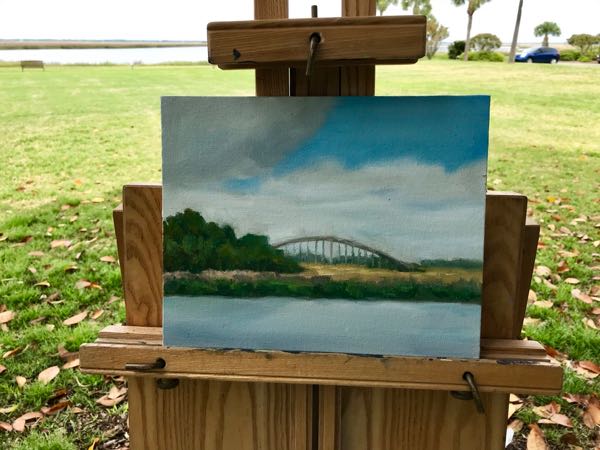
I chose this scene, because I have a bent toward bridges as a painting (and drawing) subject.
Funny to call this a “bridge scene” when there is more sky than anything else. Part of why I chose it was to learn from Laurel how to turn a fairly nondescript subject into something worth painting.
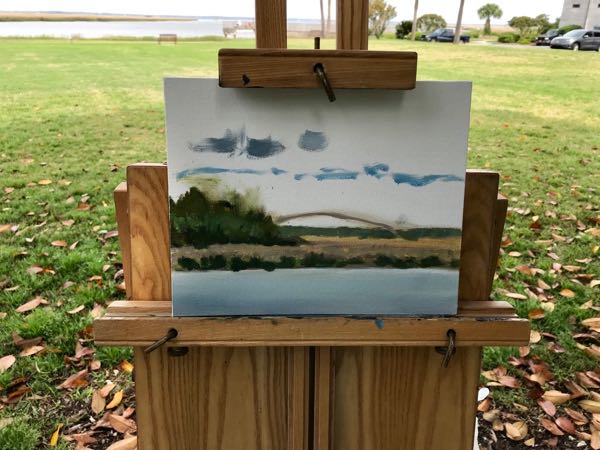
step one, following my sketch but with modifications after I eavesdropped on Laurel helping Peggy refine the same view (minus the bridge).
Step two, but what did I do this photo? It looks weird.
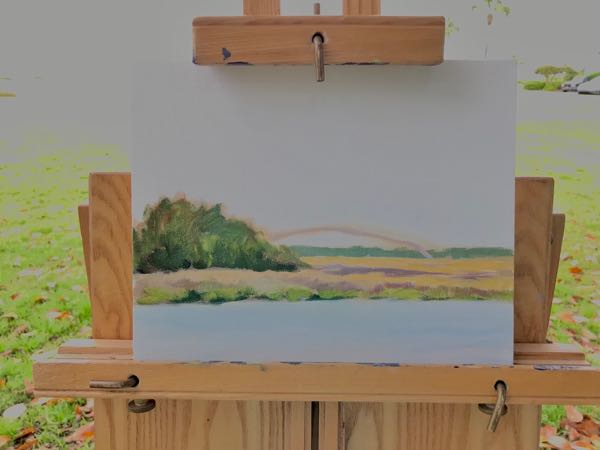
step 3
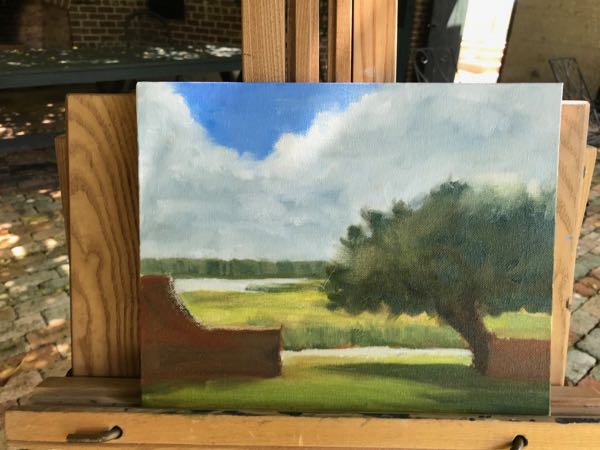
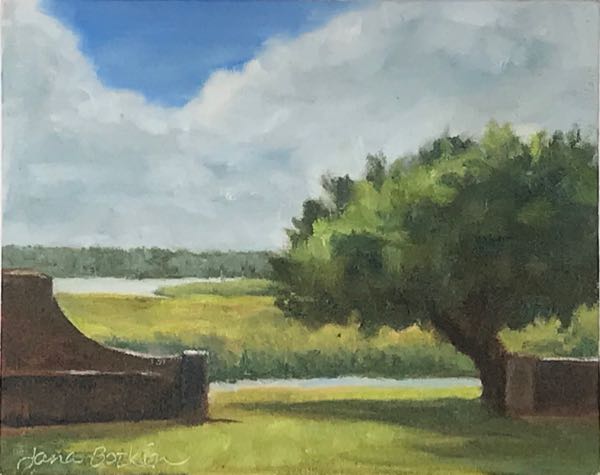
Step four
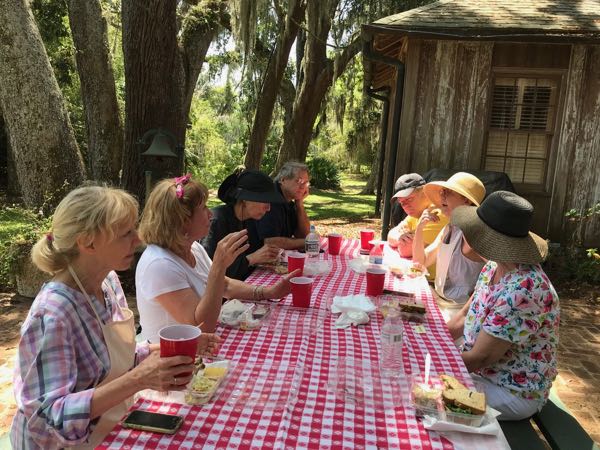
Then we had lunch, did a critique, and chose our afternoon subject. Not everyone wanted to do a second painting, but there was something I really wanted to paint.
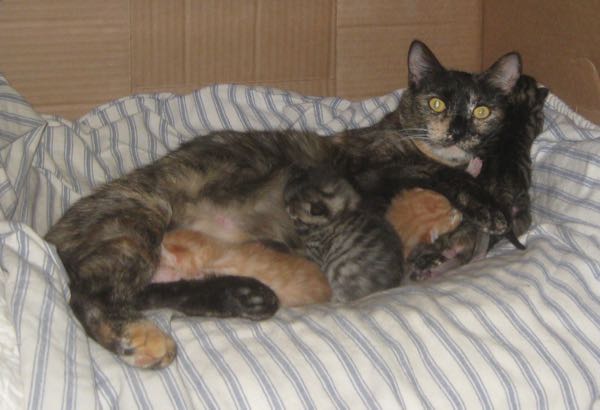
And back at home, the kitties were just fine.
Show you tomorrow, our final travelogue post about my trip to Georgia.
After class on day 2 and before class on day 3, I went driving around, looking for things, taking in all the sights. I love exploring!
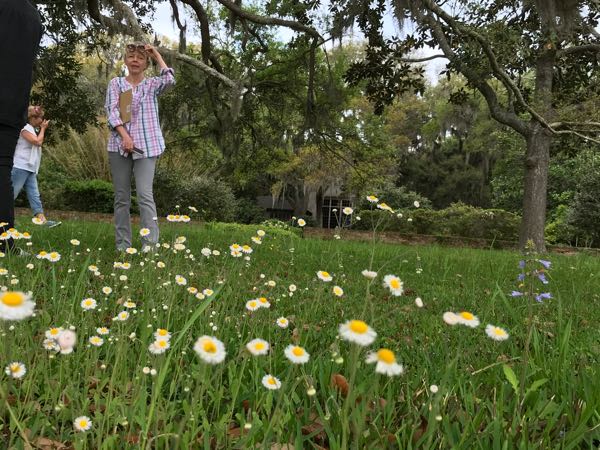
There is always time to look at wildflowers.
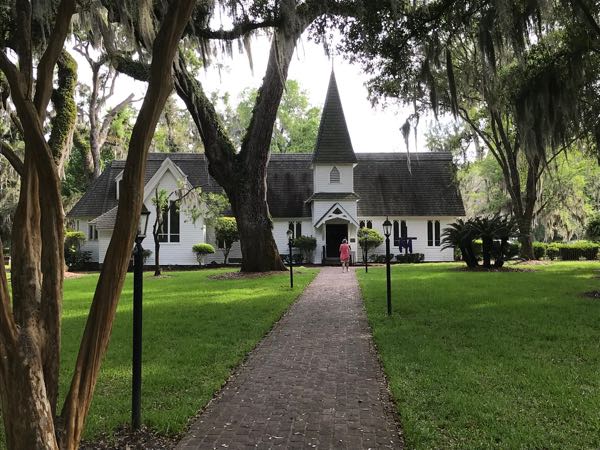
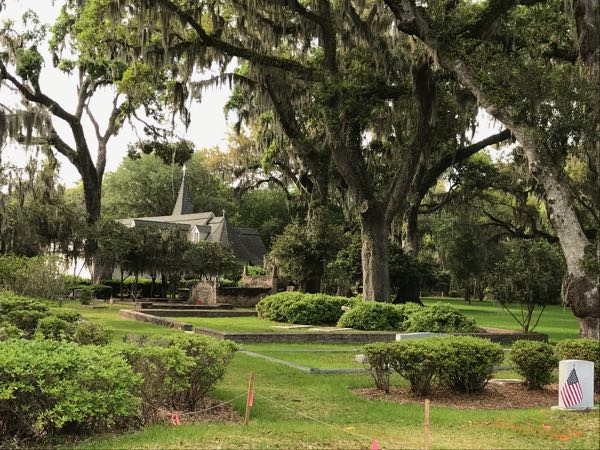
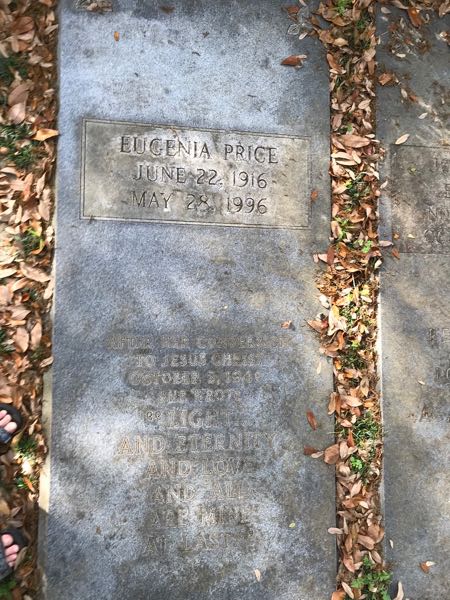
Laurel told me this church, which was in the Eugenia Price novels, was a must-see. When she said Eugenia is buried in the adjoining cemetery, I asked for directions. Something was happening inside the church, so I didn’t go inside.
I wondered around among the graves, but didn’t take many photos. It was tempting, because I saw a plot called “Graves” and another one called “Coffin”. There was also one called “Outlaw”. These were people’s names, of course.
I met someone who showed me what I was looking for.
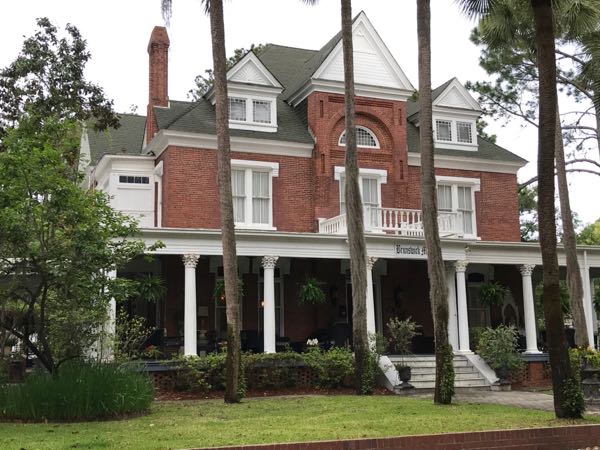
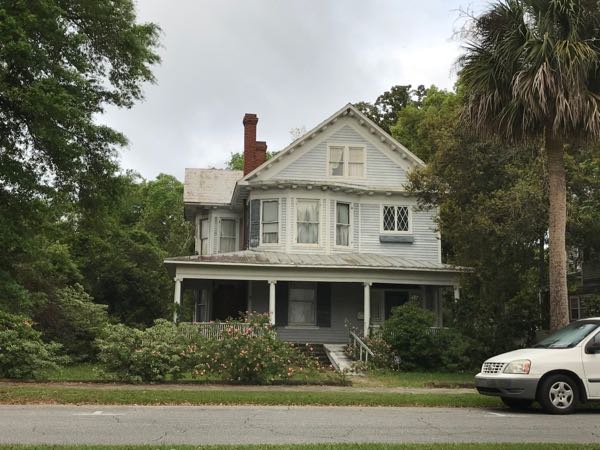
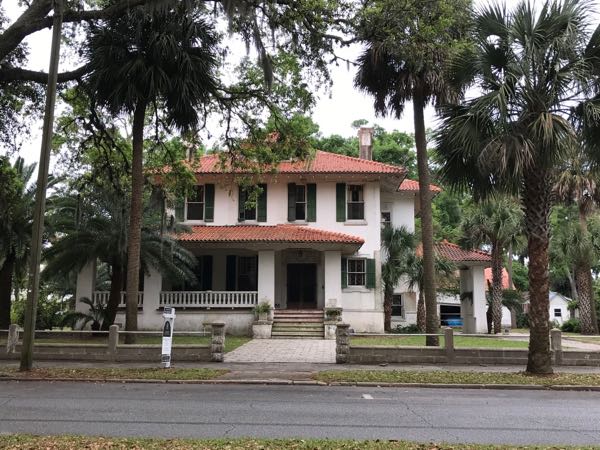
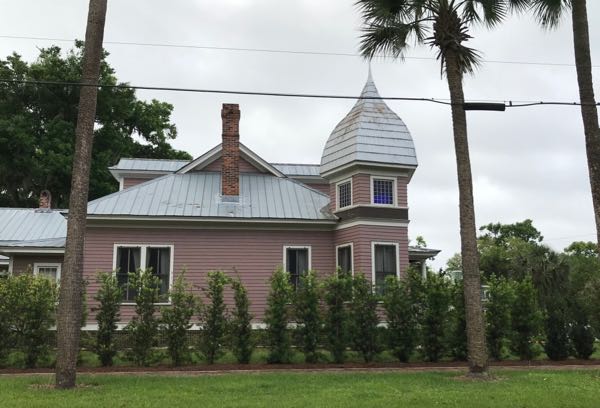
The next morning I drove through the Victorian neighborhood of Brunswick, just being a looky-loo. It isn’t often I get to see such fabulous houses or such a variety of architecture, so I was definitely gawking.
For sale. I wonder how much they are asking. I ducked it (DuckDuckGo is my preferred search engine) and saw there are 800-1600 homes for sale there. Not gonna find this one easily.
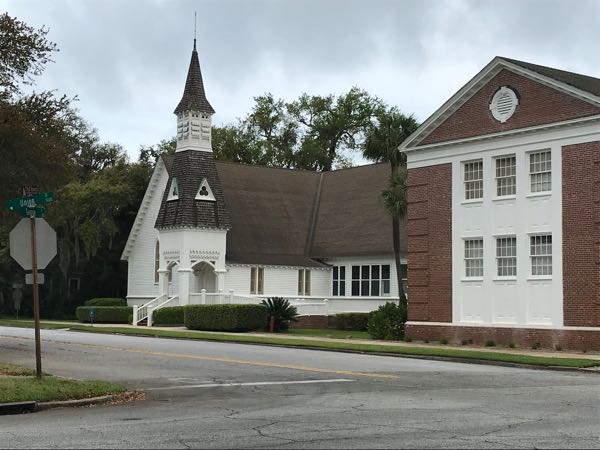
Churches on every corner. I didn’t have time to capture them all, but none were the plain-Janes of Tulare County.
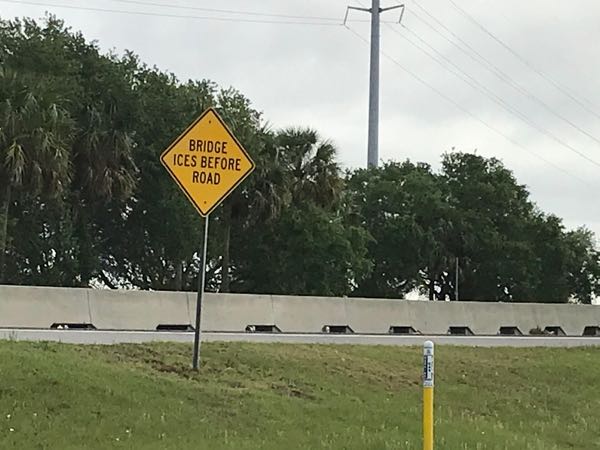
No kidding!
I couldn’t figure out the meaning of this. Finally my host explained it to me. It means that bridges ice up sooner than the roads do.
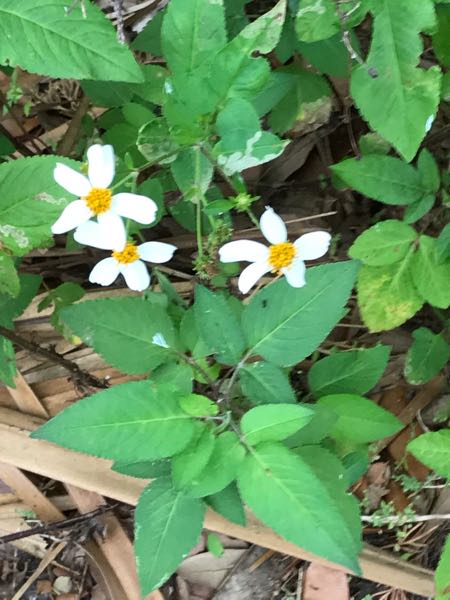
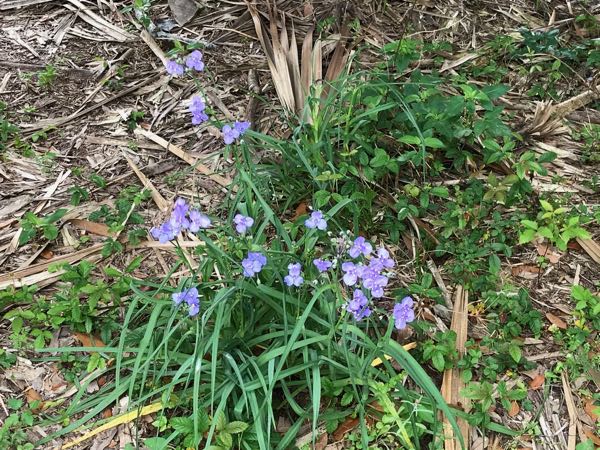
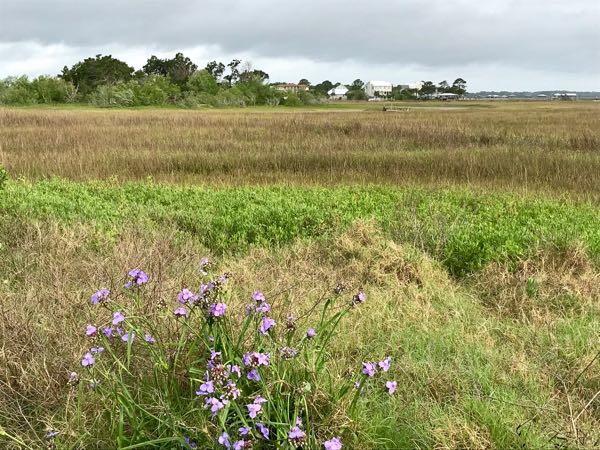
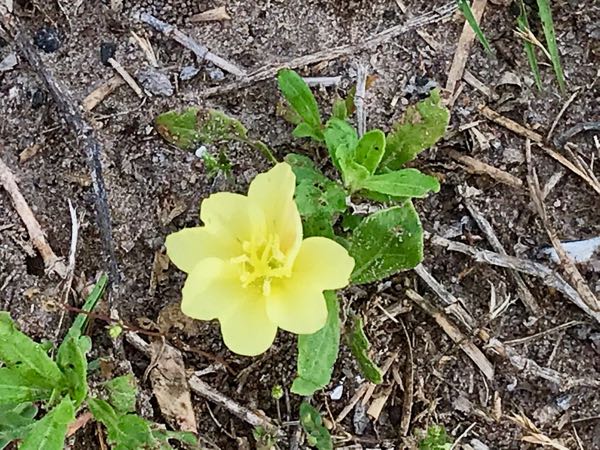
These flowers were profuse and beautiful. I bought a wildflower guide to learn the name. None of the people I was hanging out with had much interest in wildflowers, definitely not the way we have been going gaga in Tulare County this spring.
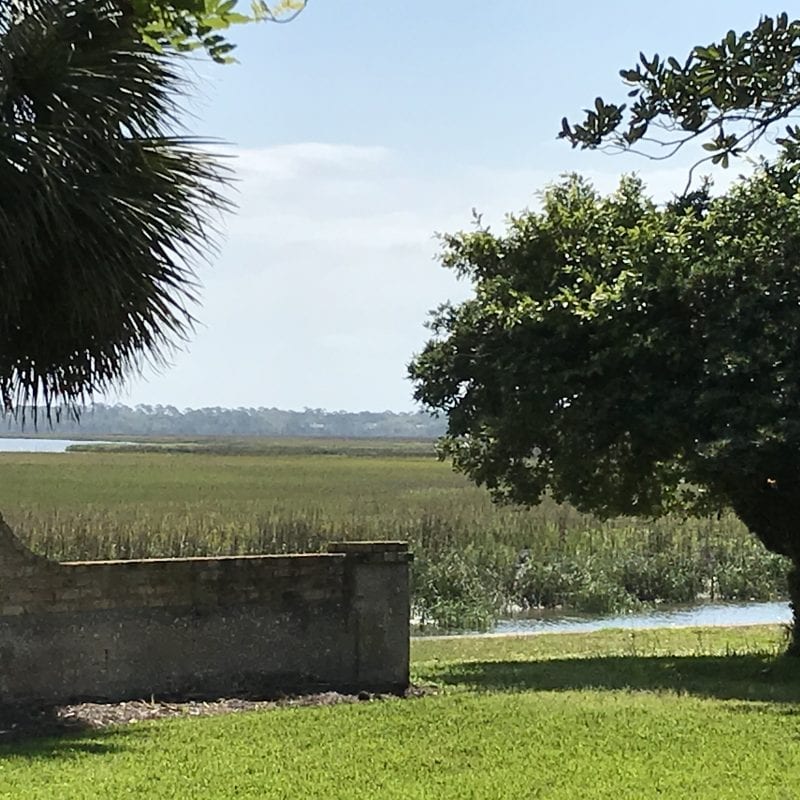
Marsh, marsh, marsh. This is one of the draws of the area. What’s the difference between a marsh and a swamp? Do people go wading out in the marshes? Are there wildflowers out there? wildlife? Do people drown? So many questions.
My wildflower guide was grossly inadequate.
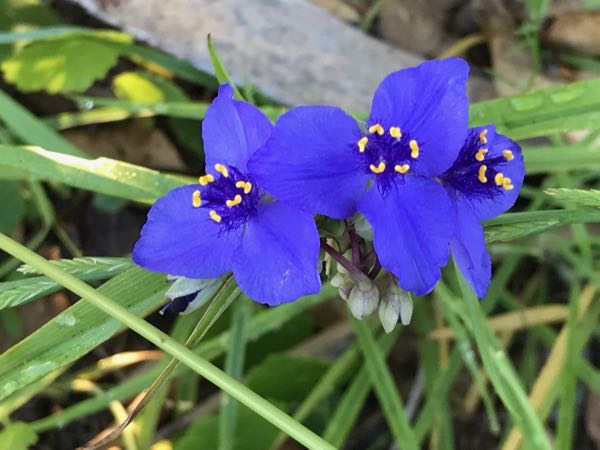
But, it did have the name of this beauty, an unfortunate moniker of “Spiderwort”. What??
Some of this will look familiar to you, since I did a rudimentary blog post while still in Georgia. Boy oh boy am I glad to be back with my laptop!
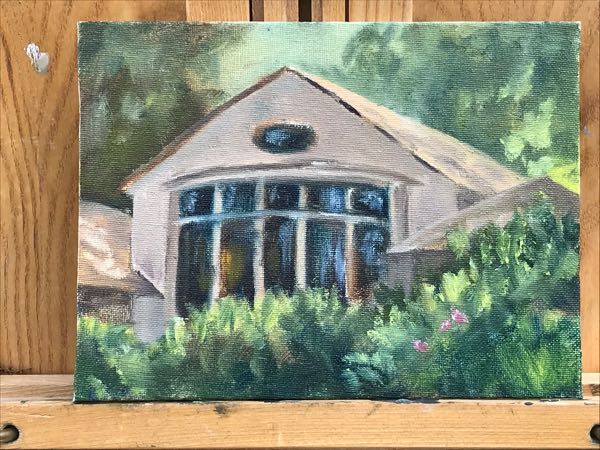
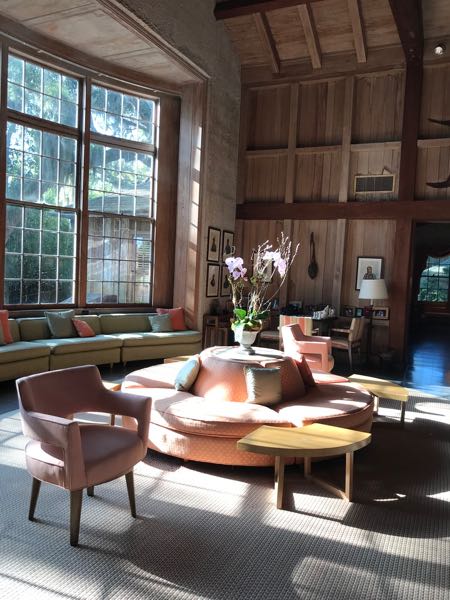
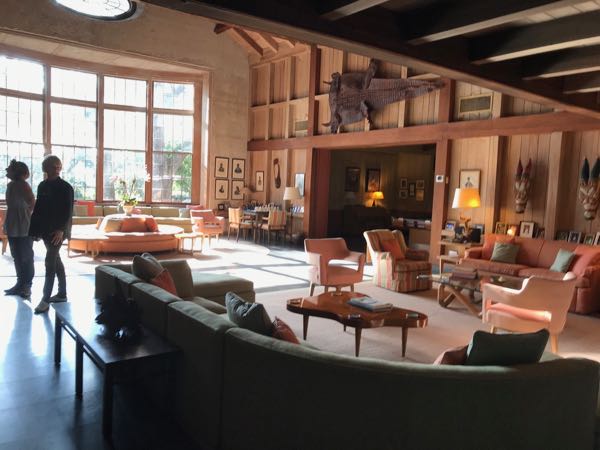
This is the continuation of the post on Monday about painting at the private estate on St. Simons Island. There were many possibilities, but I knew the clock was ticking so I needed to make a quick decision. I love architecture, so the back of the house won.
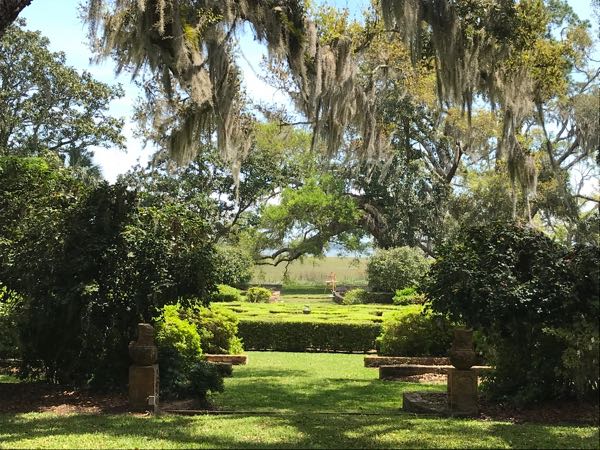
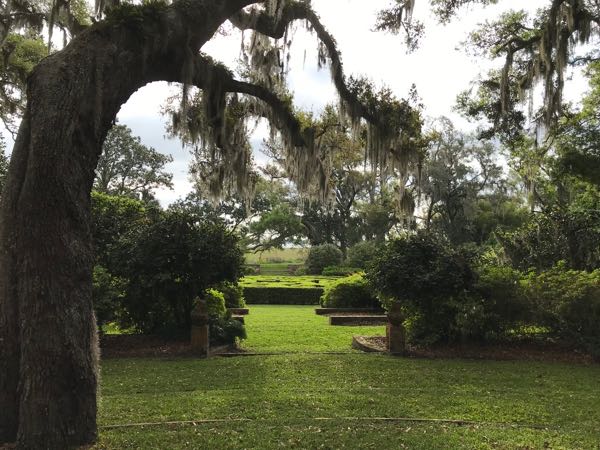
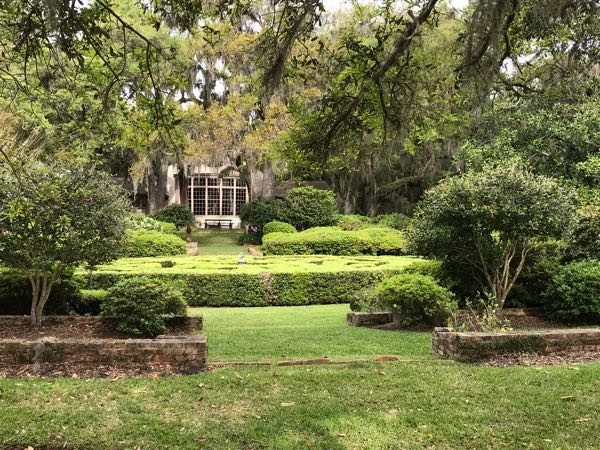
The formal garden with a maze was tempting.
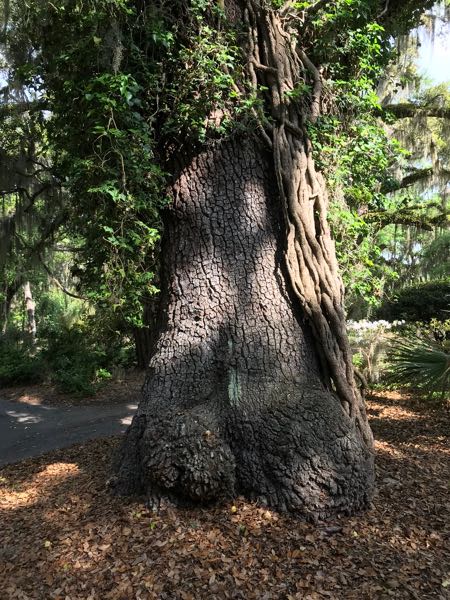
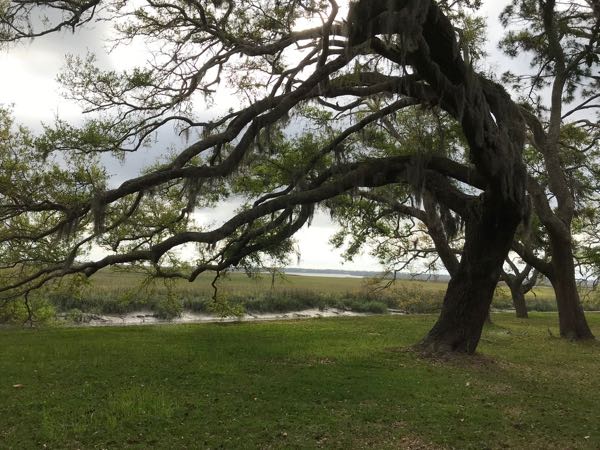
This giant oak with wisteria winding up its trunk was interesting.
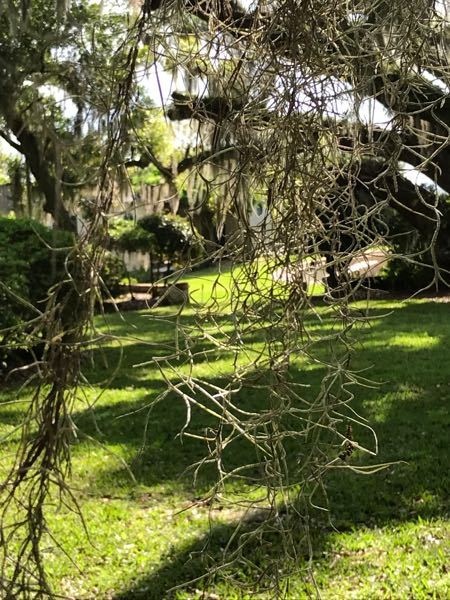
The moss was very interestingly weird, but would have been impossible to paint.
Fabulous house.
Simpler angle, and I could ignore the trees in the way.
Step one
Step two
Step three
Step four
Finished? I don’t know, because it looks so messy.
Critique.
This is the front of the house. There was so much to see, and too little time.
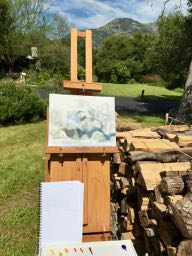
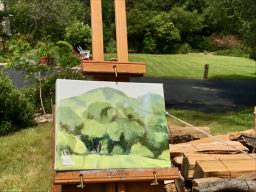
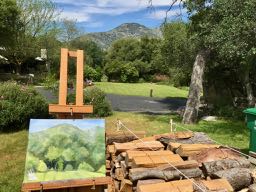
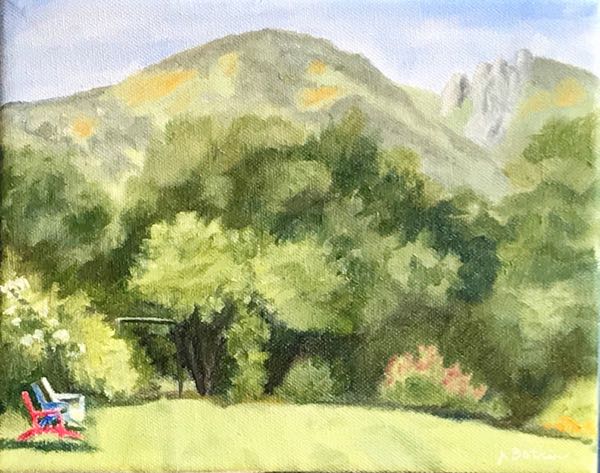
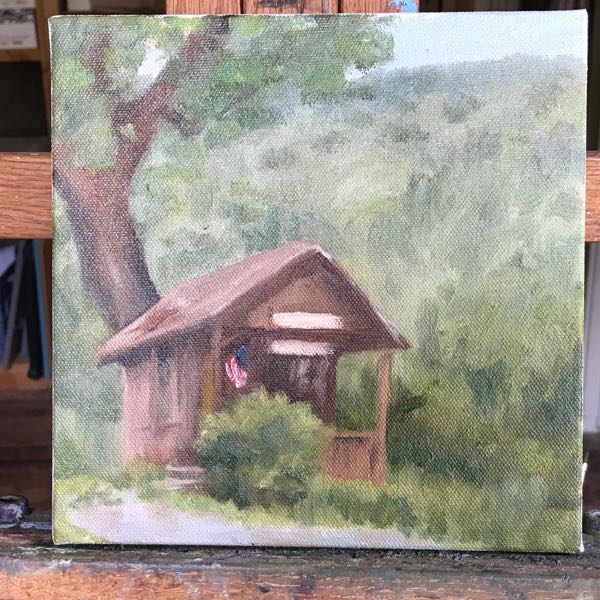
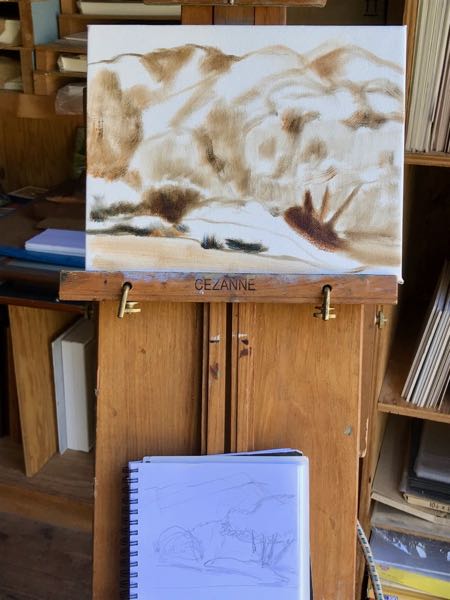
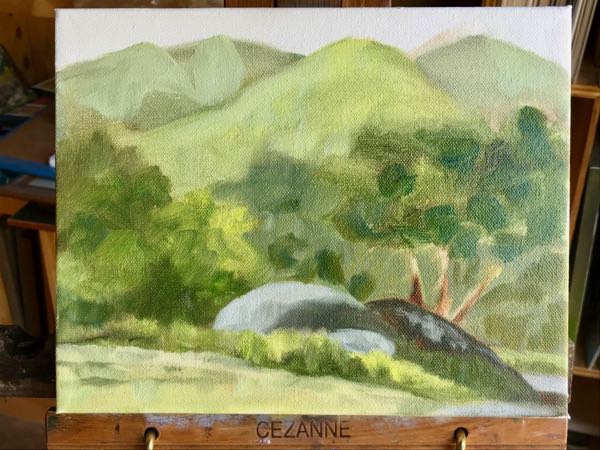
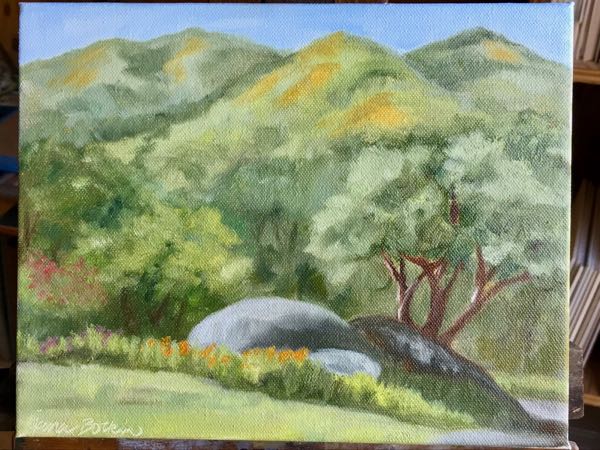
Finally, I painted something plein air at home that I like! There are so many elements to making a successful painting, and when you throw in the idea that it is a subjective type of thing, where every viewer has a different opinion, how can a painting ever be judged successful or unsuccessful? De gustibus non est disbutandem which means “it is useless to argue over matters of taste.
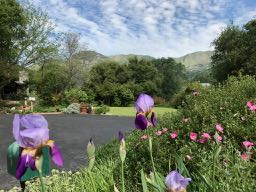
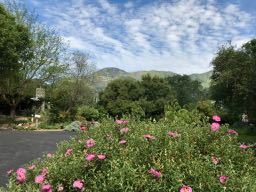
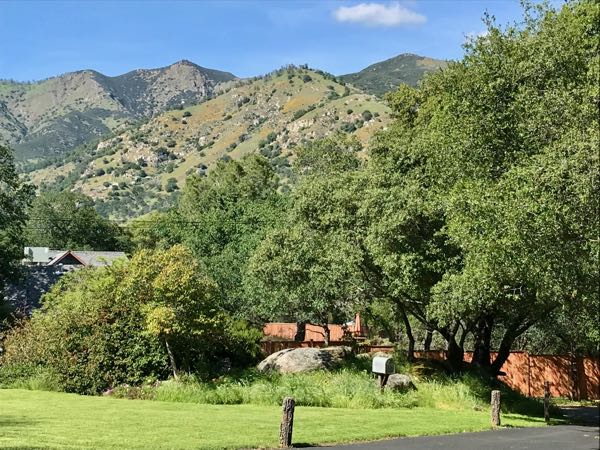
Still green, and new blooms in the yard.
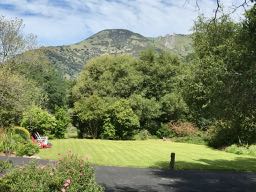
How can I not paint this?
There must be something here that I can organize into a decent composition.
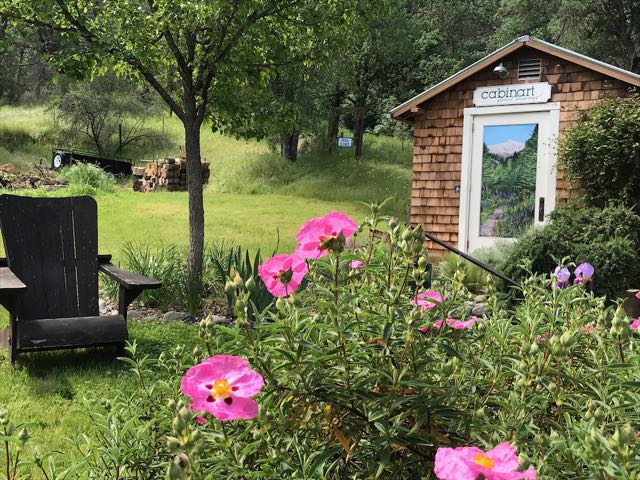
Shiny object!
Yes, I’d rather be in that little building with my pencils, but sometimes we have to parent ourselves to do the harder things with the better results in the long term.
Let’s go.
Next step.
This might work.
Yea! I like it! Comb Rocks look a little bit wrong in their shape and I had a hard time determining the darkness of the shaded side and the lightness of the sunlit side. But I think this one is a painting to be proud of in my developing plein air style.
On day two of the plein air painting workshop, we were admitted to a private estate on 1000 acres on St. Simons Island. We drove about 1-1/2 miles behind a locked gate to reach the grounds of the home. Out of respect for the homeowners, I will eliminate many specifics but will show you photos.
We began the day with a tour by the caretaker, and then were set free to find a place to set up. This time we were on our own; Laurel didn’t tell us where or how to paint, although she circulated among us the entire time (and collapsed my beast of an easel on one visit!)
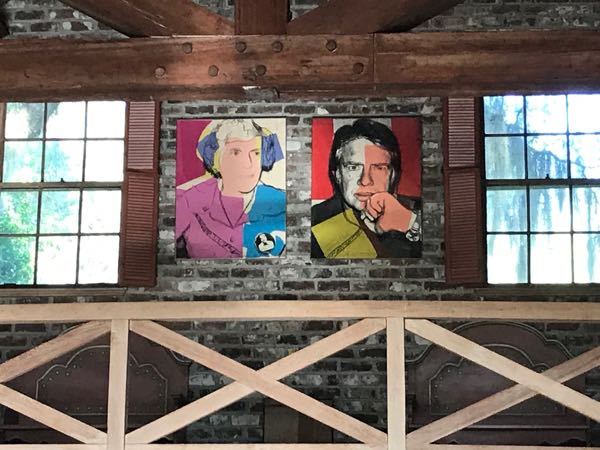
A couple of original Andy Warhol paintings, Jimmy Carter and Miss Lillian. (Remember, we were in Georgia.)
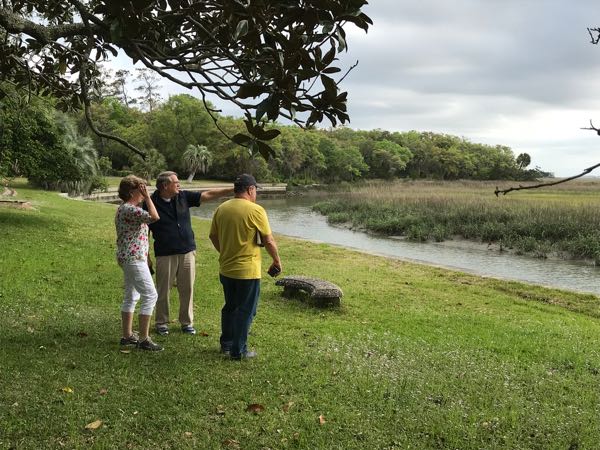
Oklahoma Judy, Georgia Bill, and Florida Marty discuss the various possibilities for painting.
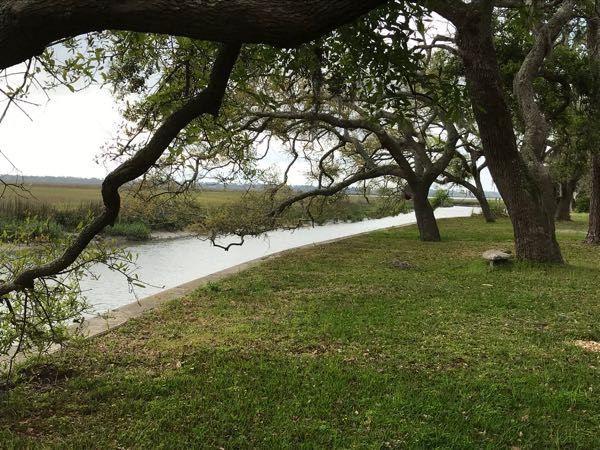
This looks like a little canal, but sizable boats went past as we were painting.
The pool was about 1/5 full of greenish water.
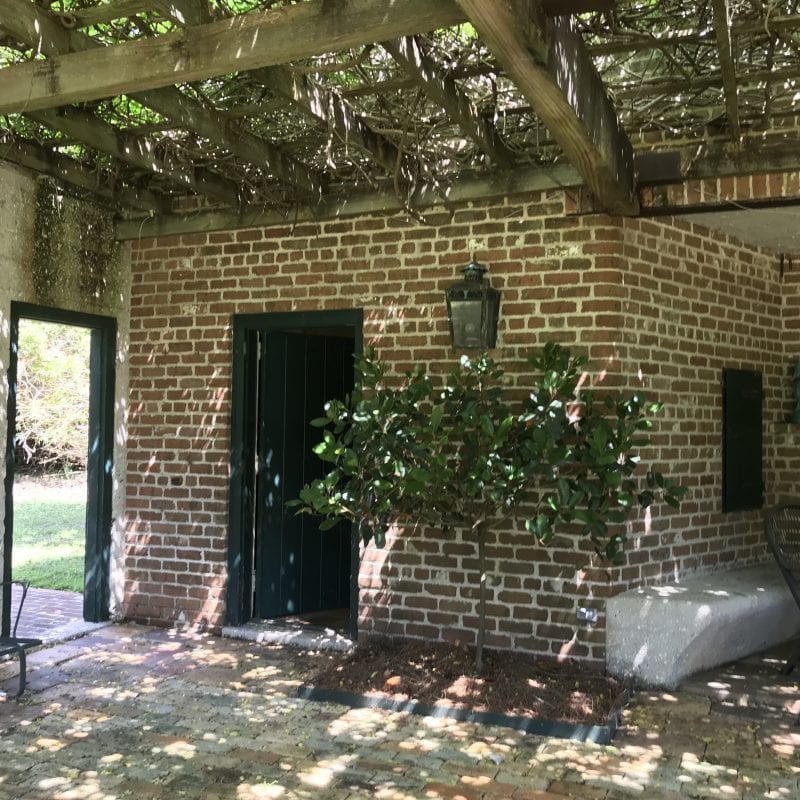
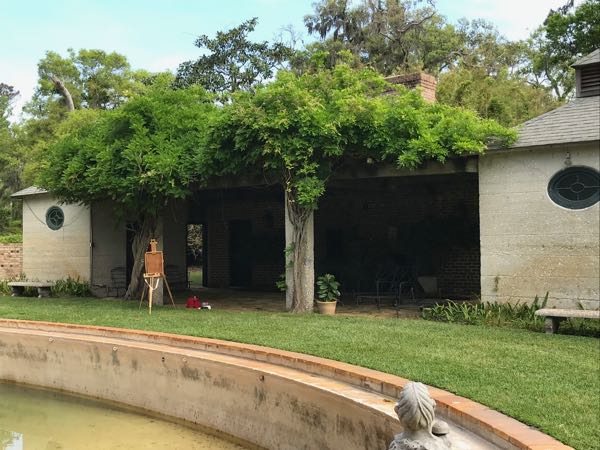
After wandering around gawking, I chose this view. It was shady beneath the pergola of the pool house.
Step one.
Step two.
Step three.
Step four.
Step five.
Lunch!
Critique time.
After lunch, we put the final touches on our paintings and then chose a new location for the afternoon.
We interrupt this travelogue to bring you more examples of practicing and putting to use the skills I learned in Georgia.
Certainly not finished by my standards.
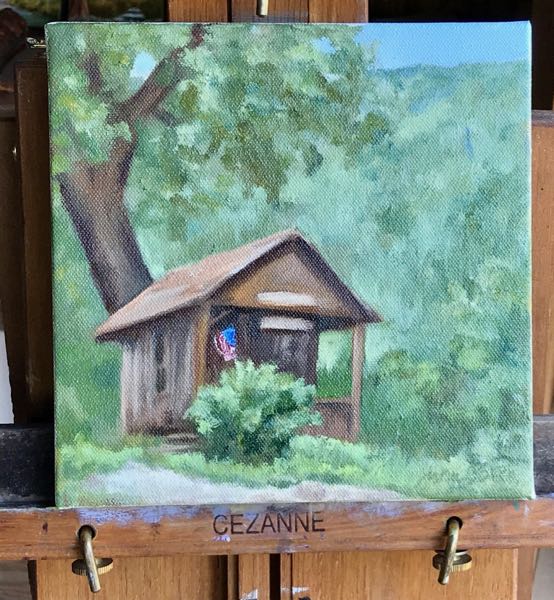
The Kaweah Post Office was awful. I spent more time on it in the painting studio.
Better. The colors didn’t photograph very true. And would you believe I lost 2 palette knives while I worked on this by the side of the road? How annoying.
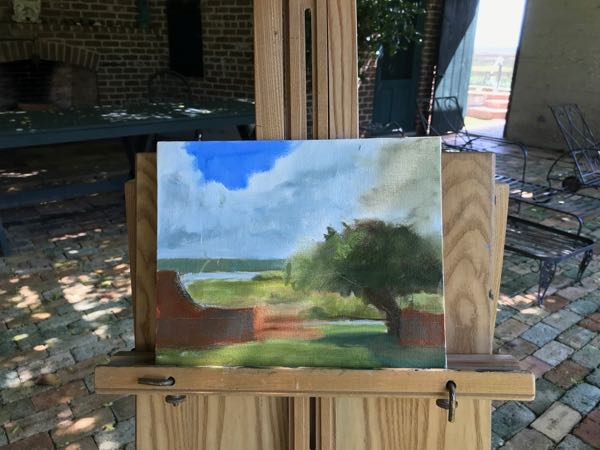
The next time, I set up inside the painting workshop with the giant doors open up to the outside. This one turned out a bit better than the P.O.
This is my view out the big doors.
It started out in the usual scary manner.
Color helps.
Am I finished? Who can say except Laurel, and she isn’t here. Looks kind of messy to me.
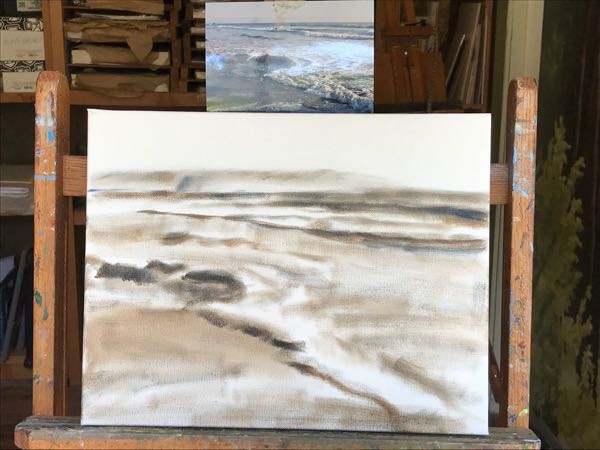
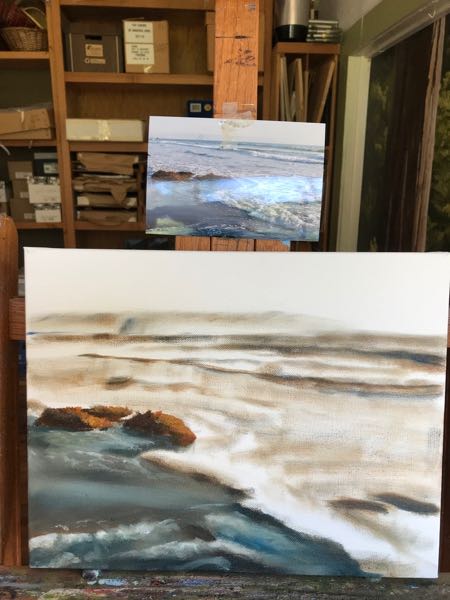
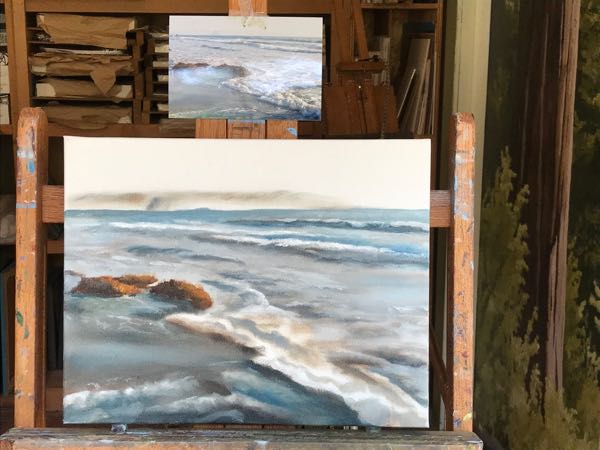
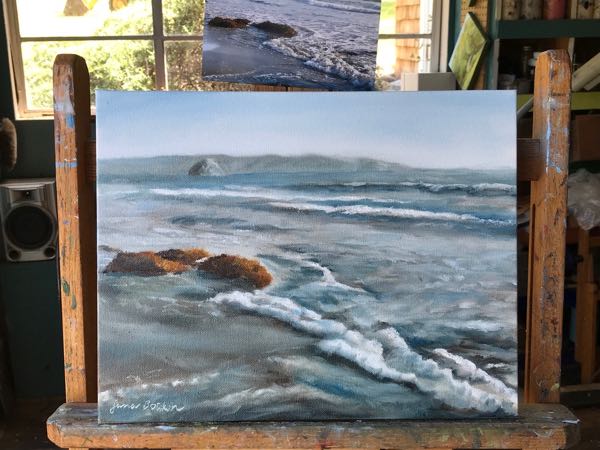
Finally, in preparation for an upcoming exhibit called “Seascapes”, I went through my photos of beach scenes and chose one to try in the plein air method. This means painting quickly, front to back, dark to light, and finishing in one session. Have you ever heard of someone doing plein air painting from a photo? I haven’t.
The blocking in stage.
Beginning with color in the front. I love blues and blue-greens.
I liked working on this one.
I incorporated my own techniques for getting things more accurate. I wonder if Laurel would be banging her head against the wall at my rebellious ways.
This one was completed while listening to Willie Robertson of Duck Dynasty get interviewed by Donald Miller. He talked a lot about having fun, and I had fun while painting this. Will I have the courage to enter this in “Seascapes”? More will be revealed.
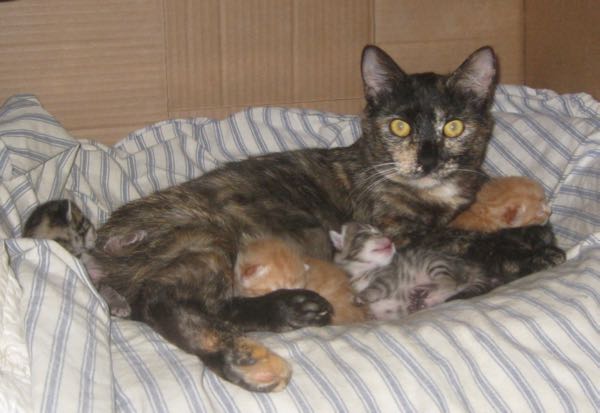
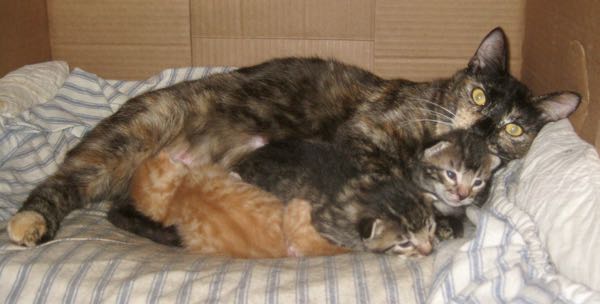
Trail Guy wanted me to show you Scout and the grandkitties as they appeared yesterday. They are almost 2 weeks old now.
Now, back to Georgia. It took some focused discipline to concentrate on painting a new way when there were so many new sights to see. I was a good student, but I was eager for the next stage of exploring the area after class.
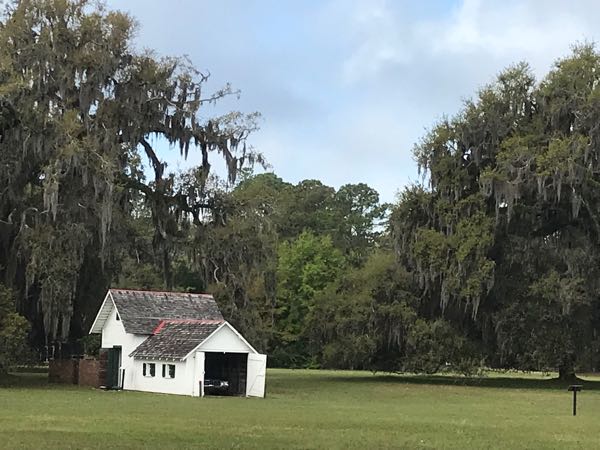
I want to know how many of the outbuildings were slave quarters, now referred to as “tabby cabins” because of the building material, called “tabby”.
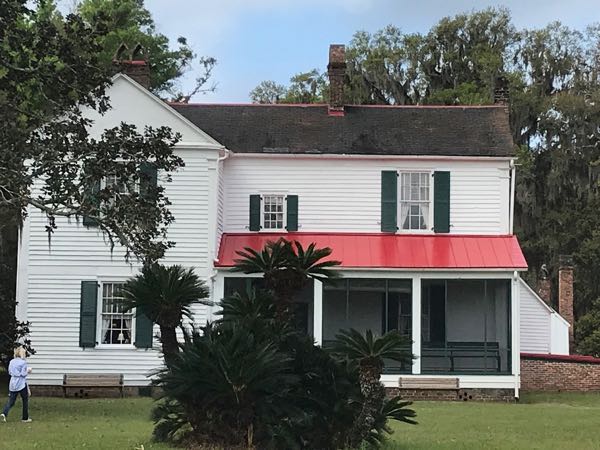
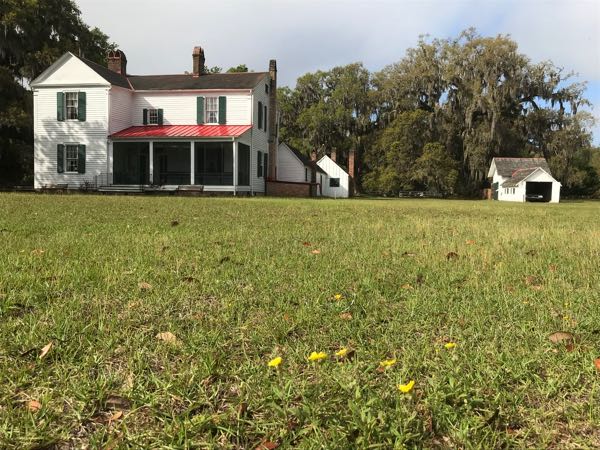
This was not a fancy plantation house; the owners had their fancy home in Savannah.
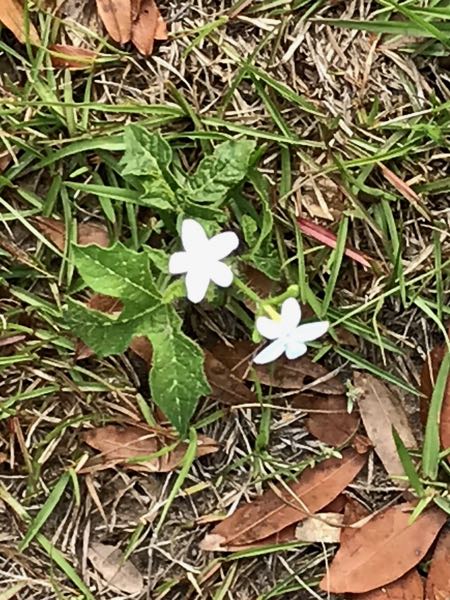
The wildflowers weren’t profuse like they are in Three Rivers and most parts of California right now, but they were present.
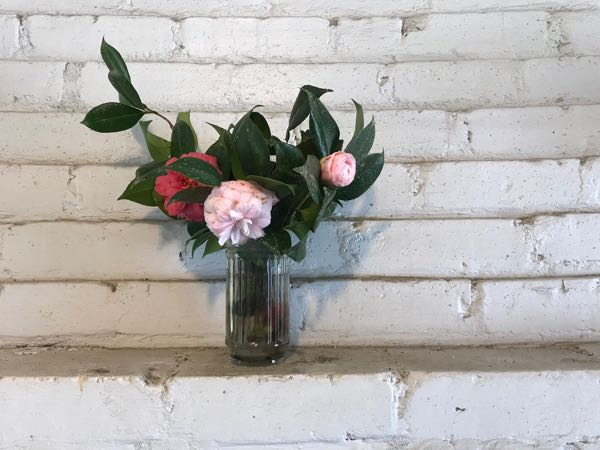
Fresh flowers on the mantel of the fireplace in the building that housed the bathrooms.
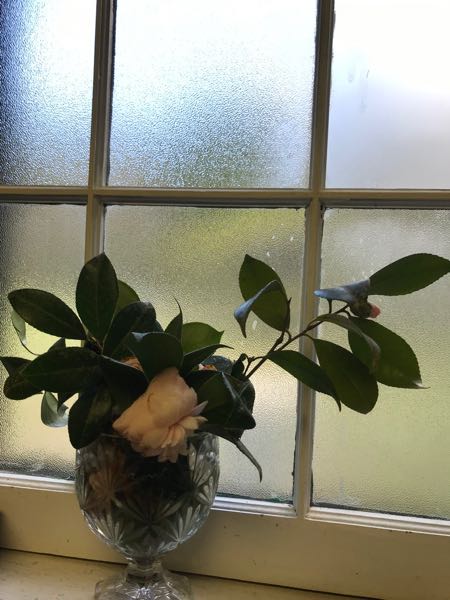
Fresh flowers in the bathroom too.
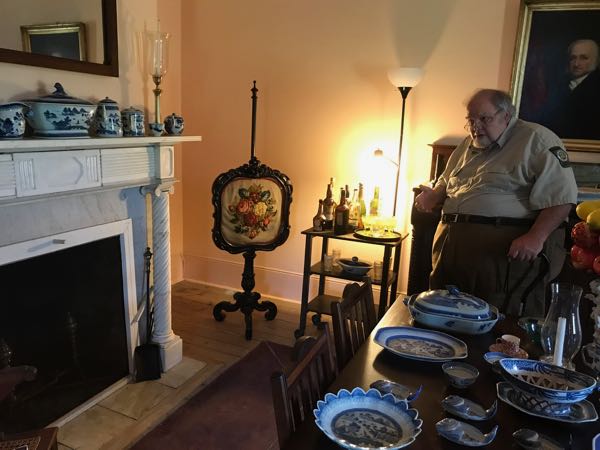
I took the official tour of the plantation house. Our guide was knowledgable but less than vigorous, so the outbuildings were not included.
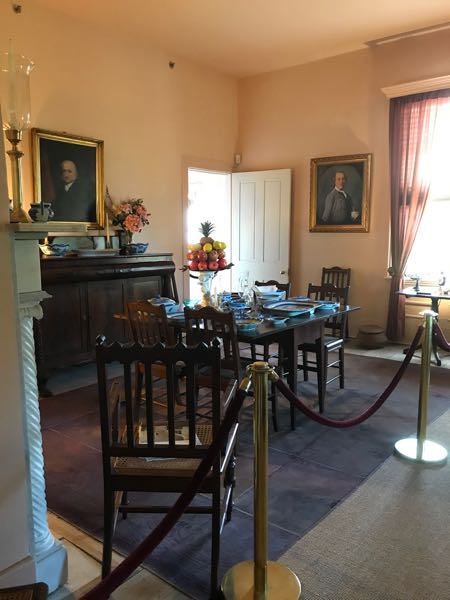
The rooms felt crowded to me. This is probably because we are giants compared to the era when those folks were alive.
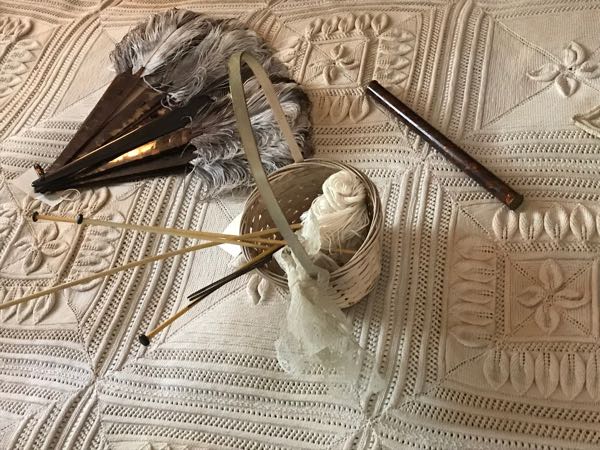
Someone spent many hours knitting this bedspread, but what else was there to do, besides tell slaves what to do? So hard to imagine that life.
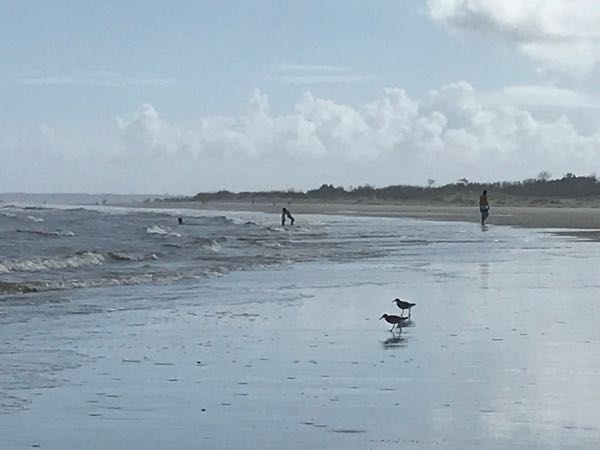
On the way to Laurel’s house after we painted, she dropped me off at the beach. THE ATLANTIC OCEAN BEACH!
It rained on me while the sun was also shining. I was ridiculously happy about it all.
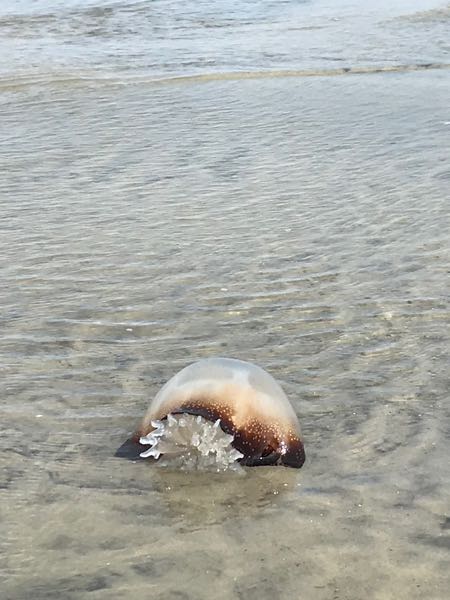
Lots of weird jellyfish, and I only found 3 shells, which I left on the railing when I put my shoes back on.
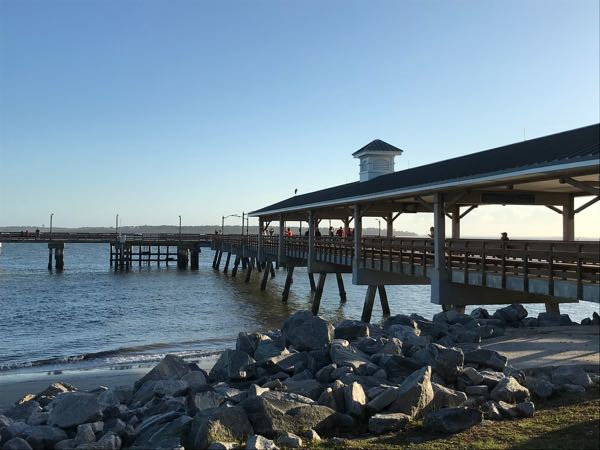
After our visit at Laurel’s house, where she gave me a much needed private lesson in brush washing (how have my brushes survived my ignorance all these years?), I went to find the lighthouse that was featured in Eugenia Price’s novels, where I first learned of St. Simons Island. This is not the lighthouse.
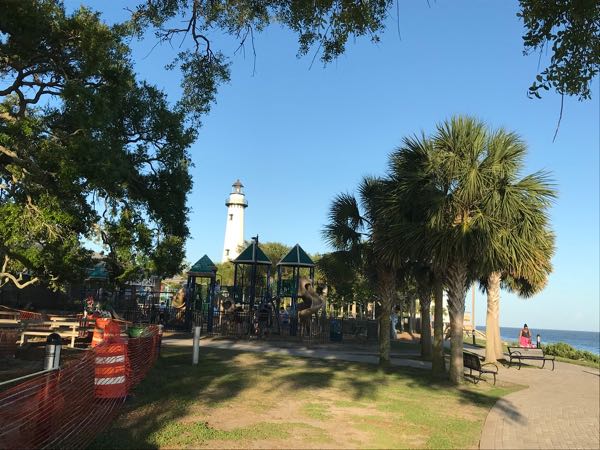
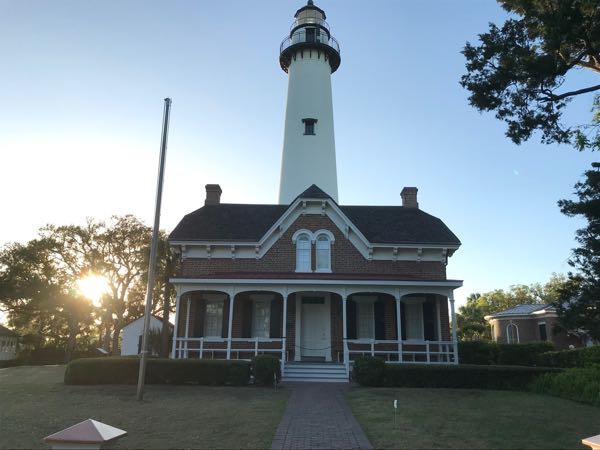
THIS is the lighthouse! It is so much fancier than I imagined, all dressed up in a well manicured park area, surrounded by perfectly maintained historic brick buildings.
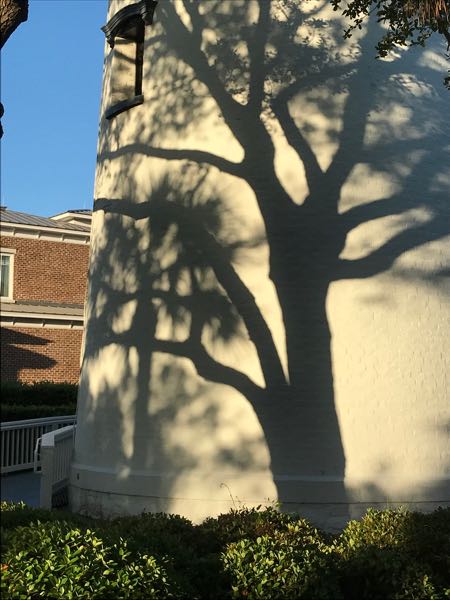
Look at these shadows on the side of the lighthouse. And you can bet there weren’t perfectly pruned shrubs around it in the era of the book I read.
I wonder if this lightkeeper’s cottage was the original. I wasn’t there during touring hours.
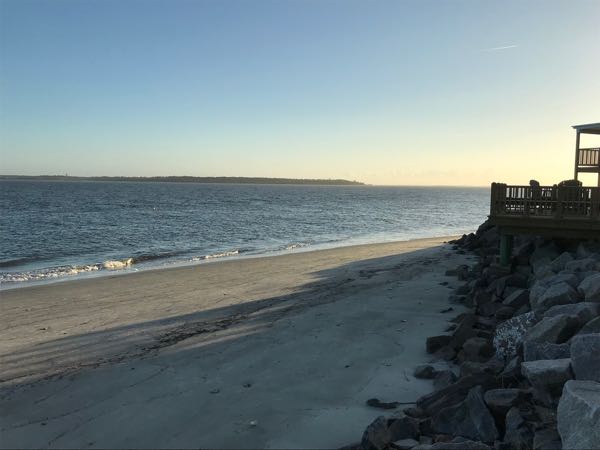
I walked back to the car along the beach, just full of gratitude that I got to be there and see these places.